A retrospective longitudinal case series evaluating patients with driving-induced spatial disorientation has shown that individualized multimodal management is accompanied by short-term reductions in self-reported dizziness handicap, despite unremarkable neuro-otological and imaging examinations. The study, conducted at a tertiary neuro-otological centre between June 2024 and June 2026, tracked five consecutive patients experiencing dizziness, spatial disorientation, and distorted perceptions of vehicular movement during driving. Although all five individuals exhibited lower symptom scores across a three-month follow-up, residual symptoms persisted in every case, and examinations failed to identify a uniform diagnostic biomarker. These findings underscore the clinical complexity of a presentation that has historically eluded straightforward classification, highlighting that while driving-related disorientation produces tangible functional impairment, it frequently operates without obvious peripheral vestibular deficits or focal intracranial pathology, leaving clinicians to manage an intricate intersection of sensory integration and situational vulnerability.
Disorientation occurring while operating a motor vehicle was first documented in medical literature in 1985, prompting the subsequent introduction of the term Motorist Disorientation Syndrome to describe patients troubled by dizziness or disorientation predominantly while driving. In subsequent decades, however, the condition has received little research attention, with published evidence remaining largely confined to small case series and cohort studies. Epidemiological records indicate that the presentation is uncommon, occurring in an estimated one percent of patients evaluated annually at tertiary neuro-otological referral clinics, yet researchers note that it remains under-recognised and underdiagnosed in routine clinical practice. Furthermore, authors caution that the acronym MDS poses substantial ambiguity in medical communication, as it already denotes myelodysplastic syndrome across general medicine and closely resembles MdDS, the established abbreviation for Mal de Débarquement Syndrome in neurotology, complicating database searches and diagnostic discussions.
The evaluated clinical cohort comprised five adult patients, consisting of three men and two women with a mean age of 39.4 ± 10.4 years and a range spanning from 30 to 52 years. Professional driving status varied, as one participant was an occupational driver while four drove non-professionally. Clinical classification divided the cohort into primary and secondary presentations: two patients presented with primary driving-induced spatial disorientation lacking any identifiable precipitating disorder, whereas three patients exhibited secondary forms arising in temporal association with other vestibular or neurobehavioural conditions, specifically benign paroxysmal positional vertigo, persistent postural-perceptual dizziness, or persistent postural-perceptual dizziness following acute vestibular neuritis. Every individual reported symptoms when driving passenger cars, but two patients experienced broader difficulties extending to trucks, motorcycles, or bicycles, indicating that situational disorientation can generalize across multiple vehicle types.
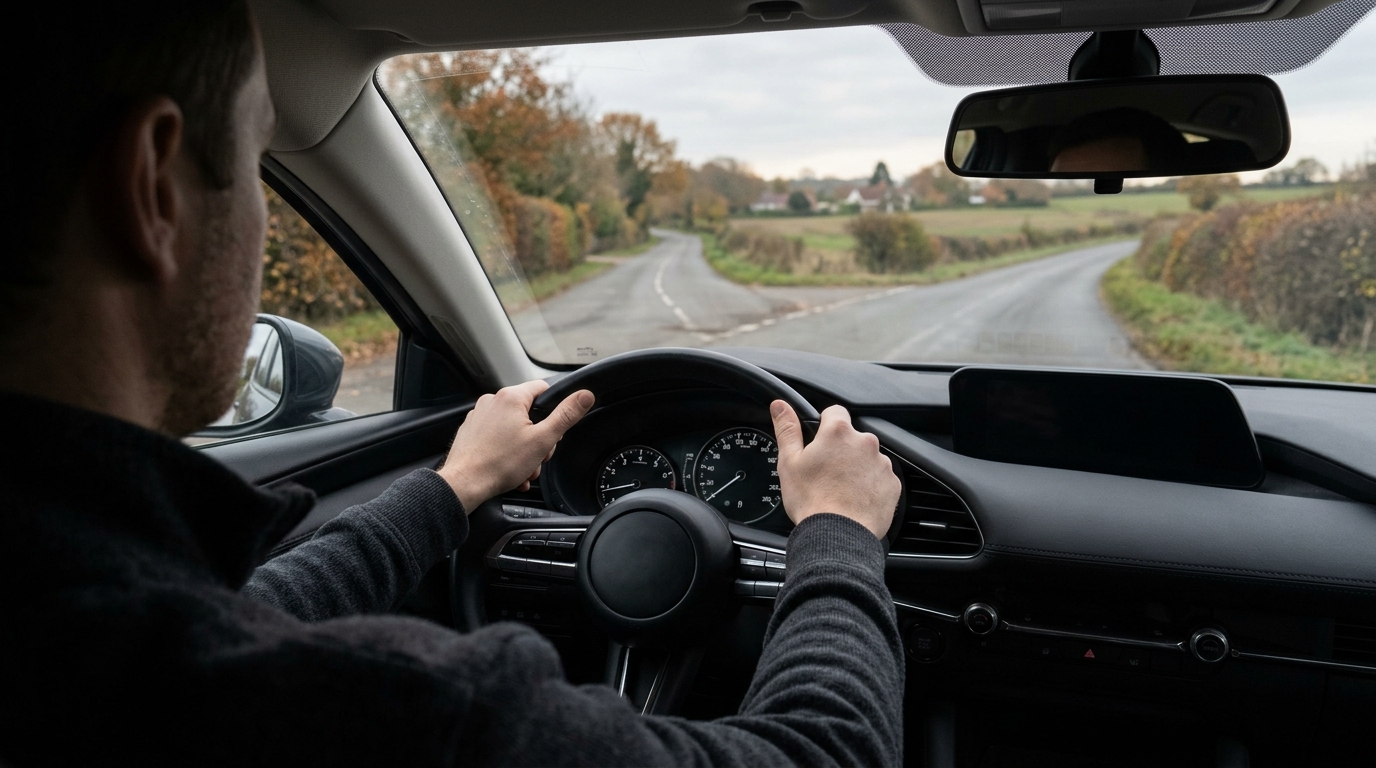
Across patient medical records, symptoms were consistently provoked by specific driving environments characterized by heightened visual complexity, increased vehicular speed, and demanding spatial constraints. Patients described acute or subacute episodes triggered by driving at higher speeds, negotiating bends, traversing multilane roadways, crossing bridges, passing through tunnels, executing overtaking manoeuvres, and operating in close proximity to nearby moving vehicles. During these provocative circumstances, patients experienced dizziness, disorientation, altered perception of vehicle motion, and a distressing sensation of losing control. In some cases, these impressions provoked marked emotional distress or panic attacks. Symptoms prompted affected individuals to adopt coping strategies, including sharply reducing speed, selecting shorter routes, avoiding difficult or complex roads, taking repeated breaks during journeys, or avoiding specific provoking environments, which in severe instances resulted in substantial driving limitation or temporary driving cessation.
Comprehensive baseline evaluations demonstrated an extensive burden of overlapping medical, psychological, and sensory comorbidities throughout the study sample. Patients reported histories of migraine, motion sickness susceptibility, anxiety-related symptoms, panic attacks, acrophobia, tetany, and ophthalmological refractive errors including myopia. In two patients, driving-related symptoms were accompanied by overt features of panic attacks, including hyperventilation and an urgent necessity to stop the vehicle. Researchers emphasize that the relationship between anxiety and driving disorientation is likely bidirectional, wherein pre-existing anxiety contributes to spatial disorientation while unexpected sensory distortion during driving provokes acute panic. Rather than defining an independent disease entity, these comorbidities suggest that driving acts as a highly specific sensory and behavioural context in which pre-existing vulnerabilities—such as migraine-related susceptibility, visual dependence, and anxiety-related vestibular mechanisms—become clinically manifest under demanding conditions.
Despite the distressing symptoms reported by drivers, extensive neuro-otological and neuro-ophthalmological diagnostic testing yielded largely unrevealing results across the cohort. Video head impulse testing, which assesses high-frequency angular vestibulo-ocular reflex function across all semicircular canals, was normal in all five patients, and spontaneous or positional nystagmus was not documented. Ocular motor assessments, including saccadic function, fell within normal ranges compared with laboratory reference data in healthy adults, with only one patient showing a mild reduction in vertical smooth pursuit gain. Subjective visual vertical testing was normal in all patients, and brain magnetic resonance imaging scans showed no structural pathology congruent with vestibular dysfunction. Head-shaking nystagmus was present in only one patient, in whom persistent postural-perceptual dizziness following vestibular neuritis was clinically suspected, indicating the absence of a uniform instrumental vestibular abnormality.
Bedside balance assessments revealed subtle physical equilibrium abnormalities in three of the five patients, consisting of postural titubation during the Romberg test, particularly after the removal of visual fixation, or unsteadiness during tandem gait. Importantly, these balance abnormalities were not accompanied by consistent evidence of uncompensated peripheral vestibular hypofunction, sensory polyneuropathy, or cerebellar syndrome. The investigators interpret these non-specific balance findings within a functional or neurobehavioural framework, suggesting they may reflect increased visual dependence or situational postural hyper-reactivity rather than fixed anatomical damage. The absence of reproducible clinical, instrumental, or neuroimaging markers further limits the justification for regarding driving-induced spatial disorientation as a distinct nosological condition, while highlighting that entirely normal vestibular test batteries do not rule out functional impairment arising during dynamic real-world driving.
To explain why symptoms manifest specifically while driving despite unremarkable diagnostic testing, researchers focus on hypotheses involving impaired multisensory integration. Driving represents a demanding locomotor task requiring continuous integration of visual, proprioceptive, vestibular, and cognitive inputs. One proposed framework attributes disorientation to a failure to resolve ambiguous or conflicting sensory cues regarding self-motion. Visual and somatosensory inputs provide only relative motion cues and must be referenced against vestibular signals of absolute motion, yet the vestibular system is itself calibrated against visual and somatosensory inputs. In visually rich or demanding driving environments, this circular dependency may destabilize. Sparse visual cues on motorways can impair heading estimation and produce illusory veering; asymmetrical optic flow from overtaking vehicles may mimic self-rotation; and braking into descending bends can generate canal-otolith conflicts perceived as the vehicle tipping.
Unable to establish a stable perceptual anchor in these demanding conditions, drivers may increasingly default toward visual cues, fostering visual dependence and visual vertigo. Because prospective controlled management trials are lacking, clinicians implemented an individualized multimodal treatment strategy. Management combined vestibular rehabilitation performed for at least 15 to 20 minutes daily, cognitive-behavioral therapy to address anxiety, and behavioural coping strategies. One patient received immersive virtual reality-based vestibular rehabilitation, a tool that facilitates desensitization and simulation of driving situations without traffic accident risks. Pharmacotherapy was likewise tailored: four patients received oral magnesium supplementation, one received adjunctive gabapentin, one was treated with a selective serotonin reuptake inhibitor alongside magnesium, and one received no pharmacotherapy. Patients generally favoured non-pharmacological interventions, though authors note that similar multimodal therapies are routinely applied across persistent postural-perceptual dizziness and other functional vestibular disorders.
Changes in perceived symptom burden were tracked using the Dizziness Handicap Inventory across the three-month follow-up period. Baseline scores ranged widely from 6 to 56 points, with a mean of 17.6 ± 21.5 points and a median of 8 points. At the three-month follow-up, scores declined to a range of 2 to 14 points, with a mean of 6.0 ± 4.7 points and a median of 4 points, reflecting an absolute mean reduction of 11.6 ± 17.1 points and a median reduction of 4 points. All five patients reported clinical improvement, although residual symptoms persisted in every individual. Structurally, inventory variance is dominated by a single general factor, meaning score reductions likely capture attenuated emotional distress and catastrophic appraisal alongside decreased symptom provocation. Clinically, one patient who had initially ceased driving was able to resume driving following intervention, while the other four continued driving throughout.
The authors emphasize that these longitudinal observations are constrained by major study limitations, including a retrospective design, a small sample of five patients, a single-centre setting, and short follow-up. Crucially, without a comparison group, symptom reduction cannot be attributed to any specific intervention and may partly reflect regression to the mean. Baseline scores exhibited extreme skew, with one score of 56 contrasted against four values of 10 or below, meaning the observed reduction was disproportionately driven by a single patient while others encountered floor effects. Furthermore, the lack of standardized biomarkers and objective driving-simulation assessments limits mechanistic certainty. Future prospective multicentre studies featuring larger cohorts, standardized neurobehavioural testing, driving-simulation paradigms, and long-term follow-up are needed to clarify whether driving-induced spatial disorientation represents an independent clinical entity or a situation-specific phenotype of broader functional vestibular conditions.
Subject of Research: Clinical characteristics and multimodal management of driving-induced spatial disorientation
Article Title: Clinical Features of Driving-Induced Spatial Disorientation: a Retrospective Longitudinal Case Series
Article References: Skáčik, P., Kováčiková, N., Kurča, E., & Sivák, Š. (2026). Clinical Features of Driving-Induced Spatial Disorientation: a Retrospective Longitudinal Case Series. Bratislava Medical Journal, 127(9), 4161-4167. https://doi.org/10.1007/s44411-026-00822-9
Image Credits: AI Generated
DOI: 10.1007/s44411-026-00822-9
Keywords: driving-induced spatial disorientation, motorist disorientation syndrome, neuro-otology, vestibular rehabilitation, dizziness handicap inventory, persistent postural-perceptual dizziness, vestibular migraine, visual dependence, video head impulse testing, subjective visual vertical, motion sickness, multisensory integration, cognitive behavioural therapy, virtual reality rehabilitation, panic attacks, Romberg test, tandem gait
News Source: Ophelia Keating. (November 25, 2026). Study Tracks Clinical Features and Multimodal Care in Driving Spatial Disorientation. Scienmag.