• HOME
  • NEWS
  • EXPLORE
    • CAREER
      • Companies
      • Jobs
    • EVENTS
    • iGEM
      • News
      • Team
    • PHOTOS
    • VIDEO
    • WIKI
  • BLOG
  • COMMUNITY
    • FACEBOOK
    • INSTAGRAM
    • TWITTER
Monday, October 5, 2026
BIOENGINEER.ORG
No Result
View All Result
  • Login
  • HOME
  • NEWS
  • EXPLORE
    • CAREER
      • Companies
      • Jobs
        • Lecturer
        • PhD Studentship
        • Postdoc
        • Research Assistant
    • EVENTS
    • iGEM
      • News
      • Team
    • PHOTOS
    • VIDEO
    • WIKI
  • BLOG
  • COMMUNITY
    • FACEBOOK
    • INSTAGRAM
    • TWITTER
  • HOME
  • NEWS
  • EXPLORE
    • CAREER
      • Companies
      • Jobs
        • Lecturer
        • PhD Studentship
        • Postdoc
        • Research Assistant
    • EVENTS
    • iGEM
      • News
      • Team
    • PHOTOS
    • VIDEO
    • WIKI
  • BLOG
  • COMMUNITY
    • FACEBOOK
    • INSTAGRAM
    • TWITTER
No Result
View All Result
Bioengineer.org
No Result
View All Result
Home Headlines

Study shows GMU’s Lyme disease early-detection test is effective

Bioengineer.org by Bioengineer.org
January 20, 2018
in Headlines, Health, Science News
Reading Time: 2 mins read
0
Share on FacebookShare on TwitterShare on LinkedinShare on RedditShare on Telegram
IMAGE

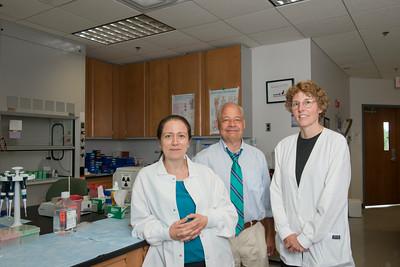
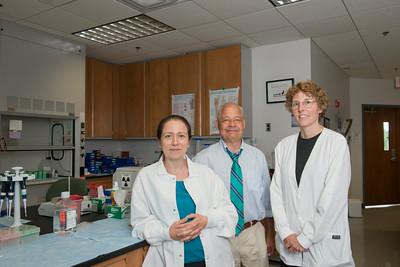
After three years and 300 patients, George Mason University researchers have proof that their early-detection urine test for Lyme disease works.

It's the largest study of its kind looking at early-stage indicators for Lyme disease, said Lance Liotta, co-director and medical director of the George Mason-based Center for Applied Proteomics and Molecular Medicine. "We are looking at a highly specific protein shed from the surface of the bacteria that causes Lyme."

The research was published in the Journal of Translational Medicine.

And now Mason researchers are applying the approach to Ebola, malaria and tuberculosis, among other diseases. The Mason team is working side by side with the private company Ceres Nanoscience, which Liotta and his co-director Chip Petricoin co-founded. A test that works like a pregnancy test could be used in undeveloped countries to quickly identify disease, even when patients aren't near a hospital, he said.

The National Institutes of Health funded the research that led to Mason's patented technology, which traps tell-tale clues (such as the Lyme bacteria protein) that a disease is present. The Mason technology, which is licensed to Ceres, works during the earliest stages of disease and finds the tiniest traces missed by most diagnostic tests.

In the case of Lyme disease, some patients may still have active cases but traditional tests don't register it, Liotta said. These patients may not be receiving the additional round of treatment they need, he said.

"If the patient gets better, the test goes negative," Liotta said. "It's a good way to monitor the patient."

"We're looking to repeat the story again with these other diseases," said Alessandra Luchini, a Mason professor who spearheaded the Lyme test research, is a co-inventor of the technology, and continues to develop new applications. "Other targets for the new type of test include Chagas disease, which is infectious and caused by a parasite, and toxoplasmosis, another parasite-borne disease."

###

About George Mason

George Mason University is Virginia's largest public research university. Located near Washington, D.C., Mason enrolls more than 34,000 students from 130 countries and all 50 states. Mason has grown rapidly over the past half-century and is recognized for its innovation and entrepreneurship, remarkable diversity and commitment to accessibility.

Media Contact

Michele McDonald
[email protected]
703-993-8781
@GeorgeMasonNews

http://www.gmu.edu

Share12Tweet8Share2ShareShareShare2

Related Posts

New Wave of Targeted and Immune Therapies Reshapes Marginal Zone Lymphoma Care

New Wave of Targeted and Immune Therapies Reshapes Marginal Zone Lymphoma Care

October 5, 2026
Physics Meets Machine Learning in New Framework for Trustworthy Materials Discovery

Physics Meets Machine Learning in New Framework for Trustworthy Materials Discovery

October 5, 2026

From Bedside Question to Breakthrough: A Step-by-Step Roadmap for Translational Medical Research

October 5, 2026

Gut Bacterial Metabolite Shapes Brain Damage After Stroke, Study Finds

October 5, 2026
Please login to join discussion

POPULAR NEWS

  • Alloys That Shrink Their Own Grains: New PIX Mechanism Refines Metals With Heat Alone

    Alloys That Shrink Their Own Grains: New PIX Mechanism Refines Metals With Heat Alone

    29 shares
    Share 12 Tweet 7
  • Endurance Exercise Reshapes the Liver in Males and Females Through Distinct Molecular Routes

    29 shares
    Share 12 Tweet 7
  • Single Transcription Factor PU.1 Rapidly Converts Fibroblasts into Macrophage-Lineage Cells

    29 shares
    Share 12 Tweet 7
  • New Scale Measures How Ready Nurse Educators Really Are for the AI Era

    29 shares
    Share 12 Tweet 7

About

We bring you the latest biotechnology news from best research centers and universities around the world. Check our website.

Follow us

Recent News

Alloys That Shrink Their Own Grains: New PIX Mechanism Refines Metals With Heat Alone

Endurance Exercise Reshapes the Liver in Males and Females Through Distinct Molecular Routes

Single Transcription Factor PU.1 Rapidly Converts Fibroblasts into Macrophage-Lineage Cells

Subscribe to Blog via Email

Success! An email was just sent to confirm your subscription. Please find the email now and click 'Confirm' to start subscribing.

Join 85 other subscribers
  • Contact Us

Bioengineer.org © Copyright 2023 All Rights Reserved.

Welcome Back!

Login to your account below

Forgotten Password?

Retrieve your password

Please enter your username or email address to reset your password.

Log In
No Result
View All Result
  • Homepages
    • Home Page 1
    • Home Page 2
  • News
  • National
  • Business
  • Health
  • Lifestyle
  • Science

Bioengineer.org © Copyright 2023 All Rights Reserved.