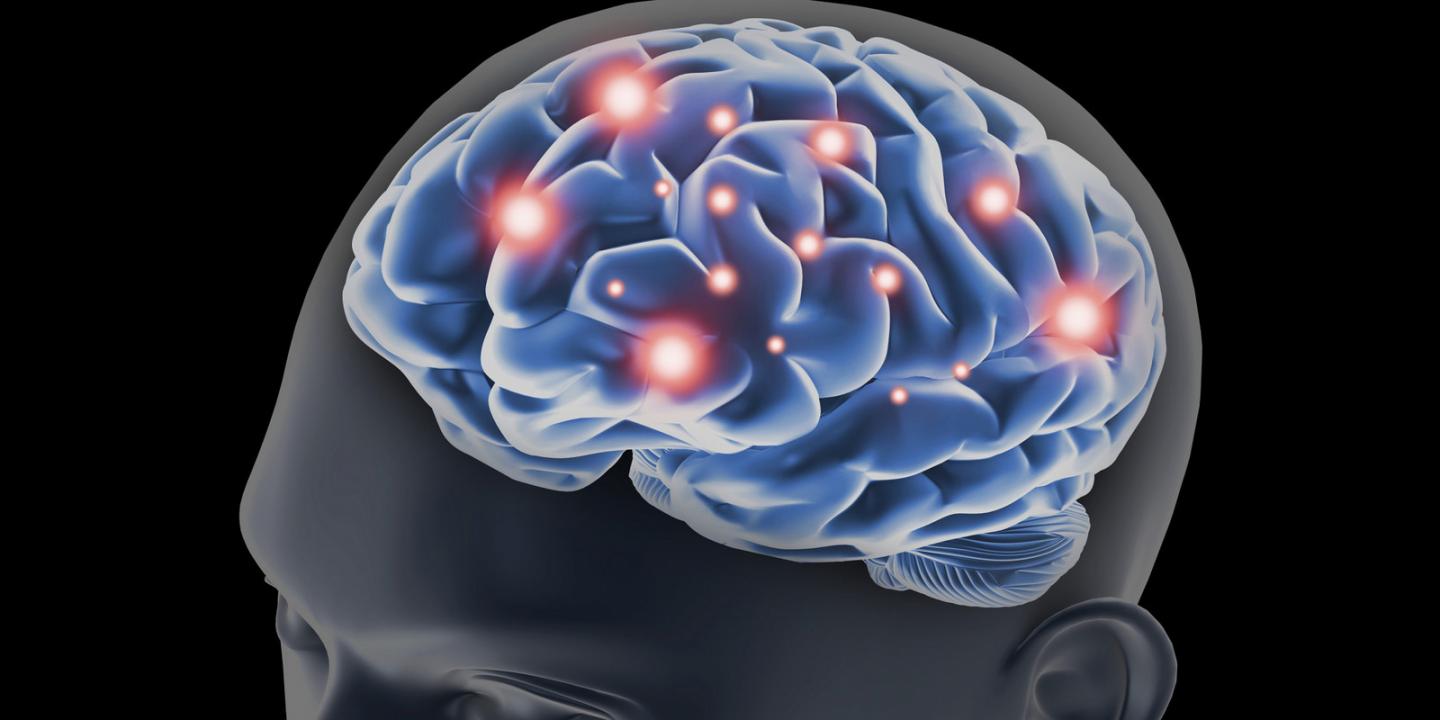
Credit: Photo courtesy of the National Institutes of Health
LOS ANGELES — May 2, 2018 — Research from Cedars-Sinai sheds light on how the human brain rapidly forms new memories, providing insights into potential new treatments for memory disorders.
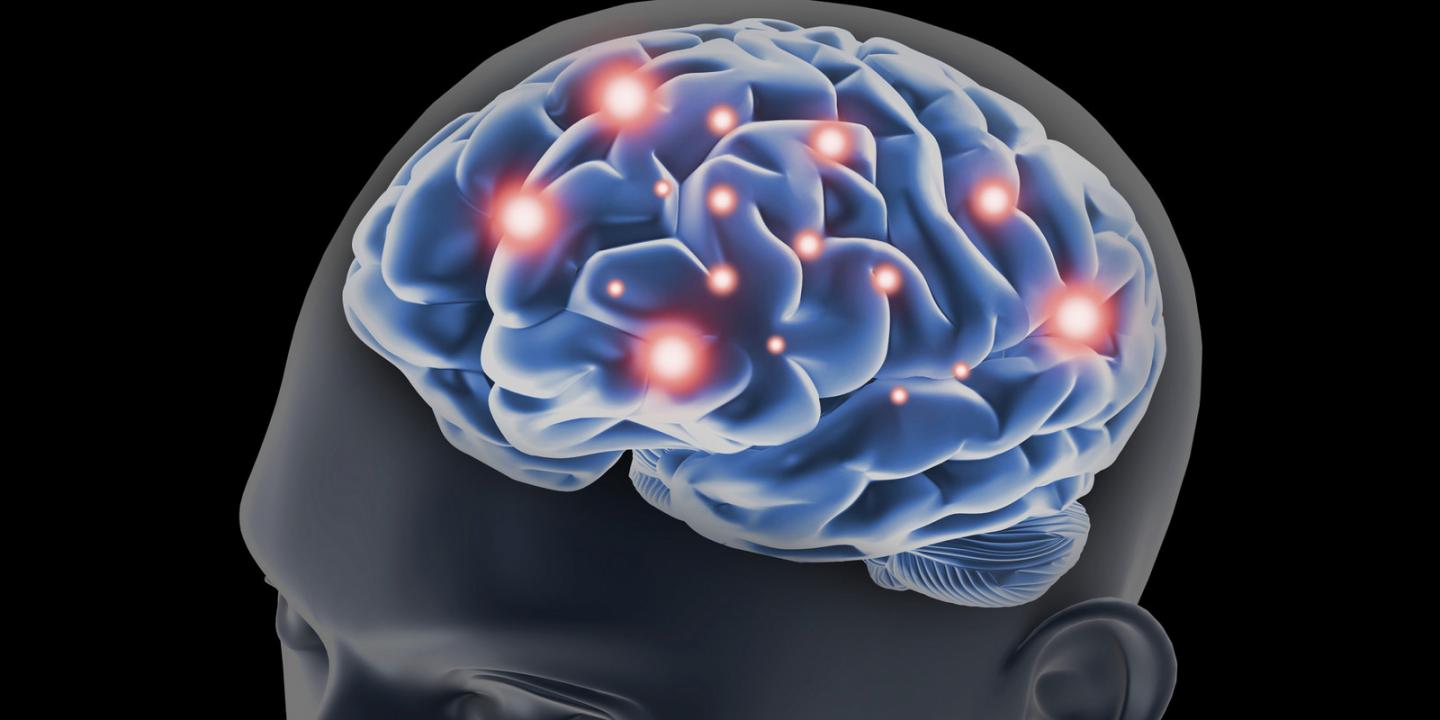
A new study examined neurons that produce dopamine, a compound that acts as a transmitter for nerve impulses. It found that these dopamine neurons play a critical role in the formation of episodic memory, which allows people to remember such things as where they parked the car in the morning and what they had for dinner last night.
The study, published in the journal Current Biology, was co-authored by Ueli Rutishauser, PhD, the senior author and an associate professor in the Department of Neurosurgery at Cedars-Sinai. In the study, investigators observed the response of individual human dopamine neurons in patients undergoing deep brain stimulation surgery to treat Parkinson's disease. The patients watched a sequence of images: Some had never been seen before and were thus "novel"; others were repeated and were therefore "familiar."
For each image, the patient pressed a button indicating whether it was novel or familiar. This allowed investigators to track the formation of new memories, because an image was only novel once. Afterward, it formed a memory.
"What we discovered was that a subset of the dopaminergic neurons responded only when an image was novel, but not when it was familiar. In other words, it indicated if the image was new, but not if something was familiar," said Jan Kaminski, PhD, first author of the study and a project scientist at Cedars-Sinai. "This is an important new scientific discovery, because it has so far remained unclear how the dopaminergic system contributes to episodic memory formation."
This research was conducted while Parkinson's patients were having a deep brain stimulation device implanted to reduce their symptoms. As part of this procedure, during which patients are awake, an electrode is lowered into the brain to precisely localize the deep brain stimulation electrode. The target of the electrode is deep inside the brain, close to where the dopamine neurons are located.
"This procedure is one of the rare opportunities for researchers to observe the activity of dopamine neurons in an area of the brain called the substania nigra in an awake human being, a type of recording only possible because the patient is undergoing a neurosurgical procedure," said Adam Mamelak, MD, professor of Neurosurgery at Cedars-Sinai and a co-investigator of the study. "This setup provides extremely valuable new insights into how humans form memories."
While not directly tied to research on specific ailments, the findings provide new information relevant to the understanding of certain diseases, Rutishauser said. "Dopamine neurons degrade in neurodegenerative diseases such as Parkinson's, which in addition to motor symptoms is often also accompanied by cognitive issues such as memory problems," he said. "What this paper shows is that dopamine neurons activate for novel stimuli. This short 'burst' of dopamine is what triggers learning."
A common treatment for patients with Parkinson's, for instance, is to take medications that increase dopamine to a steady level. But those drugs do not facilitate the short bursts that help in the formation of memory. "Our work reveals new avenues for treatments that can be explored, including those that restore short bursts of dopamine or that otherwise increase activity analogous to what dopamine is thought to do," Rutishauser said.
Apart from the scientific insights derived, this study also is an excellent demonstration of the power of interdisciplinary research and collaboration. "The study team was composed of scientists, neurologists and neurosurgeons and was only possible due to a close collaboration between Neurosurgery and Neurology. This kind of team science is a perfect demonstration of the groundbreaking basic science made possible by the close integration between clinical and research work at Cedars-Sinai," said Keith Black, MD, chairman of the Department of Neurosurgery.
###
The study was supported by the Pfeiffer Foundation, NIH NINDS (U01NS098961), the NSF (BCS-1554105) and the McKnight Endowment Fund for Neuroscience.
DOI: 10.1016/j.cub.2018.03.024
Media Contact
Jonathan Diamond
[email protected]
323-866-8146
@cedarssinai
http://www.csmc.edu
Original Source
https://www.cedars-sinai.org/newsroom/study-sheds-light-on-how-dopamine-neurons-contribute-to-memory-formation-in-humans/ http://dx.doi.org/10.1016/j.cub.2018.03.024