Credit: Georgia State University
ATLANTA-The brain regulates social behavior differently in males and females, according to a new study published today in the Proceedings of the National Academy of Sciences.
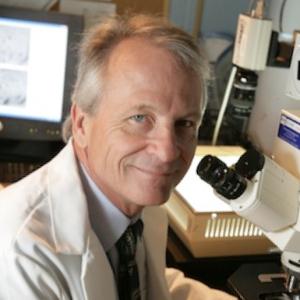
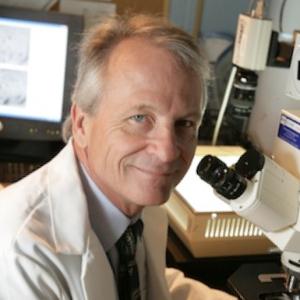
A team of researchers led by Dr. Elliott Albers, director of the Center for Behavioral Neuroscience and Regents' Professor of Neuroscience at Georgia State University, and graduate student Joseph I. Terranova, has discovered that serotonin (5-HT) and arginine-vasopressin (AVP) act in opposite ways in males and females to influence aggression and dominance. Because dominance and aggressiveness have been linked to stress resistance, these findings may influence the development of more effective gender-specific treatment strategies for stress-related neuropsychiatric disorders.
"These results begin to provide a neurochemical basis for understanding how the social brain works quite differently in males and females," said Albers.
Prominent sex differences occur in the incidence, development and clinical course of many neuropsychiatric disorders. Women, for example, have higher rates of depression and anxiety disorders such as posttraumatic stress disorder (PTSD), while men more frequently suffer from autism and attention deficit disorder. Despite profound sex differences in the expression of social behavior and the incidence of these psychiatric disorders, little is known about how the brain mechanisms underlying these phenomena differ in females and males. Further, limited knowledge exists regarding sex differences in the efficacy of treatments for these disorders. As a result, current treatment strategies are largely the same for both sexes.
In this study conducted in hamsters, the researchers investigated the hypothesis that 5-HT promotes and AVP inhibits aggression and dominance in females and that 5-HT inhibits and AVP promotes aggression and dominance in males. Their data show strong support for this hypothesis with the discovery that 5-HT and AVP act in opposite ways within the hypothalamus to regulate dominance and aggression in females and males.
This study also found that administration of the 5-HT reuptake inhibitor fluoxetine, one of the most commonly prescribed drugs for psychiatric disorders, increased aggression in females and inhibited aggression in males. These studies raise the possibility that stress-related neuropsychiatric disorders such as PTSD may be more effectively treated with 5-HT-targeted drugs in women and with AVP-targeted drugs in men.
The research team involved in this discovery included Dr. Zhimin Song, Tony E. Larkin, Nathan Hardcastle Alisa Norvelle and Ansa Riaz from Georgia State's Neuroscience Institute.
The next step will be to investigate whether there are sex differences in the efficacy of 5-HT- and AVP-active drugs in reducing social stress.
###
For more information on Dr. Elliott Albers and the research being conducted in his laboratory, visit http://neuroscience.gsu.edu/profile/h-elliott-albers/.
For more information on the Center for Behavioral Neuroscience, visit http://www.cbn-atl.org.
Media Contact
Natasha De Veauuse Brown, M.P.H.
[email protected]
404-413-3602
@GSU_News
Home