

• HOME
  • NEWS
  • EXPLORE
    • CAREER
      • Companies
      • Jobs
    • EVENTS
    • iGEM
      • News
      • Team
    • PHOTOS
    • VIDEO
    • WIKI
  • BLOG
  • COMMUNITY
    • FACEBOOK
    • INSTAGRAM
    • TWITTER
Saturday, June 27, 2026
BIOENGINEER.ORG
No Result
View All Result
  • Login
  • HOME
  • NEWS
  • EXPLORE
    • CAREER
      • Companies
      • Jobs
        • Lecturer
        • PhD Studentship
        • Postdoc
        • Research Assistant
    • EVENTS
    • iGEM
      • News
      • Team
    • PHOTOS
    • VIDEO
    • WIKI
  • BLOG
  • COMMUNITY
    • FACEBOOK
    • INSTAGRAM
    • TWITTER
  • HOME
  • NEWS
  • EXPLORE
    • CAREER
      • Companies
      • Jobs
        • Lecturer
        • PhD Studentship
        • Postdoc
        • Research Assistant
    • EVENTS
    • iGEM
      • News
      • Team
    • PHOTOS
    • VIDEO
    • WIKI
  • BLOG
  • COMMUNITY
    • FACEBOOK
    • INSTAGRAM
    • TWITTER
No Result
View All Result
Bioengineer.org
No Result
View All Result
Home NEWS Science News Biology

Study provides novel evolutionary insights into unisexual reproductive success

Bioengineer by Bioengineer
July 11, 2022
in Biology
Reading Time: 2 mins read
0
Amphidiploid and amphitriploid
Share on FacebookShare on TwitterShare on LinkedinShare on RedditShare on Telegram

Unisexual reproduction lacks meiotic recombination, resulting in the accumulation of deleterious mutations and hindering the creation of genetic diversity. Thus, unisexual taxa are commonly considered an evolutionary dead end.
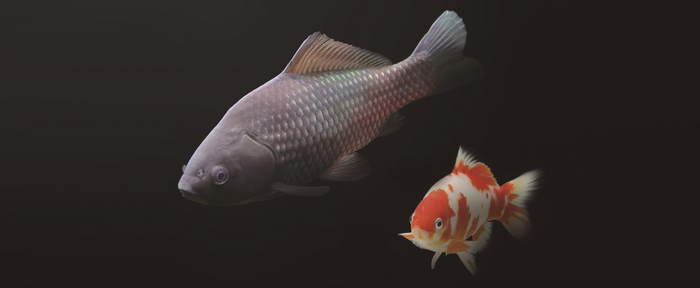
Amphidiploid and amphitriploid

Credit: IHB

Unisexual reproduction lacks meiotic recombination, resulting in the accumulation of deleterious mutations and hindering the creation of genetic diversity. Thus, unisexual taxa are commonly considered an evolutionary dead end.

Intriguingly, some unisexual fishes and reptiles have outlived their predicted extinction time and exhibit high genetic diversity and strong environmental adaptation, yet evolutionary mechanisms underlying unisexual reproductive success generally remain unclear in these vertebrates.

Researchers led by Prof. GUI Jianfang from the Institute of Hydrobiology (IHB) of the Chinese Academy of Sciences and their collaborators recently revealed the evolutionary puzzle of unisexual reproductive success in hexaploid gynogenetic gibel carp (Carassius gibelio).

This study was published in Nature Ecology & Evolution on July 11.

In this study, the research team sequenced the genomes of sexual tetraploid crucian carp (C. auratus) and unisexual hexaploid gibel carp (C. gibelio) and assembled their haplotypes to the chromosome level. Both haplotypes have 50 chromosomes, which comprise two subgenomes (25 chromosomes in subgenome A and 25 chromosomes in subgenome B).

Sequencing coverage analysis reveals that tetraploid C. auratus is an amphidiploid (AABB) with two diploid sets of chromosomes and hexaploid C. gibelio is an amphitriploid (AAABBB) with two triploid sets of chromosomes.

Based on the resequencing data from different strains of C. auratus and C. gibelio, the research team demonstrated that amphitriploid C. gibelio originated from ancestral amphidiploid C. auratus via autotriploidy about 0.82-0.96 million years ago. The amphitriploid C. gibelio overcame the meiotic obstacle caused by three homologous chromosomes through unisexual gynogenesis.

Through comparative genomics, the researchers identified intensive expansion and alterations of meiotic cell cycle-related genes and an oocyte-specific histone variant in C. gibelio. They found that most of these expanded genes showed high expression in ovaries and oocytes.

In addition, the research team found that C. gibelio produces unreduced oocytes by suppressing meiosis I. However, sporadic homologous recombination and a high rate of gene conversion were revealed during oogenesis of C. gibelio. These genomic changes might have facilitated purging deleterious mutations and maintaining genomic stability in amphitriploid C. gibelio.


Journal

Nature Ecology & Evolution

DOI

10.1038/s41559-022-01813-z

Article Publication Date

11-Jul-2022

Share12Tweet8Share2ShareShareShare2

Related Posts

Natural Hallucinogens: Evolution’s Ecological Tools, Not Mere Chemical Byproducts

June 25, 2026

This Famous Butterfly Revealed: Three Distinct Species Hidden in One

June 25, 2026

Scientists Attack Soybean Cyst Nematode by Starving Its Food Source

June 25, 2026

Decoding the Secret Code of a Crucial Immune Sensor

June 24, 2026

POPULAR NEWS

  • Saying Goodbye to PGY-6: Pediatric Fellowship Realities

    103 shares
    Share 41 Tweet 26
  • Multi-Hospital Study Reveals Long Covid Burden Is Twice as High as Current Estimates

    92 shares
    Share 36 Tweet 23
  • Detection of EDCs in Breast Milk and Infant Urine Up to Six Months Highlights Early Exposure Risks

    77 shares
    Share 31 Tweet 19
  • New Drug Candidate Developed at McMaster Shows Potential for Treating Brain Cancer

    58 shares
    Share 23 Tweet 15

About

We bring you the latest biotechnology news from best research centers and universities around the world. Check our website.

Follow us

Recent News

Tracking Lanthanide-Labeled Microplastics in Plants

POSTECH Researchers Slash Cost of Reconstituted Cell-Free Systems by 95%

AI and Physics Collaborate to Design Advanced Hydrogen Storage Materials

Subscribe to Blog via Email

Success! An email was just sent to confirm your subscription. Please find the email now and click 'Confirm' to start subscribing.

Join 82 other subscribers
  • Contact Us

Bioengineer.org © Copyright 2023 All Rights Reserved.

Welcome Back!

Login to your account below

Forgotten Password?

Retrieve your password

Please enter your username or email address to reset your password.

Log In
No Result
View All Result
  • Homepages
    • Home Page 1
    • Home Page 2
  • News
  • National
  • Business
  • Health
  • Lifestyle
  • Science

Bioengineer.org © Copyright 2023 All Rights Reserved.