• HOME
  • NEWS
  • EXPLORE
    • CAREER
      • Companies
      • Jobs
    • EVENTS
    • iGEM
      • News
      • Team
    • PHOTOS
    • VIDEO
    • WIKI
  • BLOG
  • COMMUNITY
    • FACEBOOK
    • INSTAGRAM
    • TWITTER
Monday, June 15, 2026
BIOENGINEER.ORG
No Result
View All Result
  • Login
  • HOME
  • NEWS
  • EXPLORE
    • CAREER
      • Companies
      • Jobs
        • Lecturer
        • PhD Studentship
        • Postdoc
        • Research Assistant
    • EVENTS
    • iGEM
      • News
      • Team
    • PHOTOS
    • VIDEO
    • WIKI
  • BLOG
  • COMMUNITY
    • FACEBOOK
    • INSTAGRAM
    • TWITTER
  • HOME
  • NEWS
  • EXPLORE
    • CAREER
      • Companies
      • Jobs
        • Lecturer
        • PhD Studentship
        • Postdoc
        • Research Assistant
    • EVENTS
    • iGEM
      • News
      • Team
    • PHOTOS
    • VIDEO
    • WIKI
  • BLOG
  • COMMUNITY
    • FACEBOOK
    • INSTAGRAM
    • TWITTER
No Result
View All Result
Bioengineer.org
No Result
View All Result
Home NEWS Science News

Study opens new questions on how the atmosphere and oceans formed

Bioengineer by Bioengineer
February 27, 2017
in Science News
Reading Time: 2 mins read
0
Share on FacebookShare on TwitterShare on LinkedinShare on RedditShare on Telegram
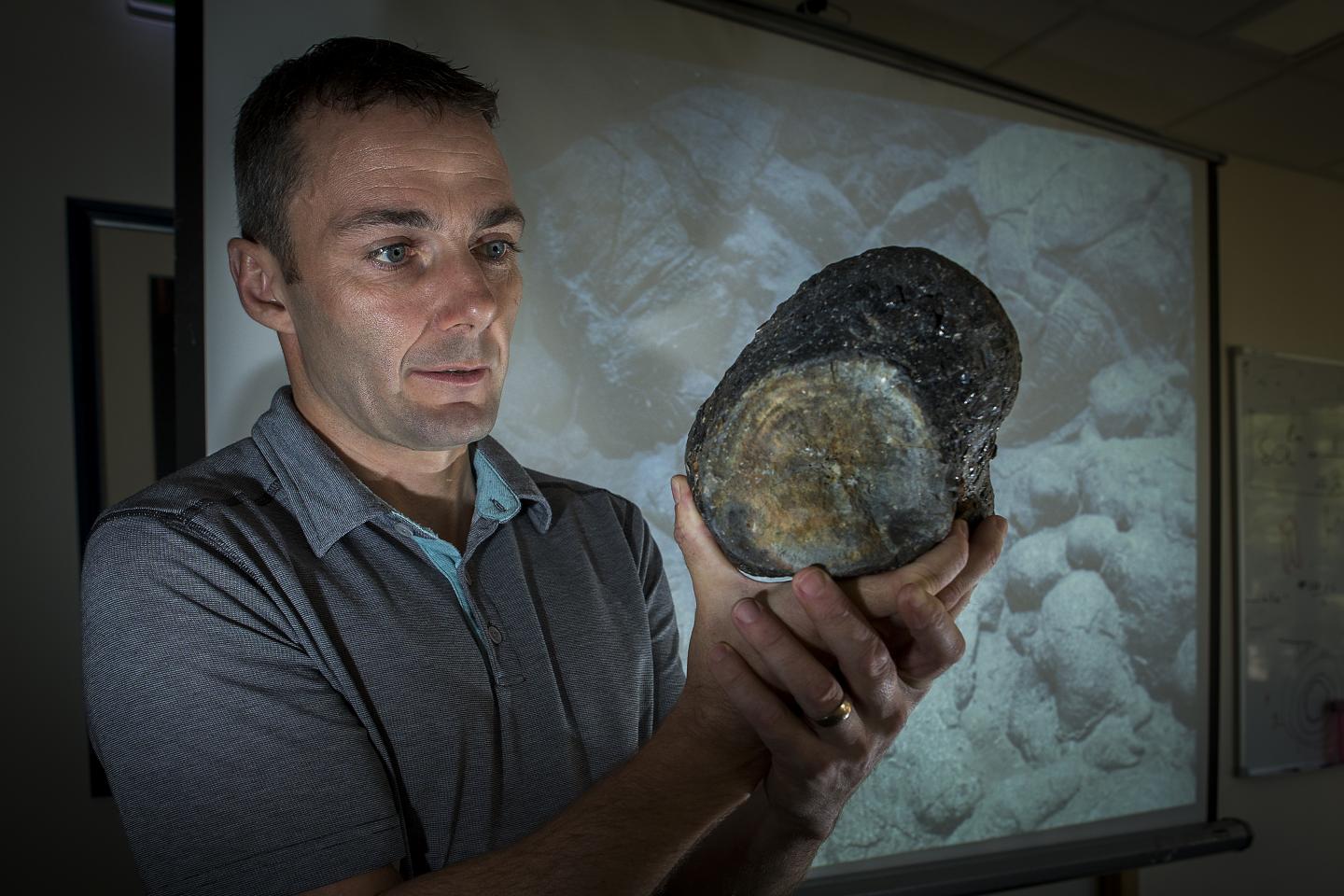
IMAGE

Credit: Stuart Hay, ANU

A new study led by The Australian National University (ANU) has found seawater cycles throughout the Earth's interior down to 2,900km, much deeper than previously thought, reopening questions about how the atmosphere and oceans formed.

A popular theory is that the atmosphere and oceans formed by releasing water and gases from the Earth's mantle through volcanic activity during the planet's first 100 million years.

But lead researcher Dr Mark Kendrick from ANU said the new study provided evidence to question this theory.

"Our findings make alternative theories for the origin of the atmosphere and oceans equally plausible, such as icy comets or meteorites bringing water to the Earth," said Dr Kendrick from the ANU Research School of Earth Sciences.

Seawater is introduced into the Earth's interior when two tectonic plates converge and one plate is pushed underneath the other into the mantle.

The study has overturned the notion that seawater only makes it about 100km into the mantle before it is returned to the Earth's surface through volcanic arcs, such as those forming the Pacific Ring of Fire that runs through the western America's, Japan and Tonga.

The team analysed samples of volcanic glass from the Atlantic, Pacific and Indian oceans that contained traces of seawater that had been deeply cycled throughout Earth's interior.

"The combination of water and halogens found in the volcanic glasses enables us to preclude local seawater contamination and conclusively prove the water in the samples was derived from the mantle," Dr Kendrick said.

###

ANU collaborated on the study with the University of Tasmania, Institut Universitaire Europeen de la Mer in France, the GEOMAR Helmholtz Centre for Ocean Research Kiel in Germany, and the University of California Santa Barbara and the University of Florida in the United States.

The study is published in Nature Geoscience.

To arrange interviews, contact Will Wright from ANU media on +612 6125 7979, +61 478 337 740 or [email protected]

Media Contact

Will Wright
[email protected]
61-261-257-979
@ANUmedia

http://www.anu.edu.au/media

############

Story Source: Materials provided by Scienmag

Share12Tweet8Share2ShareShareShare2

Related Posts

Innovative Tool Advances Research on Essential Proteins — Biology

Innovative Tool Advances Research on Essential Proteins

June 15, 2026

How Exposure to Gun Violence Fuels Racial Health Disparities

June 15, 2026

New Research Unveils Innovative EHR-Based Marker to Predict At-Risk Transplant Patients and Lower Organ Rejection Rates

June 15, 2026

Tracking HIV in Communities Through Wastewater Analysis: A New Scientific Approach

June 15, 2026
Please login to join discussion

POPULAR NEWS

  • ESMO 2025: mRNA COVID Vaccines Enhance Efficacy of Cancer Immunotherapy

    325 shares
    Share 130 Tweet 81
  • Saying Goodbye to PGY-6: Pediatric Fellowship Realities

    100 shares
    Share 40 Tweet 25
  • Multi-Hospital Study Reveals Long Covid Burden Is Twice as High as Current Estimates

    91 shares
    Share 36 Tweet 23
  • Detection of EDCs in Breast Milk and Infant Urine Up to Six Months Highlights Early Exposure Risks

    74 shares
    Share 30 Tweet 19

About

We bring you the latest biotechnology news from best research centers and universities around the world. Check our website.

Follow us

Recent News

Innovative Tool Advances Research on Essential Proteins

How Exposure to Gun Violence Fuels Racial Health Disparities

New Research Unveils Innovative EHR-Based Marker to Predict At-Risk Transplant Patients and Lower Organ Rejection Rates

Subscribe to Blog via Email

Enter your email address to subscribe to this blog and receive notifications of new posts by email.

Join 82 other subscribers
  • Contact Us

Bioengineer.org © Copyright 2023 All Rights Reserved.

Welcome Back!

Login to your account below

Forgotten Password?

Retrieve your password

Please enter your username or email address to reset your password.

Log In
No Result
View All Result
  • Homepages
    • Home Page 1
    • Home Page 2
  • News
  • National
  • Business
  • Health
  • Lifestyle
  • Science

Bioengineer.org © Copyright 2023 All Rights Reserved.