Credit: UC San Diego Health
Pharmaceutical interventions are routinely prescribed to help people quit smoking. However, a new study by University of California San Diego School of Medicine researchers suggests that, despite promising results in clinical trials, smoking cessation drugs alone may not be improving the chances of successful quitting among smokers in general.
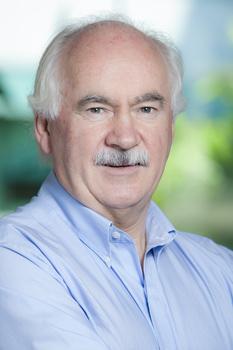
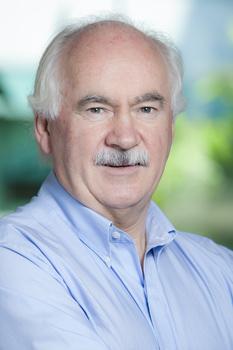
"Thirty four percent of people who are trying to quit smoking use pharmaceutical aids and yet most are not successful," said senior study author John P. Pierce, PhD, Professor Emeritus in the Department of Family Medicine and Public Health at UC San Diego School of Medicine and Moores Cancer Center. "The results of randomized trials that tested these interventional drugs showed the promise of doubling cessation rates, but that has not translated into the real world."
The study, published online in the Journal of the National Cancer Institute on December 21, assessed the effectiveness of three first-line medications recommended by clinical practice guidelines: varenicline, bupropion and nicotine replacement therapy (patch). The data was collected from the Current Population Survey-Tobacco Use Supplement — a U.S. Census survey of adults 18 years or older conducted to obtain information about the country's use of tobacco products.
Studying two cohorts surveyed approximately one decade apart, the team used a method known as "matching" to help balance comparison groups on factors that could lead individuals to be more likely to use a cessation aid but simultaneously make it more difficult for them to quit. For example, one factor was the amount of cigarettes someone regularly consumed.
"In these analyses, matching helped reduce bias," said first author Eric Leas, PhD, who conducted the research while a graduate student researcher at UC San Diego and is now a postdoctoral scholar at the Stanford University School of Medicine. "Still, we found no evidence that the pharmaceutical cessation aids that we assessed improved the chances of successfully quitting. This was both surprising, given the promise of smoking cessation seen in randomized trials, and disappointing because of the need for interventions to help smokers quit."
In the findings, the researchers point to the use of intensive behavioral counseling in combination with pharmaceutical aids as a factor that may have contributed to an increase in smoking cessation rates during clinical trials.
Prior research that studied the effect of free behavioral counseling offered by phone has shown improvement in smoking cessation rates when combined with pharmaceutical interventions.
"Smokers who are committed to quitting and want to use a pharmaceutical aid should also enroll in a program that could help them track their progress and support them in their attempt," said Leas.
Many states offer free behavioral counseling over the phone, including in California. The California Smokers' Helpline, operated by UC San Diego Moores Cancer Center, offers counselors who are fluent in the six most commonly spoken languages in California. Smokers can call 1-800-NO-BUTTS.
"Evidence is pointing to an important role of behavioral counseling when prescribing pharmaceutical aids," said Pierce. "If the products were approved with counseling we may have better success rates. As it is, less than 2 percent of smokers who use a pharmaceutical aid are using any behavioral counseling. In both of these longitudinal studies, this was a recipe for relapse to smoking."
Co-authors include: Tarik Benmarhnia, Martha M. White, Madison L. Noble, Dennis R. Trinidad and David R. Strong, all at UC San Diego.
###
###
Pharmaceutical interventions are routinely prescribed to help people quit smoking. However, a new study by University of California San Diego School of Medicine researchers suggests that, despite promising results in clinical trials, smoking cessation drugs alone may not be improving the chances of successful quitting among smokers in general.
"Thirty four percent of people who are trying to quit smoking use pharmaceutical aids and yet most are not successful," said senior study author John P. Pierce, PhD, Professor Emeritus in the Department of Family Medicine and Public Health at UC San Diego School of Medicine and Moores Cancer Center. "The results of randomized trials that tested these interventional drugs showed the promise of doubling cessation rates, but that has not translated into the real world."
The study, published online in the Journal of the National Cancer Institute on December 21, assessed the effectiveness of three first-line medications recommended by clinical practice guidelines: varenicline, bupropion and nicotine replacement therapy (patch). The data was collected from the Current Population Survey-Tobacco Use Supplement — a U.S. Census survey of adults 18 years or older conducted to obtain information about the country's use of tobacco products.
Studying two cohorts surveyed approximately one decade apart, the team used a method known as "matching" to help balance comparison groups on factors that could lead individuals to be more likely to use a cessation aid but simultaneously make it more difficult for them to quit. For example, one factor was the amount of cigarettes someone regularly consumed.
"In these analyses, matching helped reduce bias," said first author Eric Leas, PhD, who conducted the research while a graduate student researcher at UC San Diego and is now a postdoctoral scholar at the Stanford University School of Medicine. "Still, we found no evidence that the pharmaceutical cessation aids that we assessed improved the chances of successfully quitting. This was both surprising, given the promise of smoking cessation seen in randomized trials, and disappointing because of the need for interventions to help smokers quit."
In the findings, the researchers point to the use of intensive behavioral counseling in combination with pharmaceutical aids as a factor that may have contributed to an increase in smoking cessation rates during clinical trials.
Prior research that studied the effect of free behavioral counseling offered by phone has shown improvement in smoking cessation rates when combined with pharmaceutical interventions.
"Smokers who are committed to quitting and want to use a pharmaceutical aid should also enroll in a program that could help them track their progress and support them in their attempt," said Leas.
Many states offer free behavioral counseling over the phone, including in California. The California Smokers' Helpline, operated by UC San Diego Moores Cancer Center, offers counselors who are fluent in the six most commonly spoken languages in California. Smokers can call 1-800-NO-BUTTS.
"Evidence is pointing to an important role of behavioral counseling when prescribing pharmaceutical aids," said Pierce. "If the products were approved with counseling we may have better success rates. As it is, less than 2 percent of smokers who use a pharmaceutical aid are using any behavioral counseling. In both of these longitudinal studies, this was a recipe for relapse to smoking."
###
Co-authors include: Tarik Benmarhnia, Martha M. White, Madison L. Noble, Dennis R. Trinidad and David R. Strong, all at UC San Diego.
Media Contact
Yadira Galindo
[email protected]
858-249-0456
@UCSanDiego
http://www.ucsd.edu