• HOME
  • NEWS
  • EXPLORE
    • CAREER
      • Companies
      • Jobs
    • EVENTS
    • iGEM
      • News
      • Team
    • PHOTOS
    • VIDEO
    • WIKI
  • BLOG
  • COMMUNITY
    • FACEBOOK
    • INSTAGRAM
    • TWITTER
Tuesday, September 1, 2026
BIOENGINEER.ORG
No Result
View All Result
  • Login
  • HOME
  • NEWS
  • EXPLORE
    • CAREER
      • Companies
      • Jobs
        • Lecturer
        • PhD Studentship
        • Postdoc
        • Research Assistant
    • EVENTS
    • iGEM
      • News
      • Team
    • PHOTOS
    • VIDEO
    • WIKI
  • BLOG
  • COMMUNITY
    • FACEBOOK
    • INSTAGRAM
    • TWITTER
  • HOME
  • NEWS
  • EXPLORE
    • CAREER
      • Companies
      • Jobs
        • Lecturer
        • PhD Studentship
        • Postdoc
        • Research Assistant
    • EVENTS
    • iGEM
      • News
      • Team
    • PHOTOS
    • VIDEO
    • WIKI
  • BLOG
  • COMMUNITY
    • FACEBOOK
    • INSTAGRAM
    • TWITTER
No Result
View All Result
Bioengineer.org
No Result
View All Result
Home NEWS Science News

Study from School of Neuroscience urges more research into sex differences in depression

Bioengineer by Bioengineer
August 1, 2023
in Science News
Reading Time: 3 mins read
0
Georgia Hodes, Dawson Krupp
Share on FacebookShare on TwitterShare on LinkedinShare on RedditShare on Telegram

In 2016, recognizing that lack of research in female animals was hampering the success of treatments for mood disorders, the National Institutes of Health (NIH) changed its policy for basic research to include sex as a biological variable for basic research, a move that triggered an explosion of research into sex differences.
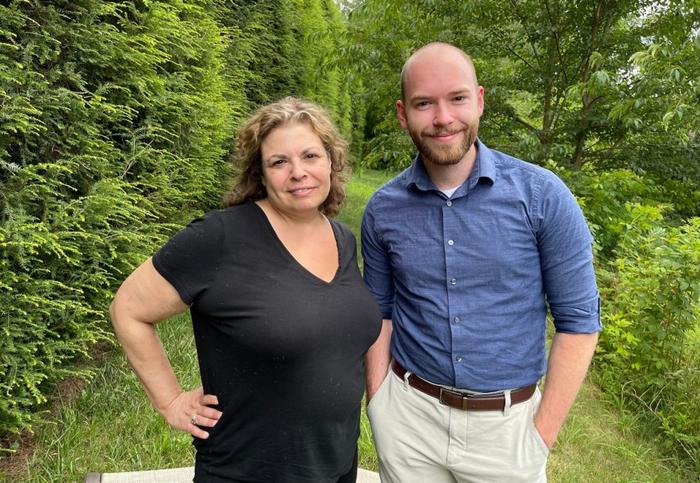
Georgia Hodes, Dawson Krupp

Credit: Virginia Tech

In 2016, recognizing that lack of research in female animals was hampering the success of treatments for mood disorders, the National Institutes of Health (NIH) changed its policy for basic research to include sex as a biological variable for basic research, a move that triggered an explosion of research into sex differences.

“Building a strong unbiased foundation of literature will help uncover more effective and sex-specific biomarkers for depression onset and target better treatment,” said Georgia Hodes, assistant professor in the School of Neuroscience, part of the Virginia Tech College of Science.

Hodes and co-author Dawson Kropp, a Ph.D. student in neuroscience, reviewed some notable findings since the NIH mandate in an article recently published in the journal Nature Mental Health.

The following are among them:

  • Compared to men, women have twice the risk of developing depression and anxiety disorders, experience their first episode of depression earlier, and have more cumulative episodes over their lifespan.  
  • Men are potentially underdiagnosed with major depressive disorder (MDD) because of sex differences in symptoms and they are more likely to externalize their symptoms, demonstrate anger or violence, and experience comorbid drug- or alcohol-use disorder.
  • Various cell types in the brain have baseline and stress-induced sex differences. For example, microglia, the immune cells of the central nervous system, express baseline differences in men and women across development and in adulthood, which may contribute to sex differences across psychiatric disorders.
  • Men seem to have greater vulnerability to prenatal or early-life stress exposure, resulting in stress-associated changes in physiology and behavior during the juvenile period. Changes in female behavior may not manifest until after puberty.
  • Some tests with mice show that chronic variable stress — recurrent physical, psychological, and social stress that is unpredictable and unavoidable — can produce behavioral responses in women after only six days. A minimum of 21 days is needed to produce the same behavioral responses for those tests in men.

In addition to discussing the research, the article also addresses the need for pharmaceutical companies to recognize that depression is a heterogeneous disorder and that one pill will not fit all.

In fact, Hodes noted, the issue of women being under researched first garnered public attention when eight out of 10 drugs pulled off the market by the Food and Drug Administration from 1997-2001 were found to pose greater risks of adverse effects to women than to men.

“At a time when other fields of medicine are moving into individualized treatments, taking sex into account should be a no brainer when it comes to mental health,” Hodes said.

Hodes and Kropp propose that future studies go beyond whether there are sex differences — the question researchers have focused on since 2016 — and start asking why there are sex differences and how these differences can help with developing personalized therapeutics.

The authors also address the need to include transgender and intersex populations in studies to better understand how they cluster with the population at large. This research would include investigating how long-term hormonal contraceptive use or hormonal treatments taken by transgender individuals impact mental and physical health.

“If we only use cisgender populations in our clinical studies, we are repeating the same mistakes made by past researchers who included only men,” said Hodes.

Related stories:

Virginia Tech neuroscientist offers insight into how loneliness can affect health

Virginia Tech researchers among the most cited in the world


Journal

Nature Mental Health

Article Publication Date

10-Jul-2023

Share12Tweet8Share2ShareShareShare2

Related Posts

β-Sitosterol from Ipomoea carnea Jacq. As a promising anti-inflammatory agent: Evidence from in silico modeling and in vitro validation

β-Sitosterol from Ipomoea carnea Jacq. As a promising anti-inflammatory agent: Evidence from in silico modeling and in vitro validation

August 31, 2026
Design, fabrication and characterization of a wearable Fiber Bragg grating sensor for cardiorespiratory monitoring using finger plethysmography

Design, fabrication and characterization of a wearable Fiber Bragg grating sensor for cardiorespiratory monitoring using finger plethysmography

August 31, 2026

KAIST opens the era of industrial-scale microbial foods, proposing growth strategies for the next-generation protein market

August 31, 2026

Virologist awarded $2 million NIH grant to investigate how virus-infected cells live and die

August 31, 2026

POPULAR NEWS

  • β-Sitosterol from Ipomoea carnea Jacq. As a promising anti-inflammatory agent: Evidence from in silico modeling and in vitro validation

    29 shares
    Share 12 Tweet 7
  • Design, fabrication and characterization of a wearable Fiber Bragg grating sensor for cardiorespiratory monitoring using finger plethysmography

    29 shares
    Share 12 Tweet 7
  • KAIST opens the era of industrial-scale microbial foods, proposing growth strategies for the next-generation protein market

    29 shares
    Share 12 Tweet 7
  • Virologist awarded $2 million NIH grant to investigate how virus-infected cells live and die

    29 shares
    Share 12 Tweet 7

About

We bring you the latest biotechnology news from best research centers and universities around the world. Check our website.

Follow us

Recent News

β-Sitosterol from Ipomoea carnea Jacq. As a promising anti-inflammatory agent: Evidence from in silico modeling and in vitro validation

Design, fabrication and characterization of a wearable Fiber Bragg grating sensor for cardiorespiratory monitoring using finger plethysmography

KAIST opens the era of industrial-scale microbial foods, proposing growth strategies for the next-generation protein market

Subscribe to Blog via Email

Success! An email was just sent to confirm your subscription. Please find the email now and click 'Confirm' to start subscribing.

Join 85 other subscribers
  • Contact Us

Bioengineer.org © Copyright 2023 All Rights Reserved.

Welcome Back!

Login to your account below

Forgotten Password?

Retrieve your password

Please enter your username or email address to reset your password.

Log In
No Result
View All Result
  • Homepages
    • Home Page 1
    • Home Page 2
  • News
  • National
  • Business
  • Health
  • Lifestyle
  • Science

Bioengineer.org © Copyright 2023 All Rights Reserved.