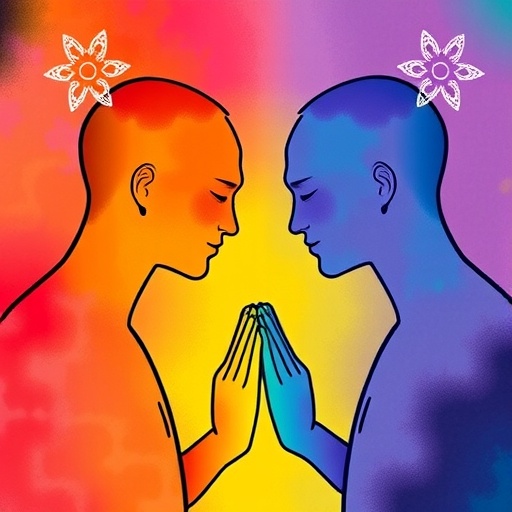
A groundbreaking study led by McGill University reveals that non-affirming religious doctrines can foster internalized homophobia and transphobia among LGBTQIA+ individuals of faith, significantly jeopardizing their mental health. This research synthesizes data from 55 quantitative studies encompassing over half a million respondents globally, demonstrating that exposure to non-affirming religious messages correlates with a range of severe mental health challenges, including substance abuse and suicidal ideation.
While religiosity and spirituality are widely documented to have beneficial effects on mental well-being, this meta-analysis highlights a complex and contradictory landscape for LGBTQIA+ people who identify with religious communities. The internalization of negative religious teachings about sexual orientation and gender identity often compels queer individuals to adopt harmful self-perceptions, striving for acceptance and divine love at the expense of their psychological health.
Kevin Prada, a PhD candidate in Counselling Psychology and principal investigator, explains that LGBTQIA+ people often wrestle with conflicting pressures: the desire to belong within faith communities juxtaposed against doctrines that negate or condemn their identities. This tension fosters internal conflicts that manifest as self-hatred, eroding the protective benefits spirituality typically affords.
The distinction between spirituality and religiosity becomes crucial in understanding these dynamics. Spirituality refers to a personal, internal connection to a higher power or greater existential meaning, often associated with a sense of purpose and belonging. Religiosity, in contrast, encompasses external observances such as religious rituals, communal worship, and formal adherence to doctrine. For many LGBTQIA+ individuals, religion’s social and institutional structures may be sites of alienation, despite potential personal spiritual connections.
The study underscores that spirituality can still be a source of resilience and meaning for LGBTQIA+ people, separate from organized religion. For some, leaving or transforming their religious contexts—what Prada terms “queering” non-affirming faith traditions—enables them to reconcile their spiritual identity with their sexuality or gender, fostering congruence and healing.
Moreover, this systematic review identifies mindfulness as a promising avenue for LGBTQIA+ individuals disengaging from non-affirming religious groups. Mindfulness practices have been linked with psychological resilience and can serve as a surrogate for spirituality’s protective effects, offering mental health benefits through enhanced self-awareness and emotional regulation.
The research team, including Professor Bassam Khoury of McGill’s Mindfulness Research Lab, aims to further develop mindfulness-based interventions tailored to the unique mental health needs of LGBTQIA+ people grappling with religious rejection. These interventions could provide vital therapeutic alternatives, helping individuals navigate identity conflicts and reduce internalized stigma.
The study also critiques the data landscape, noting the underrepresentation of Two Spirit individuals and other marginalized identities within LGBTQIA+ communities in quantitative research. To address this gap, an upcoming qualitative review is planned to incorporate richer, more intersectional perspectives and deepen understanding of diverse lived experiences.
This comprehensive examination of 55 quantitative studies not only illuminates the detrimental impact of non-affirming religion on LGBTQIA+ mental health but also offers a nuanced view of spirituality’s enduring potential. It challenges simplified narratives that uniformly cast religion as either harmful or helpful and instead calls for greater sensitivity to context, community, and individual agency.
The implications for mental health practitioners, religious leaders, and policymakers are profound. Affirming approaches that validate LGBTQIA+ identities within faith contexts can mitigate internalized stigma and promote psychological well-being. Conversely, failing to address non-affirming environments risks perpetuating cycles of harm and alienation.
McGill University’s work stands at the intersection of psychology, sociology, and religious studies, contributing critical empirical evidence to ongoing debates about faith and LGBTQIA+ inclusion. As societies worldwide reckon with these complex intersections, research like Prada’s offers a data-driven foundation for compassionate, informed dialogue and action.
Ultimately, this study advocates for an expansive understanding of spirituality—one that transcends institutional boundaries and centers individual dignity. By doing so, it opens pathways toward healing, belonging, and mental health equity for LGBTQIA+ people of faith everywhere.
Subject of Research: People
Article Title: Called by Name: A Systematic Review of the Quantitative Literature on the Relationship Between Religiosity/Spirituality and Mental Health for LGBTQIA+ People-of-Faith
News Publication Date: 27-Jan-2026
Web References: http://dx.doi.org/10.1080/00918369.2026.2614619
References:
“Called by Name: A Systematic Review of the Quantitative Literature on the Relationship Between Religiosity/Spirituality and Mental Health for LGBTQIA+ People-of-Faith,” Kevin Prada, Naomie Lemyre, Bassam Khoury, Journal of Homosexuality.
Image Credits: Not provided
Keywords: LGBTQIA+, mental health, spirituality, religiosity, internalized homophobia, internalized transphobia, mindfulness, faith communities, queer identity, psychological resilience, Two Spirit, non-affirming religion
Tags: coping with faith-based identity conflictseffects of non-affirming religious doctrines on queer individualsimpact of transphobia on psychological well-beinginternalized homophobia in LGBTQIA+ mental healthmental health challenges from religious stigmameta-analysis of religiosity and LGBTQIA+ mental healthpsychological effects of internalized transphspirituality versus religiosity in LGBTQIA+ communitiessubstance abuse linked to religious rejection in LGBTQIA+suicidal ideation among LGBTQIA+ with non-affirming faith