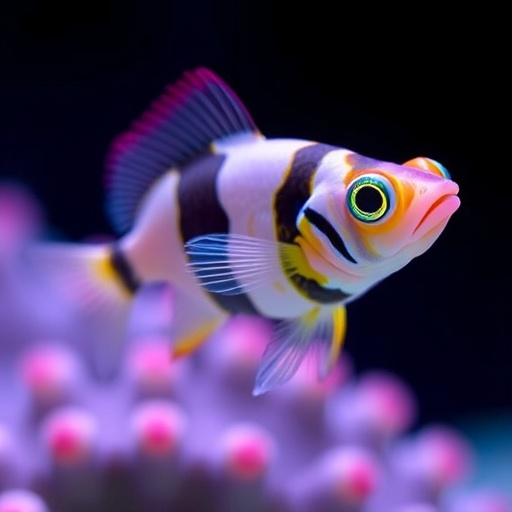
Two small freshwater fish have learned to sort unfamiliar images into visual categories, offering new evidence that the ability to generalize from examples is not confined to mammals, birds, or humans. In a study of zebrafish (Danio rerio) and redtail splitfins (Xenotoca eiseni), researchers trained the animals to distinguish between groups of abstract symbols and fish-shaped silhouettes. The fish were not merely memorizing one picture. After learning which kind of image led to a reward, they were presented with new images they had never seen before. Both species successfully learned the training tasks, but their ability to recognize the underlying categories varied with the visual material. The findings, published in Animal Cognition, strengthen the case for using teleost fish as models of animal intelligence and raise a deceptively difficult question: how does a brain decide that two unfamiliar objects belong to the same kind?
Categorization is one of the most efficient shortcuts in animal behavior. Rather than treating every object as entirely new, an animal can group things that share important features and respond to the group as a whole. A predator, for example, may benefit from distinguishing threatening shapes from harmless ones, while a foraging animal can save time by identifying food-related cues without examining every item from scratch. In psychological terms, categorization involves learning a relationship between stimuli and then generalizing that relationship to new examples. A fish that learns only that one particular image predicts food has acquired a narrow discrimination. A fish that chooses the correct response when the image changes in font, shape, or detail may have learned something broader about the category itself. That distinction is central to comparative cognition because it separates simple recognition from flexible visual learning.
The researchers focused on two species with long histories in behavioral and neurobiological research but with different evolutionary and ecological backgrounds. Zebrafish are widely used in laboratories because they are small, readily bred, and amenable to genetic and neural studies. Redtail splitfins are also established subjects in research on visual discrimination and perception. The two lineages diverged roughly 220 million years ago, according to the evolutionary estimate cited in the study, leaving substantial time for their sensory systems and behavioral strategies to evolve along different paths. Both species have previously demonstrated sophisticated visual abilities, including sensitivity to visual illusions and the capacity to perceive partially hidden or incomplete objects. Their success in those tasks made them useful candidates for testing whether fish can move beyond distinguishing individual images and instead learn visual classes.
Across three experiments, the fish faced a two-alternative forced-choice task. In practical terms, each animal was placed in an apparatus with two corridors, each marked by a different visual stimulus. One corridor contained the reinforced option, while the other represented the non-reinforced alternative. The fish had to approach a corridor and push through a flexible door to make its choice. Correct responses were followed by rewards consisting of dry food and access to female conspecifics, providing both nutritional and social or sexual motivation. The apparatus was rotated during training so that the animals could not solve the task by relying on a fixed location. The design also allowed the researchers to record not only the first decision but additional approaches, movement patterns, and the time required to reach a predefined learning criterion.
In the first two experiments, the categories were particularly abstract: the letter “G” and the number “0.” Each category was represented in multiple typefaces, including serif and sans-serif fonts. During training, fish encountered 20 stimulus pairs selected from a larger set. Once an individual achieved at least 70 percent accuracy in two consecutive sessions, it was tested with 10 new pairs using fonts it had never encountered. This arrangement was important because the images shared broad structural properties while differing in surface details. A fish could potentially solve the task by detecting a specific font or memorizing a handful of pictures, but success with the unfamiliar examples would suggest sensitivity to more general characteristics distinguishing a curved, open letter from a closed, circular numeral. The study’s third experiment extended the challenge to black-and-white silhouettes of two teleost fish species, providing visually richer and more biologically meaningful categories.
The training phase revealed that both species were capable of learning all three discriminations. In the first experiment, however, zebrafish generally needed more than twice as many trials as redtail splitfins to reach the learning criterion. The reported averages were approximately 117 trials for zebrafish and 50 for redtail splitfins. This difference did not mean that zebrafish were incapable of learning the symbols; once trained, both species performed above chance. It instead indicated that the route to acquiring the discrimination differed between species, perhaps because of variation in attention, exploration, motivation, movement, or sensitivity to the particular visual features. The researchers found no consistent evidence that one category was inherently easier to learn than the other. A statistical interaction suggested that the two species could show different preferences depending on whether “G” or “0” was the rewarded stimulus, although the follow-up comparisons did not establish a reliable difference within either species.
The more revealing test came after training, when reinforcement was removed and novel exemplars were introduced. In this phase, both doors were blocked, preventing the fish from receiving a reward for choosing either side. The animals’ choices therefore provided a measure of what they had learned rather than what they were currently being conditioned to do. The researchers inserted occasional recall trials with the familiar rewarded stimuli to maintain engagement and verify that the fish still remembered the original discrimination. According to the study’s overall findings, both species generalized their learning in some conditions, but generalization depended strongly on the stimulus features. Performance was not uniform across abstract symbols and fish silhouettes, and individual fish differed substantially in how broadly they applied what they had learned. Such variation is significant: it suggests that categorical learning is not a single, all-or-nothing ability, but a collection of strategies shaped by the animal, the task, and the perceptual structure of the stimuli.
The results fit into a broader debate about how categories are represented in the brain. One possibility is prototype-based processing, in which an animal extracts an average or typical form and judges new objects by their similarity to that internal prototype. Another is exemplar-based processing, in which the animal stores individual examples and compares new stimuli with those memories. Human learners appear capable of using both strategies, sometimes within the same task. The fish experiments cannot by themselves determine which mechanism the animals used, especially because visual categories may be solved through multiple overlapping cues. A fish might attend to the presence of an opening in “G,” the continuity of the contour, the overall area of black pigment, or a combination of features. The important point is that successful transfer to unfamiliar stimuli shows that the learned response was not tied entirely to a single physical image. Future experiments that systematically manipulate shape, orientation, contrast, and ecological relevance could help identify which visual dimensions guide the animals’ decisions.
Fish are especially valuable for this work because their brains differ markedly from those of mammals, yet they can produce comparable behavioral outcomes. Teleosts evolved from ray-finned ancestors around 250 million years ago and possess neural architectures that are fundamentally distinct from the mammalian brain. Their pallium, a major region of the telencephalon, is not organized as a mammalian neocortex, but comparative neurobiology has identified functional correspondences between broad pallial regions and structures involved in learning and decision-making in tetrapods. Similar behavior does not require identical anatomy. The ability to categorize may emerge from different neural circuits that perform related computational operations, such as extracting visual features, comparing stimuli, associating choices with consequences, and updating expectations. Evidence from other fish, including archerfish, cichlids, bamboo sharks, and rainbow trout, already points to considerable visual flexibility. The new findings place zebrafish and redtail splitfins among the increasingly diverse fish models for investigating how generalization evolves.
The study also carries a practical warning for animal cognition research. A failure to generalize does not necessarily demonstrate an absence of categorization; it may reflect an unsuitable stimulus set, an overly difficult transformation, differences in motivation, or a movement strategy that obscures the animal’s visual choice. Conversely, above-chance performance does not automatically reveal whether the animal formed a human-like concept or relied on a simpler perceptual rule. By comparing two species across several stimulus types and by measuring both first choices and repeated approaches, the researchers provide a framework for teasing apart these possibilities. Their conclusion is not that fish see the world exactly as people do, but that their visual learning can be flexible, selective, and individually variable. In an era when zebrafish are increasingly used to study the biological foundations of behavior, recognizing this complexity may make them more informative models—and may force researchers to rethink how much intelligence can be hidden behind a pair of apparently simple eyes.
Subject of Research: Visual categorical learning and generalization in zebrafish (Danio rerio) and redtail splitfin (Xenotoca eiseni).
Subject of Research: Biology
Article Title: Exploring visual categorical learning in teleost fish Danio rerio and Xenotoca eiseni
Article References: Sovrano, V. A., Truppa, V., Potrich, D., Job, R., & Sulpizio, S. (2026). Exploring visual categorical learning in teleost fish Danio rerio and Xenotoca eiseni. Animal Cognition, 29(1), Article 30. https://doi.org/10.1007/s10071-025-02037-x
Image Credits: AI Generated
DOI: 10.1007/s10071-025-02037-x
Keywords: animal cognition, visual categorization, categorical learning, zebrafish, redtail splitfin, teleost fish, visual generalization, comparative psychology, fish behavior, cognitive science
Cite Scienmag News
APA MLA Chicago
Clara W. (August 28, 2026). Study Explores Visual Category Learning in Zebrafish and Xenotoca Fish. Scienmag. https://scienmag.com/study-explores-visual-category-learning-in-zebrafish-and-xenotoca-fish/
Clara W. “Study Explores Visual Category Learning in Zebrafish and Xenotoca Fish.” Scienmag, 28 August 2026, https://scienmag.com/study-explores-visual-category-learning-in-zebrafish-and-xenotoca-fish/. Accessed 28 August 2026.
Clara W. “Study Explores Visual Category Learning in Zebrafish and Xenotoca Fish.” Scienmag. August 28, 2026. https://scienmag.com/study-explores-visual-category-learning-in-zebrafish-and-xenotoca-fish/
Copy citation Download RIS
Tags: abstract symbol discrimination in fishabstract symbol recognition in fishanimal cognition researchcategorization in freshwater fishcomparative cognition across speciesfish as models of animal intelligencefish learning and memoryfish-based models of animal intelligencefreshwater fish visual recognitiongeneralization in animal learninggeneralization of visual categories in aquatic animalsimplications for understanding brain decision-makingimplications for understanding brain decision-making processesinnovative animal behavior studiesneural mechanisms of categorizationneural mechanisms of visual learning in fishrole of categorization in animal behaviorvisual category learning in zebrafish and Xenotoca fishvisual discrimination tasks in aquatic animalsvisual perception and learning in teleost fish