• HOME
  • NEWS
  • EXPLORE
    • CAREER
      • Companies
      • Jobs
    • EVENTS
    • iGEM
      • News
      • Team
    • PHOTOS
    • VIDEO
    • WIKI
  • BLOG
  • COMMUNITY
    • FACEBOOK
    • INSTAGRAM
    • TWITTER
Monday, May 11, 2026
BIOENGINEER.ORG
No Result
View All Result
  • Login
  • HOME
  • NEWS
  • EXPLORE
    • CAREER
      • Companies
      • Jobs
        • Lecturer
        • PhD Studentship
        • Postdoc
        • Research Assistant
    • EVENTS
    • iGEM
      • News
      • Team
    • PHOTOS
    • VIDEO
    • WIKI
  • BLOG
  • COMMUNITY
    • FACEBOOK
    • INSTAGRAM
    • TWITTER
  • HOME
  • NEWS
  • EXPLORE
    • CAREER
      • Companies
      • Jobs
        • Lecturer
        • PhD Studentship
        • Postdoc
        • Research Assistant
    • EVENTS
    • iGEM
      • News
      • Team
    • PHOTOS
    • VIDEO
    • WIKI
  • BLOG
  • COMMUNITY
    • FACEBOOK
    • INSTAGRAM
    • TWITTER
No Result
View All Result
Bioengineer.org
No Result
View All Result
Home NEWS Science News Chemistry

Study: Deep-ocean creatures living a ‘feast-or-famine’ existence because of energy fluxes

Bioengineer by Bioengineer
April 26, 2019
in Chemistry
Reading Time: 2 mins read
0
Share on FacebookShare on TwitterShare on LinkedinShare on RedditShare on Telegram

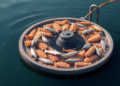
CORVALLIS, Ore. – Scientists for the first time have tracked how much energy from plants and animals at the surface of the open ocean survives as particles drop to the seafloor more than two miles below, where they say a surprisingly robust ecosystem eagerly awaits.

A new study published this week in Nature Communications documents how little energy survives. Most of it is lost in the upper water column to bacteria, which scour any particulate matter for food. But some diatoms – a particular type of single-celled algae – are sufficiently heavy that they sink like a proverbial rock after they die, reaching the seafloor before bacteria have a chance to leach out all the nutrients and energy.

These dead, but rich, diatoms arrive at the ocean floor with most of their energy supply intact and form a food web that includes tubeworms, small crabs and other small organisms, living in a “feast-or-famine” existence.

“Diatoms represent only about 3% to 5% of the phytoplankton at the surface, but provide most of the energy that makes it to the ocean floor,” noted Ricardo Letelier, an Oregon State University marine ecologist and co-author on the study. “These large diatoms have silica shells that make them heavy and allow them to sink before they become depleted.

“Energy can be a funny thing. You can eat a doughnut or a piece of coal, and they both may contain about the same amount of carbon. But you can’t get much energy from eating the coal. We usually measure the amount of carbon in organisms, not the amount of energy they provide. This study is one of the first to focus on energy and the results are surprising.”

A few years ago, the researchers, who focused their study on the North Pacific Subtropical Gyre, found another aspect that contributes to the “feast-or-famine” existence of organisms at the bottom of the ocean. There is a huge peak in diatom production during the last two weeks of August, creating a sharp spike in food production for that environment.

“You can set your calendar by it – the last couple of weeks in August is diatom season,” Letelier said. “The organisms that are two-plus miles below the surface can gorge themselves for a short period of time, and then they have to survive on not very much food for the rest of the year. Luckily, it’s a cold-water environment and thus they have a low metabolism, so they probably don’t need much.”

The study is important because there isn’t a complete understanding of how the ocean meets the energy demands for all of the organisms that live there. Phytoplankton production at the surface is a huge source, but there is still uncertainty on how close it comes to supply all the energy needed to support all the life observed in the deep regions of the ocean. Other sources include hydrothermal vents, methane seeps, ethane, and different atmospheric and terrestrial carbon sources.

“We are still very far from being able to achieve full understanding of the level of energy needs and sources,” Letelier said.

###

The research was supported by the National Science Foundation, the Gordon and Betty Moore Foundation, and the Simons Collaboration on Ocean Processes and Ecology.

Media Contact
Sean Nealon
[email protected]
Tags: Atmospheric ScienceEarth ScienceEnergy SourcesOceanography
Share12Tweet8Share2ShareShareShare2

Related Posts

Miniature Sensor Uses Light to Detect Touch — Chemistry

Miniature Sensor Uses Light to Detect Touch

May 8, 2026
Iron Minerals Determine Whether Dissolved Organic Matter Fuels Microbes or Becomes Long-Term Carbon Storage — Chemistry

Iron Minerals Determine Whether Dissolved Organic Matter Fuels Microbes or Becomes Long-Term Carbon Storage

May 8, 2026

Kate Evans Appointed Associate Lab Director for Biological and Environmental Systems Science at ORNL

May 8, 2026

Advancing Multiscale Modeling and Overcoming Operational Challenges in Autothermal COâ‚‚-to-Methanol Reactors

May 8, 2026
Please login to join discussion

POPULAR NEWS

  • Research Indicates Potential Connection Between Prenatal Medication Exposure and Elevated Autism Risk

    840 shares
    Share 336 Tweet 210
  • New Study Reveals Plants Can Detect the Sound of Rain

    727 shares
    Share 290 Tweet 181
  • Salmonella Haem Blocks Macrophages, Boosts Infection

    61 shares
    Share 24 Tweet 15
  • Breastmilk Balances E. coli and Beneficial Bacteria in Infant Gut Microbiomes

    57 shares
    Share 23 Tweet 14

About

We bring you the latest biotechnology news from best research centers and universities around the world. Check our website.

Follow us

Recent News

New Post-Hoc Analysis Explores Daily Oral Orforglipron Use in Adults Over 65 with Obesity, Regardless of Diabetes Status

Evaluating Digoxin Use in Patients with Symptomatic Rheumatic Heart Disease

Evaluating the Effectiveness and Safety of Digitalis Glycosides in Treating Heart Failure

Subscribe to Blog via Email

Enter your email address to subscribe to this blog and receive notifications of new posts by email.

Join 82 other subscribers
  • Contact Us

Bioengineer.org © Copyright 2023 All Rights Reserved.

Welcome Back!

Login to your account below

Forgotten Password?

Retrieve your password

Please enter your username or email address to reset your password.

Log In
No Result
View All Result
  • Homepages
    • Home Page 1
    • Home Page 2
  • News
  • National
  • Business
  • Health
  • Lifestyle
  • Science

Bioengineer.org © Copyright 2023 All Rights Reserved.