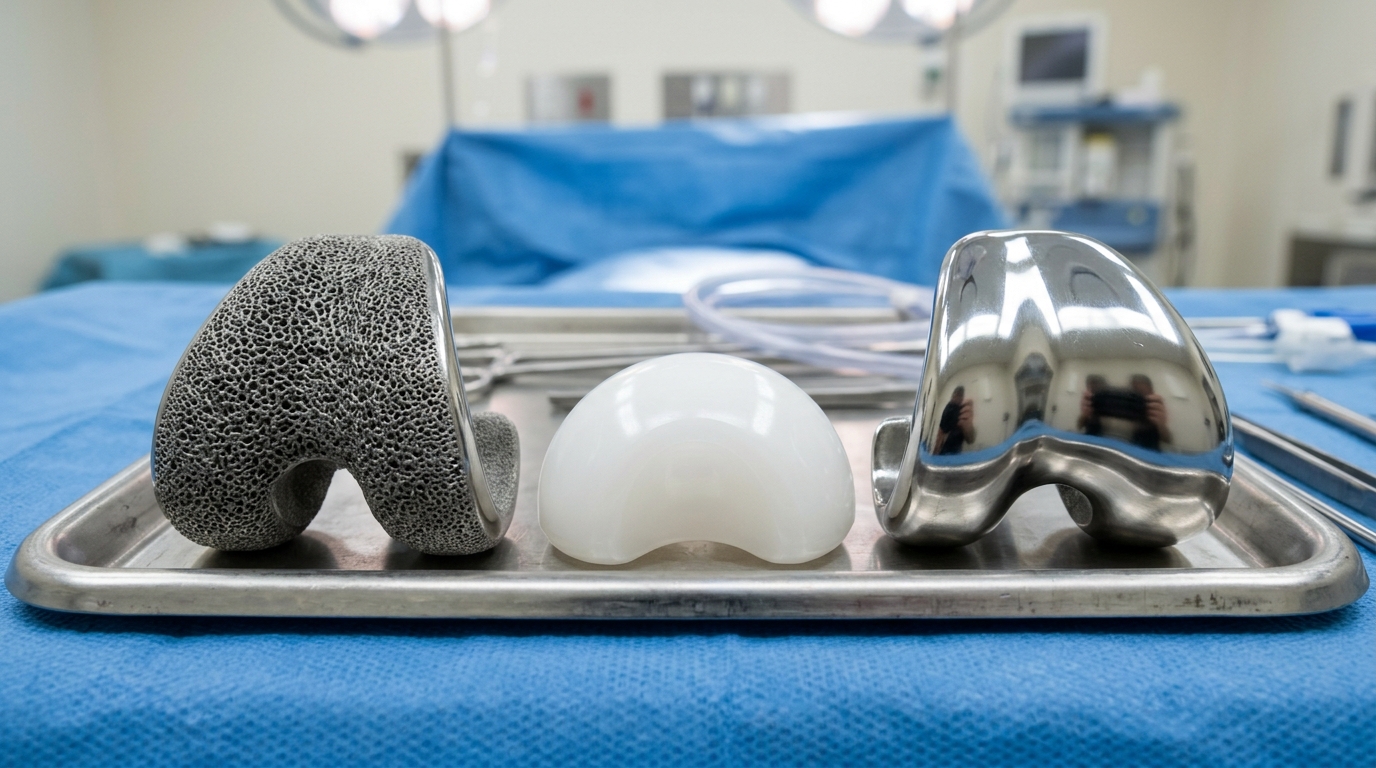
A large-scale analysis of administrative hospital records from across the United States has revealed modest differences in early perioperative complications and ninety-day readmission patterns between patients undergoing coding-defined cementless-category and cemented-category primary total knee arthroplasty. Conducted by researchers David Maman, Yaniv Steinfeld, and Yaron Berkovich and published in the journal Arthroplasty, the retrospective study investigated contemporary inpatient outcomes using data from the Healthcare Cost and Utilization Project Nationwide Readmissions Database covering the years 2020 through 2022. While cemented fixation has historically served as the conventional standard in primary knee replacement procedures, interest in cementless techniques has expanded considerably in recent years, propelled by technical enhancements in implant geometry, porous surface engineering, and evolving patient selection. However, comprehensive administrative evaluations directly comparing short-term readmission frequency and perioperative adverse events across these two fixation classifications have remained relatively limited, creating an important need for broad, real-world comparative assessments within routine orthopaedic clinical practice across modern healthcare environments nationwide.
To investigate these questions, the investigators framed their inquiry around whether coding-defined fixation selection independently correlates with distinct perioperative risk profiles and post-discharge rehospitalization trajectories following elective knee replacement. In recent years, cementless fixation designs have been adopted more widely, transitioning beyond traditional subsets of younger, highly active individuals into broader and potentially older patient populations. Despite this clinical adoption, published literature has yielded contradictory findings regarding the comparative safety of cementless versus cemented procedures, with some registry investigations reporting shorter surgical duration alongside equivalent early recovery, whereas other database studies highlighted potential elevations in early implant revisions, periprosthetic fractures, or infectious complications among selected recipient groups.
To construct a tightly controlled comparison, the investigators queried the Healthcare Cost and Utilization Project Nationwide Readmissions Database for adult patients aged eighteen years or older who underwent elective unilateral primary total knee replacement exclusively for a primary diagnosis of osteoarthritis. To ensure procedural uniformity, the study cohort was restricted to admissions where surgical intervention occurred on hospital day zero and utilized specific, commonly applied International Classification of Diseases, Tenth Revision, Procedure Coding System codes, specifically designated codes 0SRC0J9, 0SRD0J9, 0SRC0JA, and 0SRD0JA. The study design systematically excluded non-elective or urgent hospital admissions, pediatric cases, bilateral knee procedures, and cases requiring revision or reoperation during the initial hospitalization. Additionally, admissions associated with acute fractures, malignancies, active infectious processes, or documented COVID-19 infections were omitted, as were patients discharged between October and December of each study year to guarantee an uninterrupted ninety-day post-discharge monitoring window within the same calendar period.
Before statistical adjustment, the unweighted primary study population comprised 240,890 qualifying admissions, consisting of 217,750 coding-defined cemented-category procedures and 23,140 coding-defined cementless-category procedures. Recognizing substantial baseline differences between these groups—most notably regarding the utilization of robotic-assisted surgical instrumentation—the research team applied one-to-one propensity-score matching on the unweighted analytic dataset using a nearest-neighbor algorithm without replacement and a caliper specification of 0.1. The multivariable matching framework incorporated an extensive array of demographic details, clinical comorbidities, procedural variables, socioeconomic indicators such as median household income quartiles, and hospital characteristics. Following matching, the analytic cohort contained exactly 23,140 unweighted admissions in each coding-defined fixation category. Applying official database discharge weights generated corresponding weighted national estimates of 40,490 cemented-category procedures and 40,501 cementless-category procedures, successfully achieving post-match standardized mean differences below 0.10 across all modeled baseline covariates.
Evaluating the primary outcome revealed that coding-defined cementless-category knee arthroplasty was associated with a statistically significant, albeit modest, reduction in ninety-day all-cause readmission compared with cemented-category arthroplasty. Specifically, the weighted proportion of ninety-day readmission stood at 5.17 percent in the cementless cohort compared with 5.76 percent in the cemented cohort, reflecting an adjusted odds ratio of 0.89 with a 95 percent confidence interval spanning from 0.84 to 0.95 and a significance value below 0.001. Among patients who experienced subsequent rehospitalization, the average time elapsed between initial discharge and readmission was virtually identical between the groups, measuring 28.41 plus or minus 24.58 days for cementless cases and 28.67 plus or minus 24.88 days for cemented cases, demonstrating no meaningful temporal disparity in when patients required secondary hospital care.
Analysis of in-hospital complications during the index surgical admission highlighted notable divergence across specific adverse events between the two fixation categories. Coding-defined cementless arthroplasty was associated with a lower incidence of composite postoperative in-hospital complications, occurring in 13.55 percent of weighted cementless admissions compared with 15.36 percent of cemented admissions, yielding an adjusted odds ratio of 0.86 with a 95 percent confidence interval of 0.83 to 0.90. Coded blood loss anemia was similarly recorded less frequently among cementless cases, affecting 11.28 percent versus 13.13 percent in the cemented group, corresponding to an adjusted odds ratio of 0.84. However, the requirement for allogeneic blood transfusion remained comparable between groups, occurring in 1.1 percent of cementless cases and 1.0 percent of cemented cases, an association that lacked statistical significance with an odds ratio of 1.09.
In contrast to the reductions observed in coded systemic complications and blood loss anemia, coding-defined cementless arthroplasty exhibited a statistically significant elevation in the likelihood of intraoperative bone fracture. Intraoperative fractures occurred in 0.30 percent of weighted cementless-category admissions compared with 0.18 percent of cemented-category admissions, representing an adjusted odds ratio of 1.67 with a 95 percent confidence interval ranging from 1.25 to 2.23 and a p-value of 0.001.
The study also identified noticeable variations in secondary healthcare utilization among patients who required readmission within ninety days of their initial surgery. While readmission timing did not differ, readmissions following cemented-category primary procedures were characterized by significantly longer hospital stays and greater overall financial charges. The mean length of stay during readmission reached 6.22 plus or minus 8.81 days for cemented-category patients compared with 4.63 plus or minus 4.69 days for cementless-category patients. Concurrently, mean total readmission hospital charges were higher for the cemented cohort, totaling $74,985.69 plus or minus $139,172.69, compared with $61,072.91 plus or minus $72,770.30 in the cementless group. The authors cautioned, however, that these financial values reflect billed inpatient charges rather than actual negotiated reimbursement rates, post-acute care spending, or comprehensive episode-of-care financial outlays.
A critical contribution of the research involved examining the specific diagnostic causes and surgical interventions recorded during ninety-day readmission encounters. Grouped primary readmission diagnoses proved remarkably heterogeneous across both cohorts, indicating that rehospitalizations were driven by widespread medical and surgical issues rather than isolated failure of the implant construct. Diagnoses included prosthesis-related infections, surgical site wound complications, soft-tissue cellulitis, bacteremia or systemic sepsis, venous thromboembolic disorders, acute cardiopulmonary problems, gastrointestinal disorders, and urinary complications. When evaluating principal procedures performed during these readmission stays, formal knee revision, component extraction, or joint replacement operations represented only a distinct minority of interventions. A substantial proportion of readmitted patients had no major surgical procedure coded, while others underwent soft-tissue debridement, fluid management, transfusion, or general medical stabilization, reinforcing that readmission cannot serve as a direct proxy for mechanical implant loosening.
Recognizing that baseline patient physiology shifts substantially with advancing age, the authors conducted an age-centered interaction analysis to examine whether the comparative readmission risk varied across patient lifespans. Centering age at seventy years, the multivariable model demonstrated that the main association between coding-defined fixation category and ninety-day readmission was not statistically significant at exactly age seventy, displaying an odds ratio of 0.96 with a 95 percent confidence interval of 0.90 to 1.02. Nevertheless, the interaction term between fixation category and continuous age remained highly statistically significant, showing an odds ratio of 1.019 per additional year of age. Exploratory marginal modeling indicated lower readmission odds for cementless arthroplasty at age sixty, neutrality around age seventy, and inverted odds suggesting higher readmission likelihood for cementless fixation by age eighty, underscoring potential age-dependent perioperative risk profiles.
The authors thoroughly articulated several essential methodological limitations inherent to retrospective studies utilizing large administrative claims registries. Most prominently, exposure categorization relied entirely on administrative procedural billing codes, which lack granular technical details regarding implant brand, implant metallurgy, component geometry, operative instrumentation, or specific cementing techniques. Administrative data cannot distinguish fully cemented, fully cementless, or hybrid fixation arrangements, nor can they track radiographic bone ingrowth, component osseointegration, or long-term biomechanical survivorship. Furthermore, the database captures only inpatient admissions, omitting outpatient clinic visits, emergency room discharges that did not result in formal hospital admission, physical therapy recovery milestones, and patient-reported functional outcomes. Residual confounding from unmeasured clinical factors such as preoperative bone mineral density, anatomical deformity severity, patient frailty, and individual surgeon technique also could not be fully excluded.
In their concluding synthesis, the investigators underscored that while contemporary coding-defined cementless-category primary total knee arthroplasty is associated with small statistical advantages in overall ninety-day readmissions and select in-hospital medical complications, these benefits are counterbalanced by a measurable increase in the odds of intraoperative periprosthetic fracture. Because readmission reasons were overwhelmingly diverse and revision procedures were uncommon within the ninety-day window, the observed differences primarily characterize short-term inpatient administrative outcomes and resource utilization rather than definitive evidence of long-term implant performance, biological stability, or functional superiority.
Subject of Research: Comparison of 90-day readmissions and early complications following cemented versus cementless primary total knee arthroplasty
Article Title: Ninety-day readmission and early complications after coding-defined cementless-category versus cemented-category primary total knee arthroplasty
Article References: Maman, D., Steinfeld, Y., & Berkovich, Y. (2026). Ninety-day readmission and early complications after coding-defined cementless-category versus cemented-category primary total knee arthroplasty. Arthroplasty, 8(1), Article 57. https://doi.org/10.1186/s42836-026-00418-2
Image Credits: AI Generated
DOI: 10.1186/s42836-026-00418-2
Keywords: total knee arthroplasty, orthopedic surgery, cementless fixation, cemented arthroplasty, hospital readmissions, perioperative complications, Nationwide Readmissions Database, propensity score matching, Ninety-day, readmission, early, complications
News Source: Ophelia Keating. (November 8, 2026). Study Compares Readmissions and Early Complications Between Cemented and Cementless Knee Replacements. Scienmag.