• HOME
  • NEWS
  • EXPLORE
    • CAREER
      • Companies
      • Jobs
    • EVENTS
    • iGEM
      • News
      • Team
    • PHOTOS
    • VIDEO
    • WIKI
  • BLOG
  • COMMUNITY
    • FACEBOOK
    • INSTAGRAM
    • TWITTER
Wednesday, November 18, 2026
BIOENGINEER.ORG
No Result
View All Result
  • Login
  • HOME
  • NEWS
  • EXPLORE
    • CAREER
      • Companies
      • Jobs
        • Lecturer
        • PhD Studentship
        • Postdoc
        • Research Assistant
    • EVENTS
    • iGEM
      • News
      • Team
    • PHOTOS
    • VIDEO
    • WIKI
  • BLOG
  • COMMUNITY
    • FACEBOOK
    • INSTAGRAM
    • TWITTER
No Result
View All Result
Bioengineer.org
No Result
View All Result
Home NEWS Science News Technology

Strontium-90 Decay Electrons Can Stabilize and Energize Surrounding Plasma

by
November 13, 2026
in Technology
Reading Time: 2 mins read
0
Strontium-90 Decay Electrons Can Stabilize and Energize Surrounding Plasma

Strontium-90 Decay Electrons Can Stabilize and Energize Surrounding Plasma

Share on FacebookShare on TwitterShare on LinkedinShare on RedditShare on Telegram

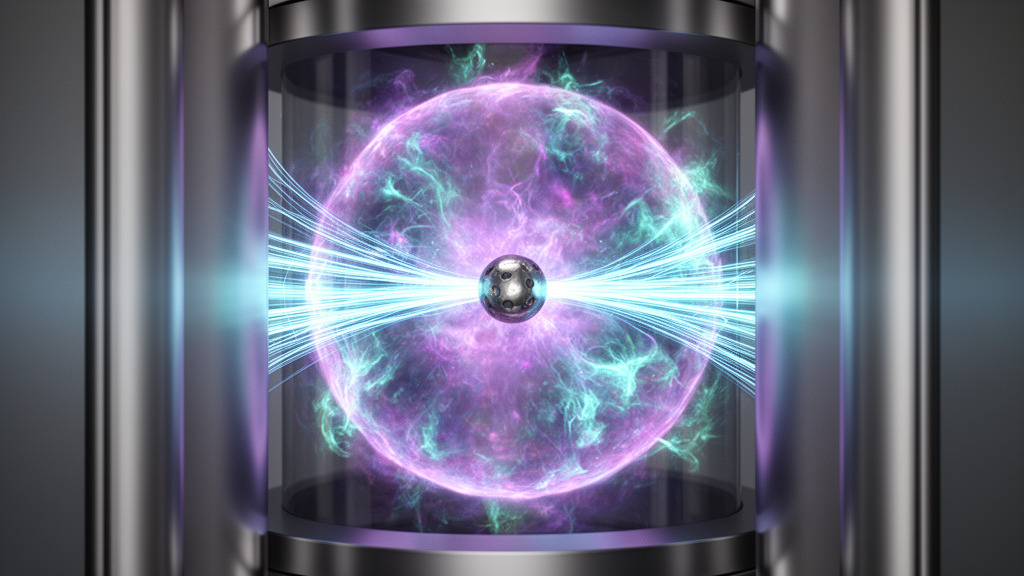
Emitted electrons generated by the radioactive decay of strontium-90 can actively contribute to the stability of a surrounding plasma, according to a study published in Applied Physics B. Researchers investigated the dynamic behavior of these decay electrons by using the time-dependent properties of laser fields to track collision and exchange processes between the emitted particles and plasma electrons. The findings demonstrate that decay products can directly interact with their environment to counter common plasma degradation pathways.

Tracking the dynamic behavior of electrons produced through radioactive nuclide decay has remained an important and challenging challenge in physics. To observe these rapid interactions, the authors applied time-dependent laser field properties to monitor the intricate collision dynamics within the system. This diagnostic approach enabled the team to track both the collision events and the exchange processes occurring between the electrons emitted during strontium-90 decay and the pre-existing electrons within the plasma medium.

The study revealed two primary mechanisms through which the emitted electrons support the plasma state. First, the emitted electrons serve as physical supplements that enter the plasma to compensate for ionized electron losses typically induced by collisions and recombination. Second, beyond replenishing lost particle populations, the emitted electrons transfer energy directly into the plasma via collisions with positive ions, helping sustain the overall energy balance of the medium.

In addition to identifying these stabilization mechanisms, the authors determined the specific conditions required for high-frequency collisions to take place between the particles. By analyzing the resulting distribution of collision probabilities, the researchers identified the precise timing when the maximum collision probability occurs during the process. Furthermore, the analysis established the exact numerical value of plasma energy attained during a very brief phase of rapid energy increase.

Subject of Research: Interference mechanism and plasma stabilization effects of strontium-90 decay electrons

Article Title: Study on the interference mechanism of strontium-90 radioactive decay

Article References: Hu, J., Fu, Y.-Z., & Liu, K. (2026). Study on the interference mechanism of strontium-90 radioactive decay. Applied Physics B, 132(5), Article 66. https://doi.org/10.1007/s00340-026-08677-2

Image Credits: AI Generated

DOI: 10.1007/s00340-026-08677-2

Keywords: strontium-90, radioactive decay, plasma physics, plasma stability, electron collisions, time-dependent laser fields, beta decay electrons, recombination, ionization dynamics, collision probability, positive ions, energy transfer, Applied Physics B, nuclear physics, atomic collisions, decay electron dynamics

News Source: Katie Riggs. (November 13, 2026). Strontium-90 Decay Electrons Can Stabilize and Energize Surrounding Plasma. Scienmag.

Tags: Applied Physics Batomic collisionsbeta decay electronscollision probabilitydecay electron dynamicselectron collisionsenergy transferionization dynamicsNuclear PhysicsPlasma physicsplasma stabilitypositive ionsradioactive decayrecombinationstrontium-90time-dependent laser fields
Share12Tweet7Share2ShareShareShare1

Related Posts

New Biomicrometric Framework Tracks Spatial and Temporal Dynamics in Migrating Cells

New Biomicrometric Framework Tracks Spatial and Temporal Dynamics in Migrating Cells

November 18, 2026
Microstructural Modeling Optimizes Electrical Resistance in Laser-Welded Aluminum Battery Interconnects

Microstructural Modeling Optimizes Electrical Resistance in Laser-Welded Aluminum Battery Interconnects

November 18, 2026

Bio-Based Benzoxazine Blended With Polyethylene Glycol Enables Self-Healing Marine Coatings

November 18, 2026

Lightweight AI Models Enable Reliable Slip Detection on Microcontroller Hardware

November 18, 2026

POPULAR NEWS

  • Review Identifies Stage-Specific Biological Bottlenecks Limiting Long-Term Cancer Metastasis Control

    Review Identifies Stage-Specific Biological Bottlenecks Limiting Long-Term Cancer Metastasis Control

    29 shares
    Share 12 Tweet 7
  • Lightweight AI Models Enable Reliable Slip Detection on Microcontroller Hardware

    29 shares
    Share 12 Tweet 7
  • Overharvesting Threatens Traditional Cosmetic Plants in South Africa’s Eastern Cape

    29 shares
    Share 12 Tweet 7
  • Distributed Latent Encoding Cuts Cloud Media Retrieval Latency Across Six Datasets

    29 shares
    Share 12 Tweet 7

About

We bring you the latest biotechnology news from best research centers and universities around the world. Check our website.

Follow us

Recent News

Review Identifies Six Strategies to Expand Nurses’ Role in Health Policy

Machine Learning Framework Prioritizes Betrixaban as Potential CepI Candidate Against Burkholderia Cenocepacia

Inappropriate Antidiuresis Identified in Patient With Pure Autonomic Failure Phenotype

Subscribe to Blog via Email

Enter your email address to subscribe to this blog and receive notifications of new posts by email.

Join 88 other subscribers
  • Contact Us

Bioengineer.org © Copyright 2023 All Rights Reserved.

Welcome Back!

Login to your account below

Forgotten Password?

Retrieve your password

Please enter your username or email address to reset your password.

Log In
No Result
View All Result
  • Homepages
    • Home Page 1
    • Home Page 2
  • News
  • National
  • Business
  • Health
  • Lifestyle
  • Science

Bioengineer.org © Copyright 2023 All Rights Reserved.