• HOME
  • NEWS
  • EXPLORE
    • CAREER
      • Companies
      • Jobs
    • EVENTS
    • iGEM
      • News
      • Team
    • PHOTOS
    • VIDEO
    • WIKI
  • BLOG
  • COMMUNITY
    • FACEBOOK
    • INSTAGRAM
    • TWITTER
Friday, July 17, 2026
BIOENGINEER.ORG
No Result
View All Result
  • Login
  • HOME
  • NEWS
  • EXPLORE
    • CAREER
      • Companies
      • Jobs
        • Lecturer
        • PhD Studentship
        • Postdoc
        • Research Assistant
    • EVENTS
    • iGEM
      • News
      • Team
    • PHOTOS
    • VIDEO
    • WIKI
  • BLOG
  • COMMUNITY
    • FACEBOOK
    • INSTAGRAM
    • TWITTER
  • HOME
  • NEWS
  • EXPLORE
    • CAREER
      • Companies
      • Jobs
        • Lecturer
        • PhD Studentship
        • Postdoc
        • Research Assistant
    • EVENTS
    • iGEM
      • News
      • Team
    • PHOTOS
    • VIDEO
    • WIKI
  • BLOG
  • COMMUNITY
    • FACEBOOK
    • INSTAGRAM
    • TWITTER
No Result
View All Result
Bioengineer.org
No Result
View All Result
Home NEWS Science News Health

Stroke rehab study uses neurostimulation to ‘rewire’ the brain, improve recovery

Bioengineer by Bioengineer
May 2, 2018
in Health
Reading Time: 2 mins read
0
Share on FacebookShare on TwitterShare on LinkedinShare on RedditShare on Telegram

Credit: The Ohio State University Wexner Medical Center

Researchers at The Ohio State University Wexner Medical Center are among the first in the world studying how a specific type of neurostimulator can improve rehabilitation for stroke patients.

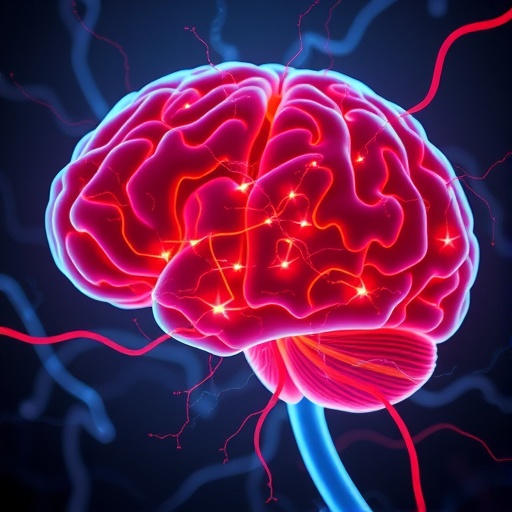
As part of the clinical trial, an electrical device called a vagus nerve stimulator is surgically implanted in the patient's chest wall. The Vivistim device, which connects to the vagus nerve in the neck, is used to "rewire" circuits in the brain associated with certain motor functions. Stroke can result in the loss of brain tissue and negatively affect various bodily functions from speech to movement, depending on the location of the stroke.

In an earlier pilot study, this approach known as Paired Vagus Nerve Stimulation was shown to benefit approximately 85 percent of the people who received the nerve stimulation, said Dr. Marcie Bockbrader, research physiatrist for the Neurological Institute at The Ohio State University Wexner Medical Center.

"This nerve stimulation is like turning on a switch, making the patient's brain more receptive to therapy," Bockbrader said. "The goal is to see if we can improve motor recovery in people who have what is, in effect, a brain pacemaker implanted in their body. The idea is to combine this brain pacing with normal rehab, and see if patients who've been through all of the other usual therapies after a stroke can get even better."

The study is recruiting patients who suffered a stroke and have been left with poor arm function as a result. The study is open to patients who have suffered a stroke at least nine months ago up to 10 years ago.

Each participant will receive three one-hour sessions of intensive physiotherapy each week for six weeks to help improve their arm function.

Half of the group will also receive an implanted vagus nerve stimulator. During rehabilitation therapy sessions, when a patient correctly performs an exercise, the therapist pushes a button to trigger the device to stimulate the vagus nerve. This neurostimulator signals the brain to remember that movement.

"We are trying to see if this neurostimulator could be used to boost the effective therapy, creating a sort of 'supercharged therapy.' We want to determine if patients can recover more quickly through the use of this stimulation," Bockbrader said.

Previous research indicates that vagus nerve stimulation causes the release of the brain's own chemicals, called neurotransmitters that will help the brain form new neural connections which might improve participant's ability to use their arm.

Traditional vagus nerve stimulation has been used in the United States and around the world to treat more than 100,000 patients for epilepsy.

###

Ohio State is among 13 institutions in the United States and 5 in the United Kingdom participating in this clinical trial. For more information, visit http://www.vnsstroketrial.com. The study is being sponsored by Dallas-based Microtransponder Inc., a medical device company that has developed the Vivistim device.

Media Contact

Drew Schaar
[email protected]
614-932-9950

Original Source

http://bit.ly/2I1aSLY
Share12Tweet7Share2ShareShareShare1

Related Posts

Scientists Discover New Pathway That Triggers Epilepsy

July 17, 2026

Scientists engineer next-generation cancer treatments by disabling tumor DNA repair

July 17, 2026

Perioperative D-dimer to albumin ratio predicts serious complications, mortality after hip fracture

July 16, 2026

LIG1 Loss Reveals Targetable Weakness Against Chemotherapy-Resistant Triple-Negative Breast Cancer

July 16, 2026
Please login to join discussion

POPULAR NEWS

  • Scientists Overcome Antimicrobial Resistance in Bacteria Linked to Cystic Fibrosis

    Scientists Overcome Antimicrobial Resistance in Bacteria Linked to Cystic Fibrosis

    42 shares
    Share 17 Tweet 11
  • Porcine Heart Transplant

    50 shares
    Share 20 Tweet 13
  • 高齢者の骨粗鬆症治療の持続性比較

    51 shares
    Share 20 Tweet 13
  • A multifaceted sensation

    49 shares
    Share 20 Tweet 12

About

We bring you the latest biotechnology news from best research centers and universities around the world. Check our website.

Follow us

Recent News

Compact genetic switch offers new potential therapies for drug-resistant epilepsy

Federal Ginseng Rules Struggle to Accurately Predict Plant Health

Experimental KRAS Vaccine Stimulates Immune Response in High-Risk Pancreatic Cancer Patients

Subscribe to Blog via Email

Enter your email address to subscribe to this blog and receive notifications of new posts by email.

Join 85 other subscribers
  • Contact Us

Bioengineer.org © Copyright 2023 All Rights Reserved.

Welcome Back!

Login to your account below

Forgotten Password?

Retrieve your password

Please enter your username or email address to reset your password.

Log In
No Result
View All Result
  • Homepages
    • Home Page 1
    • Home Page 2
  • News
  • National
  • Business
  • Health
  • Lifestyle
  • Science

Bioengineer.org © Copyright 2023 All Rights Reserved.