• HOME
  • NEWS
  • EXPLORE
    • CAREER
      • Companies
      • Jobs
    • EVENTS
    • iGEM
      • News
      • Team
    • PHOTOS
    • VIDEO
    • WIKI
  • BLOG
  • COMMUNITY
    • FACEBOOK
    • INSTAGRAM
    • TWITTER
Tuesday, October 6, 2026
BIOENGINEER.ORG
No Result
View All Result
  • Login
  • HOME
  • NEWS
  • EXPLORE
    • CAREER
      • Companies
      • Jobs
        • Lecturer
        • PhD Studentship
        • Postdoc
        • Research Assistant
    • EVENTS
    • iGEM
      • News
      • Team
    • PHOTOS
    • VIDEO
    • WIKI
  • BLOG
  • COMMUNITY
    • FACEBOOK
    • INSTAGRAM
    • TWITTER
  • HOME
  • NEWS
  • EXPLORE
    • CAREER
      • Companies
      • Jobs
        • Lecturer
        • PhD Studentship
        • Postdoc
        • Research Assistant
    • EVENTS
    • iGEM
      • News
      • Team
    • PHOTOS
    • VIDEO
    • WIKI
  • BLOG
  • COMMUNITY
    • FACEBOOK
    • INSTAGRAM
    • TWITTER
No Result
View All Result
Bioengineer.org
No Result
View All Result
Home NEWS Science News Chemistry

Straining memory leads to new computing possibilities

Bioengineer by Bioengineer
November 30, 2023
in Chemistry
Reading Time: 2 mins read
0
Phase-change memristor
Share on FacebookShare on TwitterShare on LinkedinShare on RedditShare on Telegram

By strategically straining materials that are as thin as a single layer of atoms, University of Rochester scientists have developed a new form of computing memory that is at once fast, dense, and low-power. The researchers outline their new hybrid resistive switches in a study published in Nature Electronics.
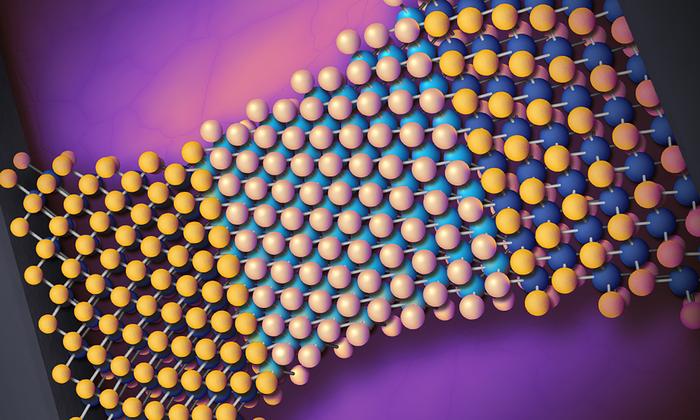
Phase-change memristor

Credit: University of Rochester illustration / Michael Osadciw

By strategically straining materials that are as thin as a single layer of atoms, University of Rochester scientists have developed a new form of computing memory that is at once fast, dense, and low-power. The researchers outline their new hybrid resistive switches in a study published in Nature Electronics.

Developed in the lab of Stephen M. Wu, an assistant professor of electrical and computer engineering and of physics, the approach marries the best qualities of two existing forms of resistive switches used for memory: memristors and phase-change materials. Both forms have been explored for their advantages over today’s most prevalent forms of memory, including dynamic random access memory (DRAM) and flash memory, but have their drawbacks.

Wu says that memristors, which operate by applying voltage to a thin filament between two electrodes, tend to suffer from a relative lack of reliability compared to other forms of memory. Meanwhile, phase-change materials, which involve selectively melting a material into either an amorphous state or a crystalline state, require too much power.

“We’ve combined the idea of a memristor and a phase-change device in a way that can go beyond the limitations of either device,” says Wu. “We’re making a two-terminal memristor device, which drives one type of crystal to another type of crystal phase. Those two crystal phases have different resistance that you can then story as memory.”

The key is leveraging 2D materials that can be strained to the point where they lie precariously between two different crystal phases and can be nudged in either direction with relatively little power.

“We engineered it by essentially just stretching the material in one direction and compressing it in another,” says Wu. “By doing that, you enhance the performance by orders of magnitude. I see a path where this could end up in home computers as a form of memory that’s ultra-fast and ultra-efficient. That could have big implications for computing in general.”

Wu and his team of graduate students conducted the experimental work and partnered with researchers from Rochester’s Department of Mechanical Engineering, including assistant professors Hesam Askari and Sobhit Singh, to identify where and how to strain the material. According to Wu, the biggest hurdle remaining to making the phase-change memristors is continuing to improve their overall reliability—but he is nonetheless encouraged by the team’s progress to date.


Journal

Nature Electronics

DOI

10.1038/s41928-023-01071-2

Article Title

Strain engineering of vertical molybdenum ditelluride phase-change memristors

Article Publication Date

23-Nov-2023

Share12Tweet8Share2ShareShareShare2

Related Posts

Laser-Driven Platform Spins Single Cells Along Any Axis in Real Time

Laser-Driven Platform Spins Single Cells Along Any Axis in Real Time

October 6, 2026
Microwave Whispers Reveal Hidden Hydrogen Bonds Between Two Industrial Liquids

Microwave Whispers Reveal Hidden Hydrogen Bonds Between Two Industrial Liquids

October 6, 2026

Chip-Scale Photonic Receiver Pushes Dual-Band Radar to Centimeter Precision

October 6, 2026

Root Compounds From a Traditional Indian Climber Show Predicted Binding to a Key Fat-Digesting Enzyme

October 6, 2026

POPULAR NEWS

  • Alloys That Shrink Their Own Grains: New PIX Mechanism Refines Metals With Heat Alone

    Alloys That Shrink Their Own Grains: New PIX Mechanism Refines Metals With Heat Alone

    29 shares
    Share 12 Tweet 7
  • Endurance Exercise Reshapes the Liver in Males and Females Through Distinct Molecular Routes

    29 shares
    Share 12 Tweet 7
  • Single Transcription Factor PU.1 Rapidly Converts Fibroblasts into Macrophage-Lineage Cells

    29 shares
    Share 12 Tweet 7
  • New Scale Measures How Ready Nurse Educators Really Are for the AI Era

    29 shares
    Share 12 Tweet 7

About

We bring you the latest biotechnology news from best research centers and universities around the world. Check our website.

Follow us

Recent News

Alloys That Shrink Their Own Grains: New PIX Mechanism Refines Metals With Heat Alone

Endurance Exercise Reshapes the Liver in Males and Females Through Distinct Molecular Routes

Single Transcription Factor PU.1 Rapidly Converts Fibroblasts into Macrophage-Lineage Cells

Subscribe to Blog via Email

Success! An email was just sent to confirm your subscription. Please find the email now and click 'Confirm' to start subscribing.

Join 85 other subscribers
  • Contact Us

Bioengineer.org © Copyright 2023 All Rights Reserved.

Welcome Back!

Login to your account below

Forgotten Password?

Retrieve your password

Please enter your username or email address to reset your password.

Log In
No Result
View All Result
  • Homepages
    • Home Page 1
    • Home Page 2
  • News
  • National
  • Business
  • Health
  • Lifestyle
  • Science

Bioengineer.org © Copyright 2023 All Rights Reserved.