In a groundbreaking study conducted at Baylor College of Medicine, researchers have revealed a sophisticated mechanism by which triple-negative breast cancer (TNBC) cells enhance their metastatic capabilities through extracellular matrix-mediated clustering. This discovery offers unprecedented insight into how aggressive breast cancer cells migrate and survive in the bloodstream, ultimately seeding tumors in distant organs—an imperative factor in cancer lethality. Metastasis remains the principal cause of death in cancer patients, underscoring the critical need for novel therapeutic strategies targeting this complex process.
Metastasis involves the dissociation of cancer cells from the primary tumor mass, followed by their navigation through the circulatory system to colonize remote tissues. Existing studies have indicated that circulating tumor cells (CTCs) more effectively give rise to secondary tumors when they traverse the vasculature as clusters rather than as isolated single cells. These clusters demonstrate increased survival rates in the stressful circulatory environment and display a heightened capacity to establish metastatic colonies. However, the molecular underpinnings facilitating cluster formation, particularly in TNBC, have remained elusive given the aggressive loss of classical cell adhesion molecules in these cancers.
Classical adherens junction proteins are typically responsible for mediating cell-to-cell adhesion, stabilizing clusters through robust intercellular connections. The conundrum arises in TNBC, where these proteins are frequently downregulated or absent, prompting the question: how do TNBC cells compensate to sustain cluster integrity? In their meticulous comparative analyses of TNBC versus non-TNBC cells, as well as metastatic versus non-metastatic breast tumors, the research team identified a critical role for components of the extracellular matrix (ECM), with a particular focus on hyaluronan (HA).
The ECM is a highly intricate and dynamic network composed principally of proteins, glycosaminoglycans, and water. It functions as both a structural scaffold and an adhesive substrate, facilitating cellular cohesion and signaling. Hyaluronan, a major glycosaminoglycan in the ECM, emerged from this comparative study as a key player in mediating TNBC cell clustering. This polysaccharide accumulates as a dense, sticky coat on the surface of TNBC cells due to the upregulated activity of hyaluronan synthase 2 (HAS2), an enzyme markedly overexpressed in these aggressive cancer cells.
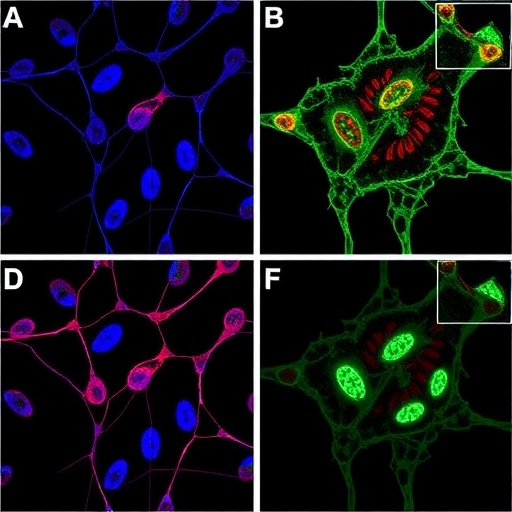
Experimental investigations utilizing mouse metastasis models and patient-derived samples revealed that the HA coat is indispensable for cluster formation. Enzymatic removal of HA from CTCs resulted in the disintegration of previously stable clusters. Furthermore, the cell surface glycoprotein CD44 was identified as a necessary partner, required for the proper presentation of hyaluronan on the cellular membrane. Abrogation of CD44 expression compromised HA localization and consequently inhibited the ability of TNBC cells to aggregate into protective clusters.
The HA-CD44 interaction sets the stage for further stabilization through desmosomal adhesion complexes, which confer mechanical resilience essential for enduring the hemodynamic forces encountered within the bloodstream. These desmosomes reinforce the cluster architecture, enabling the cancer cell conglomerates to resist shear stress-induced damage during circulatory transit. This mechanistic cascade grants TNBC clusters a formidable advantage in surviving the hostile circulatory milieu and enhances their metastatic potential.
Strikingly, the study revealed that HA-mediated clustering confers flexibility absent in the classical adherens junction-mediated clusters. Unlike rigid cell-cell junctions, the HA-based clusters demonstrate a pliability that permits transient disassembly when navigating the narrow capillary networks. Cells temporarily elongate into single-file arrangements while maintaining contact, subsequently reassembling into cohesive clusters post-capillary transit. This dynamic behavior provides a critical survival mechanism that maximizes metastatic efficiency without sacrificing cluster integrity.
Beyond physical cohesion, HA also functions as a molecular trap for immune cells, notably neutrophils, through their expression of CD44. The sequestration of neutrophils within CTC clusters provides a dual advantage: protective camouflage against immune clearance and facilitation of metastatic dissemination. This immunological interplay adds another layer of complexity to the survival strategy employed by TNBC clusters during metastasis.
The translational implications of these findings are profound. By targeting the HA-CD44 axis, novel therapeutic interventions could disrupt cluster formation or induce cluster disaggregation, thereby mitigating metastatic spread. Given that similar HA-CD44 clustering mechanisms have been observed in other malignancies such as glioblastoma, prostate, and pancreatic cancers, this approach bears wide-ranging potential for combating metastasis across diverse cancer types.
This research not only elucidates a previously unappreciated role of the extracellular matrix in cancer metastasis but also redefines the paradigm of tumor cell clustering as a malleable and actively regulated process. The identification of the HA coat as a versatile mediator of cluster formation challenges existing dogma and opens new avenues for future investigation into the biophysical and biochemical determinants of cancer dissemination.
Supported by extensive NIH funding and a collaborative team of experts at Baylor College of Medicine, this advance underscores the pivotal role of interdisciplinary research integrating molecular genetics, cell biology, and clinical oncology. As the fight against metastatic cancer continues, the elucidation of HA-mediated clustering in TNBC offers a promising target for therapeutic innovation and a beacon of hope for patients afflicted with this intractable disease.
Subject of Research: Cells
Article Title: Extracellular matrix mediates circulating tumor cell clustering in triple-negative breast cancer metastasis
News Publication Date: 6-Feb-2026
Web References: https://doi.org/10.1038/s41467-026-69007-w
Keywords: Health and medicine, Clinical medicine, Diseases and disorders, Health care, Human health, Medical specialties
Tags: Baylor College of Medicine cancer studycancer cell clustering mechanismscancer metastasis and mortalitycirculating tumor cells in metastasisextracellular matrix and cancermetastatic breast cancer survival ratesmetastatic potential of cancer cellsnovel approaches to cancer treatmentrole of adherens junction proteins in cancertherapeutic strategies for TNBCtriple-negative breast cancer researchtumor cell migration and colonization