Credit: ©UNIGE
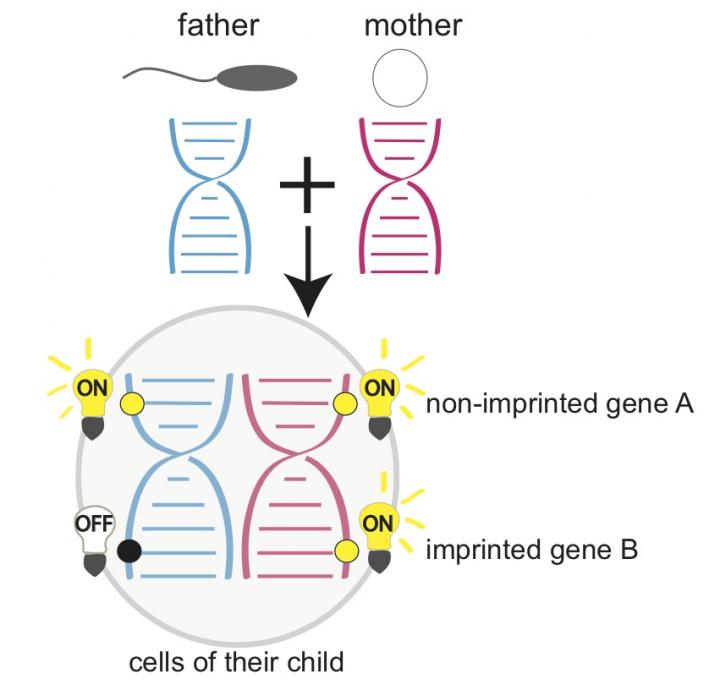
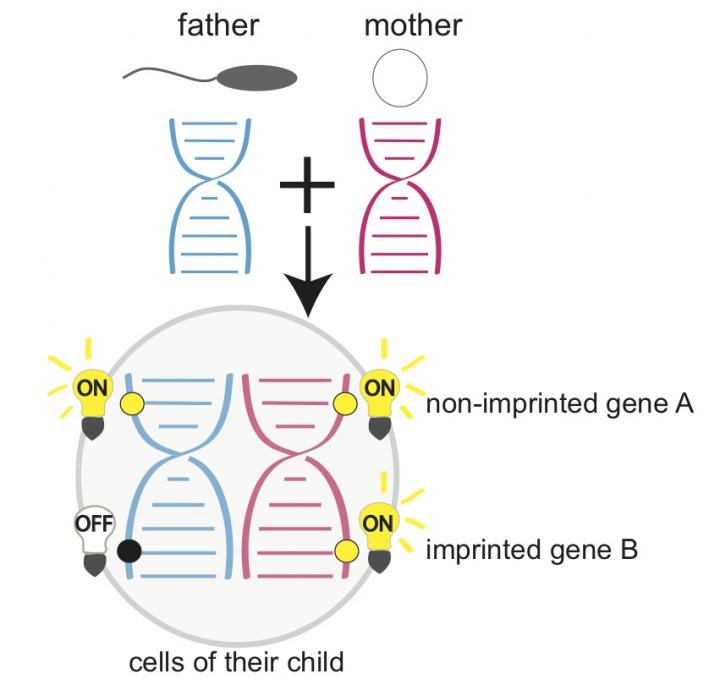
When a child is conceived, he or she receives DNA from both parents. The child's own genome thus consists of a maternal and a paternal genome. However, some genes — about 100 out of the 20,000 encoded genes– are exclusively expressed either from the maternal or from the paternal genome, with the other copy of the gene remaining silent. We know that these imprinted genes are more likely to lead to serious genetic diseases, such as Prader-Willi or Angelman syndrome. Researchers at the University of Geneva (UNIGE), Switzerland, have devised a new technique, based on a combination of biology and bioinformatics, to quickly and accurately detect the imprinted genes expressed in each of the cell types that constitute the human organs. This major breakthrough will improve our understanding and diagnosis of genetic diseases. The study can be read in full in the American Journal of Human Genetics.
The research team, led by Professor Stylianos Antonarakis from the Department of Genetic Medicine and Development in the Faculty of Medicine at UNIGE, focused on genomic imprinting. This is a set of genes exclusively expressed from the genetic code inherited either from the father (the paternal allele) or from the mother (maternal allele). Why is there so much interest in the identification of the imprinted genes? Because if a deleterious mutation affects the functional allele, it cannot be compensated by the expression of the second silent allele, likely causing a serious genetic disease. The goal, therefore, is to determine the imprinted genes in all cell types of human body tissues that are liable to cause these kind of diseases.
Until recently, millions of cells were analysed together without distinction. «We have now developed a new technique with a better resolution, known as Human Single-Cell Allele-Specific Gene Expression," explains Christelle Borel, UNIGE researcher. "The process can be used to simultaneously examine the expression of the two alleles, paternal and maternal, of all known genes in each individual cell. The method is fast and can be carried out on thousands of single cells with the utmost precision using next-generation sequencing technology." The heterogeneity of each tissue of the body is thus analysed in detail while searching for imprinted genes in disease-relevant tissue. The individual's genome is sequenced, as is the genome of both parents, in order to identify the parental origin of the alleles transcribed in the person's single cell.
Each cell is unique
Federico Santoni, first author of the study and researcher at UNIGE and HUG (Geneva University Hospitals) further explains, "We establish the profile of the allelic expression for thousands of genes in each single cell. We then process this data with a novel computational and statistical framework to identify the specific signature of each imprinted gene, enabling us to accurately record them." This new technique redefines the landscape of imprinted genes by examining all cell types, and can be applied to all tissues affected by diseases, such as cardiac and brain tissue. Moreover, the scientists have discovered novel imprinted genes and demonstrated that some were restricted to certain tissues or cell types.
This technique focuses on the specific characteristics of each individual by treating each cell as a single entity. This concept, called Single-cell Genomics, is part of an emerging field that is assuming an all-important role at UNIGE, which sees it as the future of medicine that will be personalised rather than generalised. Thanks to the technique pioneered by UNIGE researchers, it will be possible to identify new disease causing genes and to adapt a specific and targeted treatment for individual patients.
###
Media Contact
Christelle Borel
[email protected]
41-223-795-718
@UNIGEnews
http://www.unige.ch