Pharmaceutical researchers have formulated and statistically optimized immediate-release oral tablets containing ten milligrams of dapagliflozin using direct compression and response surface methodology. The investigation applied a three-level factorial experimental design to evaluate how varying quantities of crosspovidone and starch govern essential tablet performance attributes, specifically mechanical crushing strength, disintegration time, and the duration required for complete drug release. Through systematic mathematical modeling, the researchers determined that an optimized formulation comprising 22.0 milligrams of crosspovidone and 55.2 milligrams of starch achieved a tablet hardness of 3.62 kilograms per square centimeter, a disintegration time of 49.7 seconds, and one hundred percent drug release within 26.6 minutes. All experimental formulations satisfied standard pharmacopoeial quality requirements while displaying zero-order dissolution kinetics and anomalous, non-Fickian drug transport mechanisms.
Dapagliflozin is a selective sodium-glucose co-transporter-2 inhibitor utilized in the therapeutic management of type 2 diabetes mellitus, where it lowers circulating blood glucose levels through an insulin-independent mechanism by inhibiting renal glucose reabsorption in the kidneys. In addition to providing glycemic control, clinical evidence cited in the study highlights significant cardiovascular and renal protective properties associated with the drug. Because of its established therapeutic utility, dapagliflozin is routinely formulated as an immediate-release oral dosage form intended to promote rapid in vivo dissolution and prompt systemic absorption. Achieving an efficient immediate-release profile requires balancing adequate mechanical strength against rapid matrix breakdown upon contact with aqueous media, a technical challenge that depends heavily upon the specific proportions of superdisintegrants, binders, and diluents incorporated into the tablet matrix.
Traditional pharmaceutical tablet development frequently relies on empirical, trial-and-error blending strategies that can be labor-intensive, time-consuming, and insufficient for mapping complex interactions among competing excipients. To circumvent these limitations, the research team instituted a systematic Design of Experiments strategy using a three-level full factorial design coupled with response surface methodology. This quantitative approach permitted simultaneous mathematical modeling of two critical formulation factors across nine distinct experimental batches while evaluating linear, interaction, and quadratic curvature effects. By characterizing the concurrent performance of crosspovidone as a porous superdisintegrant and starch as a functional diluent and binder, the statistical protocol sought to establish reliable predictive equations, minimize the volume of experimental trials required, and identify an ideal formulation space meeting pre-compression and post-compression quality standards.
The experimental formulation design relied on pure dapagliflozin supplied by Glenmark Pharma Limited in Mumbai, India, combined with crosspovidone and starch sourced from Meditech Pharma Limited in Solan. Auxiliary tableting excipients included dicalcium phosphate as an adjustable diluent, magnesium stearate as a lubricant, and talc as a glidant, both obtained from Loba Chemie Private Limited in Bombay. Every tablet batch was engineered to contain a fixed dose of 10 milligrams of dapagliflozin, representing 6.90 percent weight-by-weight of the final solid unit. To preserve a constant overall tablet weight of 145 milligrams across all experimental formulations, the quantity of dicalcium phosphate was precisely adjusted between 10 and 60 milligrams (6.90 to 41.38 percent weight-by-weight) in inverse response to alterations in crosspovidone and starch levels, while magnesium stearate and talc were held constant at 5 milligrams each (3.45 percent weight-by-weight).
Direct compression was selected as the manufacturing method to fabricate the immediate-release units without intermediate granulation steps. The active drug substance, crosspovidone, starch, and dicalcium phosphate were accurately weighed on an analytical balance, combined uniformly for 10 to 15 minutes, and passed through a number 44 mesh sieve to guarantee blend uniformity and deagglomeration. The glidant and lubricant were subsequently introduced into the sieved mixture and gently blended for an additional 2 to 3 minutes, deliberate timing designed to avoid over-lubrication that might compromise tablet bonding or delay water penetration. The finished powder blends were compressed into core tablets using a Karnavati research and development tablet press outfitted with BB and D tooling, yielding consistent tablet batches designated for comprehensive micromeritic and post-compression testing.
The 3-squared factorial design designated the amount of crosspovidone (coded as factor X1) and the amount of starch (coded as factor X2) as independent variables evaluated at three distinct levels: low (-1), intermediate (0), and high (+1). For crosspovidone, the investigated masses corresponded to 15 milligrams, 20 milligrams, and 25 milligrams, which represented 10.34 percent, 13.79 percent, and 17.24 percent of the tablet weight. Starch was tested at 50 milligrams, 75 milligrams, and 100 milligrams, corresponding to 34.48 percent, 51.72 percent, and 68.97 percent weight-by-weight. The three measured dependent responses consisted of tablet crushing hardness (Y1) expressed in kilograms per square centimeter, disintegration time in acidic buffer (Y2) recorded in seconds, and the total duration required to achieve one hundred percent in vitro active ingredient release (Y3) expressed in minutes.
Prior to tableting, the micromeritic flow properties of all nine experimental powder blends were systematically profiled to ensure acceptable processability during direct compression. Bulk density and tapped density determinations confirmed favorable packing characteristics, while angle of repose measurements remained consistently below 30 degrees for all batches, demonstrating satisfactory to excellent powder fluidity. Furthermore, Carr’s compressibility index stayed below 15 percent and Hausner’s ratio values remained beneath 1.25 across all formulations, signifying low interparticulate cohesion and dependable flow into the die cavity. One-way analysis of variance confirmed that differences in flow properties among the nine formulations were not statistically significant (p > 0.05), demonstrating that varying excipient proportions did not disrupt uniform powder transfer or die filling during high-speed compression.
Comprehensive post-compression testing verified that every prepared formulation satisfied established pharmacopoeial quality standards. Tablet thickness remained uniform across batches, ranging from 1.2 ± 0.2 to 1.5 ± 0.1 millimeters, and weight variation testing confirmed consistent die filling throughout manufacturing. Chemical assay showed drug content values within the acceptable range of 95 to 105 percent, demonstrating homogenous active drug dispersion. Mechanical integrity was verified through Roche friability testing operated at 25 revolutions per minute for four minutes (100 total rotations), where tablet weight loss remained below 0.4 percent for all formulations, well beneath the official one percent threshold. Diametrical crushing strength measured across ten randomly sampled tablets per formulation using a Monsanto hardness tester varied from 3.5 ± 0.1 to 4.9 ± 0.6 kilograms per square centimeter, with one-way ANOVA showing that hardness differences among batches were statistically significant (p < 0.05).
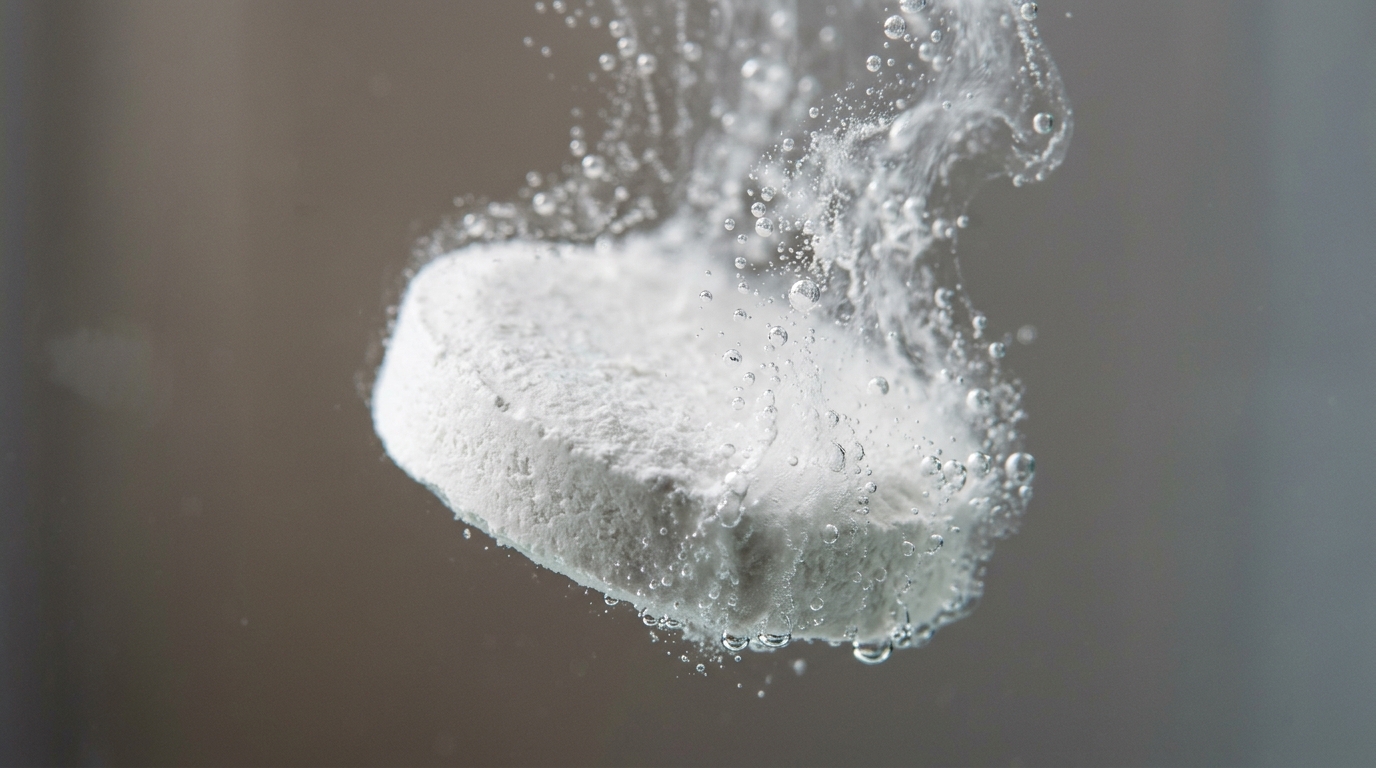
In vitro dissolution and disintegration evaluations exposed clear mechanistic differences driven by the relative concentrations of the two experimental excipients. Disintegration times tested in simulated gastric fluid at pH 1.2 ranged from 45 to 64 seconds across the series. Dissolution testing conducted in a USP Dissolution Apparatus II paddle system operating at 50 rpm in 900 milliliters of pH 1.2 medium at 37 ± 0.5 degrees Celsius revealed rapid drug release across all formulations, with complete dissolution achieved between 20 and 60 minutes. Aliquots withdrawn across twelve time points up to 60 minutes were filtered and analyzed at 224 nanometers using ultraviolet-visible spectrophotometry. Higher concentrations of crosspovidone accelerated dissolution through rapid capillary wicking and swelling without forming a viscous barrier, whereas increased starch concentrations marginally extended drug release by promoting interparticulate bonding and compact matrix density.
Mathematical modeling in Design-Expert software yielded statistically significant regression models for all three responses, with model F-values of 204 for hardness, 9.46 for disintegration time, and 16.77 for total release time (all p < 0.05). Second-order quadratic models proved optimal for hardness and dissolution time, whereas disintegration was accurately described by a two-factor interaction model. Coefficients of determination reached 0.9994 for hardness, 0.9990 for disintegration, and 0.9819 for release duration, indicating that more than 98 percent of experimental variance was accounted for by the models. Predicted and adjusted R-squared values matched closely without signs of overfitting, and low predicted residual error sum of squares statistics together with variance inflation factors equal to one confirmed the orthogonality and statistical reliability of the derived polynomial equations.
The quantitative polynomial equations demonstrated contrasting antagonistic and additive influences exerted by the test excipients on tablet performance attributes. Crosspovidone exhibited a negative coefficient for hardness and disintegration time, indicating that greater disintegrant loading reduced crushing resistance while accelerating tablet breakup. Conversely, starch exhibited positive coefficients, indicating an additive contribution to tablet hardness driven by free hydroxyl groups facilitating hydrogen bonding at particle contact interfaces, along with an increase in disintegration and drug release times. Dissolution kinetics across all nine formulations fit most closely to a zero-order release model (R-squared values of 0.982 to 0.995), while Korsmeyer-Peppas release exponent values ranging from 0.90 to 1.30 demonstrated anomalous non-Fickian to Super Case II transport mechanisms combining diffusion, matrix swelling, polymer relaxation, and surface erosion.
Numerical optimization utilizing response surface contour plots and a multi-criteria desirability function approaching unity pinpointed the optimal excipient composition as 22.0 milligrams of crosspovidone and 55.2 milligrams of starch per tablet unit. Experimental preparation of this optimized tablet demonstrated close alignment with model predictions, yielding an observed hardness of 3.62 kilograms per square centimeter, rapid disintegration within 49.7 seconds, and complete dissolution of the 10-milligram dapagliflozin payload within 26.6 minutes. By combining factorial screening, regression analysis, and empirical verification, the investigation establishes response surface methodology as a robust, reproducible platform for designing immediate-release solid dosage forms with balanced mechanical strength and accelerated drug dissolution performance.
Subject of Research: Formulation and statistical optimization of immediate-release dapagliflozin tablets
Article Title: Development and statistical optimization of immediate release tablets of dapagliflozin
Article References: Rao, P. B. B., Thejomoorthy, K., Kumar, K. R., Swain, K., & Sankula, K. R. (2026). Development and statistical optimization of immediate release tablets of dapagliflozin. Discover Pharmaceutical Sciences, 2(1), Article 23. https://doi.org/10.1007/s44395-026-00056-2
Image Credits: AI Generated
DOI: 10.1007/s44395-026-00056-2
Keywords: dapagliflozin, immediate-release tablets, response surface methodology, factorial design, crosspovidone, tablet dissolution, pharmaceutical formulation, drug release kinetics, Development, statistical, optimization, immediate
News Source: Ophelia Keating. (November 6, 2026). Statistical Modeling Optimizes Immediate Release Dapagliflozin Tablets for Rapid Dissolution. Scienmag.