• HOME
  • NEWS
  • EXPLORE
    • CAREER
      • Companies
      • Jobs
    • EVENTS
    • iGEM
      • News
      • Team
    • PHOTOS
    • VIDEO
    • WIKI
  • BLOG
  • COMMUNITY
    • FACEBOOK
    • INSTAGRAM
    • TWITTER
Friday, November 6, 2026
BIOENGINEER.ORG
No Result
View All Result
  • Login
  • HOME
  • NEWS
  • EXPLORE
    • CAREER
      • Companies
      • Jobs
        • Lecturer
        • PhD Studentship
        • Postdoc
        • Research Assistant
    • EVENTS
    • iGEM
      • News
      • Team
    • PHOTOS
    • VIDEO
    • WIKI
  • BLOG
  • COMMUNITY
    • FACEBOOK
    • INSTAGRAM
    • TWITTER
No Result
View All Result
Bioengineer.org
No Result
View All Result
Home NEWS Science News Health

Staphylococcus aureus Community Pneumonia Linked to Higher Severity and Distinct Risk Factors

by
November 6, 2026
in Health
Reading Time: 2 mins read
0
Staphylococcus aureus Community Pneumonia Linked to Higher Severity and Distinct Risk Factors

Staphylococcus aureus Community Pneumonia Linked to Higher Severity and Distinct Risk Factors

Share on FacebookShare on TwitterShare on LinkedinShare on RedditShare on Telegram

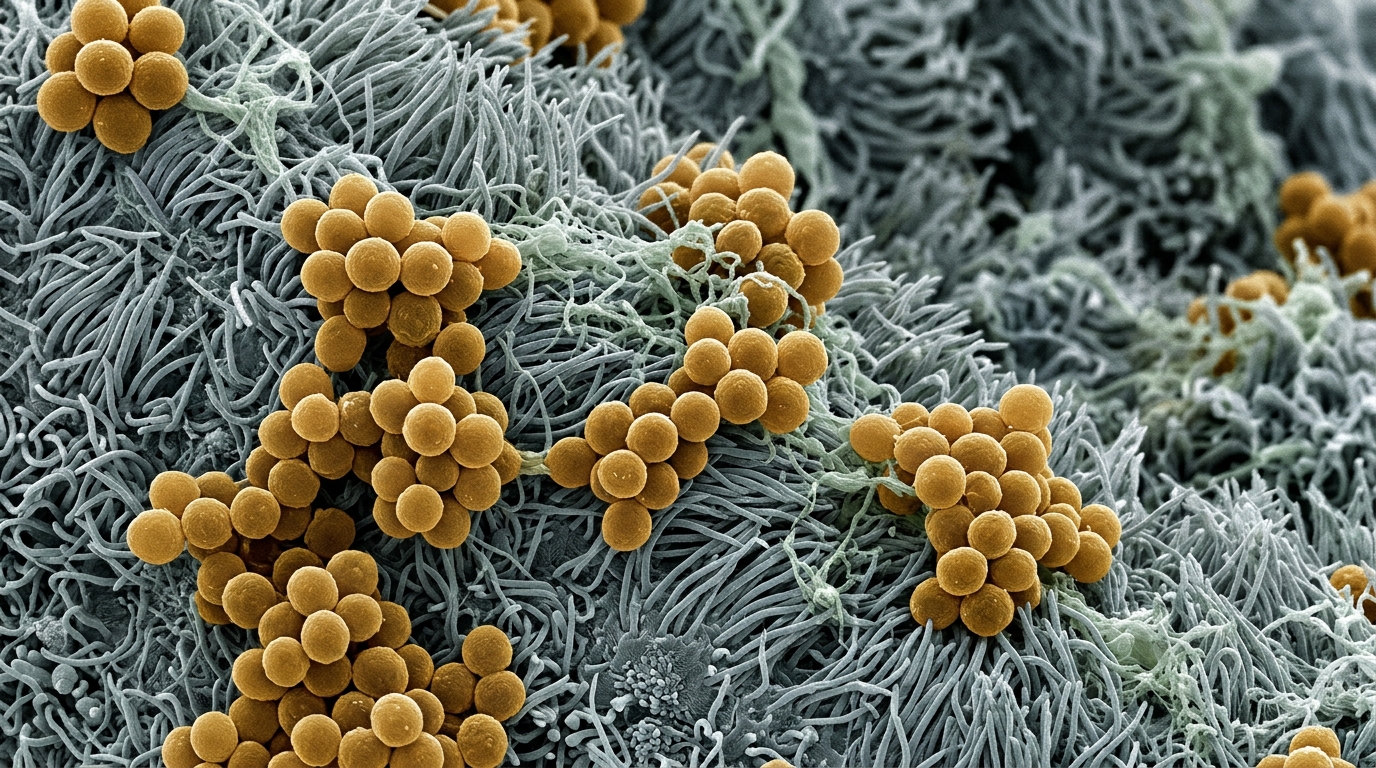
Adults diagnosed with community-acquired Staphylococcus aureus pneumonia experienced more severe disease courses, longer hospital stays, and increased mortality compared to patients with non-staphylococcal community-acquired pneumonia, according to a retrospective comparative study conducted in Chongqing, China. The investigation evaluated clinical features, imaging, laboratory findings, and patient outcomes across 180 adult patients with S. aureus community-acquired pneumonia and an equal comparison cohort of 180 adults with non-S. aureus community-acquired pneumonia.

The comparative analysis identified diabetes mellitus, chronic lung disease, and bronchiectasis as independent risk factors for developing community-acquired S. aureus pneumonia. In subgroup evaluations comparing methicillin-resistant S. aureus (MRSA) with methicillin-susceptible S. aureus (MSSA), researchers observed that a history of prior pneumonia and the presence of dyspnea served as clinical predictors for MRSA infection, a pathogen subset recognized for its association with poor clinical outcomes.

Patients with S. aureus community-acquired pneumonia exhibited greater radiographic abnormalities and elevated markers of systemic inflammation relative to the comparison cohort. These clinical presentations were accompanied by extended hospitalizations, higher rates of intensive care unit admission, and greater overall mortality. Additionally, co-infections were detected in 38.3 percent of the studied cases, consisting predominantly of respiratory viruses and Gram-negative bacteria.

While community-acquired S. aureus pneumonia presented with greater clinical severity than non-S. aureus pneumonia—especially among individuals infected with MRSA—the authors concluded that adverse patient outcomes should not be attributed to pathogen type alone. The researchers emphasized that early risk stratification and the prompt implementation of appropriate empirical antimicrobial therapy represent critical factors for improving clinical outcomes in this high-risk patient population.

Subject of Research: Clinical features and risk factors of community-acquired Staphylococcus aureus pneumonia

Article Title: Risk factors, clinical features, and antimicrobial use in community-acquired Staphylococcus aureus pneumonia in Chongqing, China

Article References: Sheng, Q., Huang, X., You, J., Li, X., & Tong, J. (2026). Risk factors, clinical features, and antimicrobial use in community-acquired Staphylococcus aureus pneumonia in Chongqing, China. BMC Pulmonary Medicine. https://doi.org/10.1186/s12890-026-04949-x

Image Credits: AI Generated

DOI: 10.1186/s12890-026-04949-x

Keywords: Staphylococcus aureus, community-acquired pneumonia, MRSA, bacterial co-infections, intensive care unit, pulmonary medicine, risk factors, antimicrobial therapy, Risk, factors, clinical, features

News Source: Ophelia Keating. (November 6, 2026). Staphylococcus aureus Community Pneumonia Linked to Higher Severity and Distinct Risk Factors. Scienmag.

Tags: antimicrobial therapybacterial co-infectionsClinicalcommunity-acquired pneumoniafactorsfeaturesintensive care unitMRSAPulmonary Medicineriskrisk factorsStaphylococcus aureus
Share12Tweet7Share2ShareShareShare1

Related Posts

KRAS Phosphorylation Drives Colorectal Cancer Invasion by Boosting Cathepsin B Secretion

KRAS Phosphorylation Drives Colorectal Cancer Invasion by Boosting Cathepsin B Secretion

November 6, 2026
Social Sciences Expose Hidden Inequities Shaping Neglected Tropical Diseases

Social Sciences Expose Hidden Inequities Shaping Neglected Tropical Diseases

November 6, 2026

Serial Biomarkers Optimize Antibiotic Utilization in Hospital-Acquired Pneumonia

November 6, 2026

Review Examines How Viral Infections Might Trigger Chronic Scrotal Content Pain

November 6, 2026

POPULAR NEWS

  • KRAS Phosphorylation Drives Colorectal Cancer Invasion by Boosting Cathepsin B Secretion

    KRAS Phosphorylation Drives Colorectal Cancer Invasion by Boosting Cathepsin B Secretion

    29 shares
    Share 12 Tweet 7
  • Platelets Undergo Lifespan Remodeling That Promotes Thromboinflammation and Fuels Tumor Progression

    29 shares
    Share 12 Tweet 7
  • Social Sciences Expose Hidden Inequities Shaping Neglected Tropical Diseases

    29 shares
    Share 12 Tweet 7
  • Fourier-Enhanced TecoGAN Improves Video Super-Resolution Quality and Temporal Stability

    29 shares
    Share 12 Tweet 7

About

We bring you the latest biotechnology news from best research centers and universities around the world. Check our website.

Follow us

Recent News

Research report: The Diffusion of Digital Empowerment: The Relationship Between Digital Strategy, Digital Routinization, and Digital Capability

Beetle Diversity Surveyed Across Elevational Gradients in Colombia’s Coastal Sierra Nevada

KRAS Phosphorylation Drives Colorectal Cancer Invasion by Boosting Cathepsin B Secretion

Subscribe to Blog via Email

Enter your email address to subscribe to this blog and receive notifications of new posts by email.

Join 86 other subscribers
  • Contact Us

Bioengineer.org © Copyright 2023 All Rights Reserved.

Welcome Back!

Login to your account below

Forgotten Password?

Retrieve your password

Please enter your username or email address to reset your password.

Log In
No Result
View All Result
  • Homepages
    • Home Page 1
    • Home Page 2
  • News
  • National
  • Business
  • Health
  • Lifestyle
  • Science

Bioengineer.org © Copyright 2023 All Rights Reserved.