


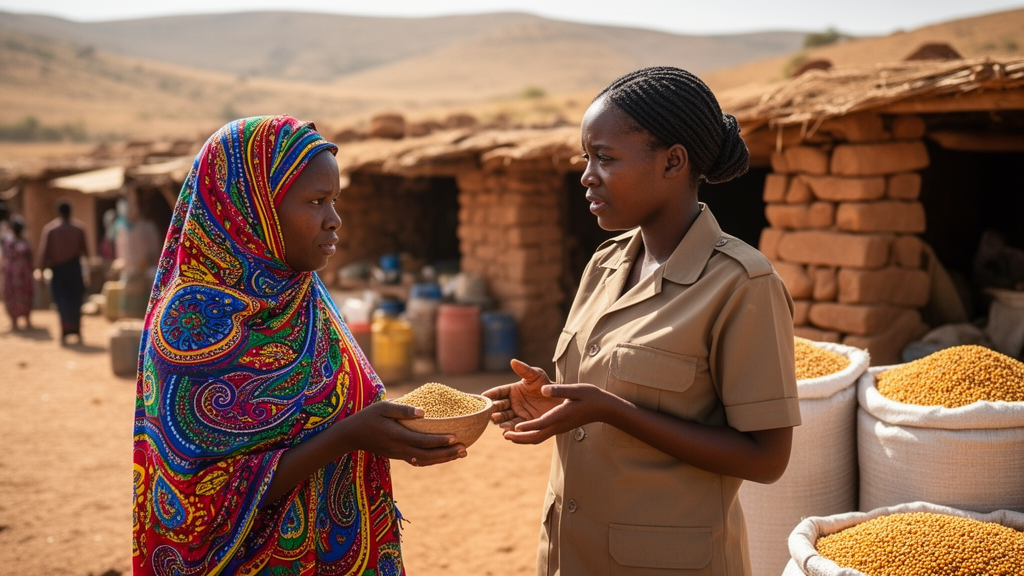
A new study of rural households in Eastern Ethiopia finds that despite a wide range of stakeholder-led nutrition security interventions, the average household dietary diversity score in the study area was 4.02, well below the national household dietary diversity score of 5.42. Half of the sampled households fell into the category of low dietary diversity, according to the survey results published in BMC Nutrition.
The study was led by Mideksa Fufa Jilito, Fekadu Beyene Kenee, Andreas Thiel and Chanyalew Seyoum Aweke, and examined how stakeholders’ interventions relate to the nutrition of rural households. The authors note that Ethiopia’s government has been implementing several initiatives and policies to address nutrition problems, yet nutrition problems continue to affect the country’s socioeconomic and health circumstances.
For the household component, the researchers digitally collected primary data from 385 randomly selected households. In addition to the household survey, they gathered data from stakeholders to examine their contributions to households’ nutrition security, purposively selecting 84 stakeholder employees for that survey.
To analyse the household data, the team applied a generalized ordered logit model to estimate factors associated with households’ nutritional status. Stakeholder data was analysed separately using descriptive analysis to complement the household data.
The survey of stakeholders revealed that several organisations intervene in both the production and consumption of nutrient-dense crops. Their reported mechanisms include training, seed delivery, and home-garden-based vegetable production, indicating a broad portfolio of activities aimed at improving what rural households grow and eat.
The econometric model results showed that access to extension services, irrigation facilities, and engaging women in farming activities were positively associated with the medium and high nutritional status of rural households. These associations suggest that households with better access to agricultural support and water infrastructure, and those where women participate in farming, tended to be represented more in the higher nutritional status categories.
By contrast, several factors were negatively correlated with the medium and high nutritional status of households. These included the sex of the household head, credit services, market distance, healthcare services, and changes in weather variability. The study reports these as correlations from the model, not as experimentally established causal effects.
The authors conclude that relevant stakeholders working on agriculture and nutrition interventions should pay attention to take action on nutrition-related concerns in Eastern Ethiopia. The finding that the local average dietary diversity score sits below the national figure, with half of sampled households in the low diversity category, underscores the gap between the range of interventions described by stakeholders and the measured nutritional status of households in the study area.
As an observational study based on a cross-sectional household survey and descriptive stakeholder analysis, the research describes associations within the sampled population rather than testing the effectiveness of specific interventions. The article was published on 29 October 2026 as an open access research paper in BMC Nutrition, and is currently shared as an accepted manuscript that remains subject to further edits before the final Version of Record.
Subject of Research: Stakeholder-led nutrition security interventions and household nutritional status in rural Eastern Ethiopia
Article Title: Stakeholder-led nutrition security interventions and households’ nutritional status in Eastern Ethiopia
Article References: Jilito, M. F., Kenee, F. B., Thiel, A., & Aweke, C. S. (2026). Stakeholder-led nutrition security interventions and households’ nutritional status in Eastern Ethiopia. BMC Nutrition. https://doi.org/10.1186/s40795-026-01536-5
Image Credits: AI Generated
DOI: 10.1186/s40795-026-01536-5
Keywords: Ethiopia, nutrition security, dietary diversity, rural households, stakeholder interventions, generalized ordered logit, extension services, irrigation, women in farming, BMC Nutrition, Stakeholder-led, nutrition
News Source: Daisy Hatcher. (October 29, 2026). Stakeholder-led nutrition interventions fall short in Eastern Ethiopia, survey finds. Scienmag.



