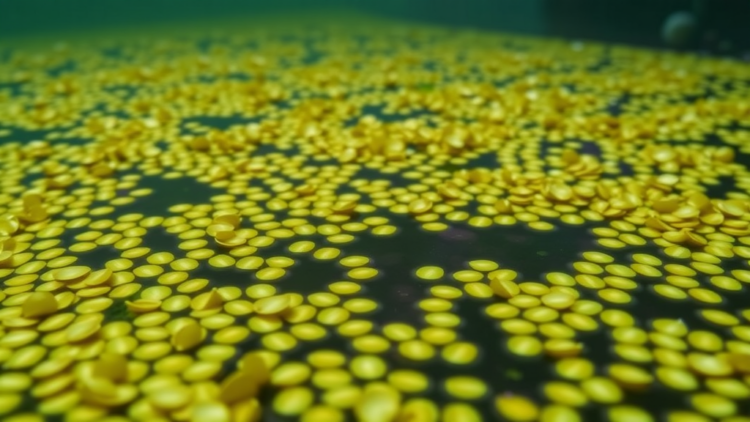
A family of tiny, free-floating aquatic plants that most people walk past without a second glance is emerging as one of the most promising sustainable foods on the planet. In a new study published in BMC Agriculture, researchers in Sri Lanka have carried out the most comprehensive analysis to date of four duckweed species native to the island nation, and the results suggest that these unassuming green fronds could play a major role in tackling protein malnutrition, diabetes, obesity and even infectious disease. The team examined Spirodela polyrhiza, Lemna minor, Lemna perpusilla and Landoltia punctata, evaluating everything from their macronutrient and mineral content to their fatty acid profiles, enzyme-inhibiting power, antimicrobial activity and toxicity.
Duckweeds, members of the family Lemnaceae, are the smallest flowering plants on Earth, yet they punch far above their weight nutritionally. Under optimal conditions they can produce six to ten times more protein per hectare than soybean, and they do so without requiring any arable land, thriving instead on the surface of nutrient-rich ponds, lakes and wetlands. Their amino acid profile aligns with World Health Organization recommendations for human nutrition, and previous work has shown that methionine and tryptophan levels exceed FAO guidelines by 76 percent and 24 percent respectively. Sri Lanka’s tropical climate and abundant inland water bodies make the country an ideal setting for year-round duckweed cultivation, yet until now the nutritional and bioactive properties of its native species had remained largely unexplored.
The research team, led by scientists at the National Institute of Fundamental Studies in Kandy, collected the four species from Puttalam, Soragune, Peradeniya and Bolgoda between May and June 2023, authenticated them at the National Herbarium in Peradeniya, and cultivated them under controlled greenhouse conditions before analysis. Proximate analysis revealed protein contents ranging from 17.34 to 26.45 percent of dry weight, with Landoltia punctata showing the highest protein levels of the four. Carbohydrate content ranged from 6.95 to 14.55 percent, crude fat from 3.69 to 3.92 percent, ash from 8.03 to 9.55 percent and crude fiber from 5.26 to 9.49 percent. Spirodela polyrhiza stood out for its significantly higher fat, carbohydrate and crude fiber contents, while Lemna minor had the highest moisture.
Mineral analysis using inductively coupled plasma optical emission spectroscopy showed that potassium dominated the elemental profile, ranging from 20.17 to 50.07 grams per kilogram of dry weight, with Lemna perpusilla accumulating the most potassium and sodium. Calcium ranged from 11.03 to 25.46 grams per kilogram, with Spirodela polyrhiza also leading in magnesium and calcium. Crucially for food safety, the levels of lead and cadmium in all four species fell below the thresholds set by the World Health Organization and the European Commission, addressing one of the chief concerns about using duckweed grown in natural waters for human consumption, since these plants are well known to absorb heavy metals from contaminated aquatic environments.
Perhaps the most striking nutritional finding came from the fatty acid analysis. Omega-3 fatty acids, including alpha-linolenic acid and eicosapentaenoic acid, constituted between 44.42 and 50.38 percent of total fatty acids across all four species. Alpha-linolenic acid was the most abundant individual fatty acid in three of the species, ranging from 29.53 to 46.44 percent, followed by palmitic and linoleic acids. The unsaturated-to-saturated fatty acid ratios ranged from 1.54 to 2.71, and polyunsaturated fatty acids vastly outnumbered monounsaturated ones. The favorable omega-6 to omega-3 ratios, typically between 5:3 and 4:1, are associated with reduced risk of inflammation, cardiovascular disease and cancer, positioning duckweed as a rare plant-based source of these essential fats.
Beyond basic nutrition, the extracts displayed remarkable bioactivity. In alpha-amylase inhibition assays, which measure the potential to slow starch digestion and blunt post-meal blood sugar spikes, Spirodela polyrhiza and Landoltia punctata achieved an IC50 of just 0.14 micrograms per milliliter, while Lemna minor showed the strongest overall inhibition across all solvents. Every duckweed extract outperformed acarbose, the standard antidiabetic drug, which required an IC50 of 12.16 micrograms per milliliter. On the anti-obesity front, a 60 percent ethanol extract of Spirodela polyrhiza inhibited pancreatic lipase with an IC50 of 1.39 micrograms per milliliter, approaching the potency of the pharmaceutical drug orlistat, while Lemna minor consistently posted the lowest IC50 values across solvents.
The antimicrobial results were equally compelling. Spirodela polyrhiza produced the largest inhibition zone against Escherichia coli at 17.33 millimeters and showed notable activity against Aspergillus niger, while Landoltia punctata excelled against Staphylococcus aureus, Candida albicans and Aspergillus niger. Lemna minor inhibited both bacterial strains and both fungi, consistent with earlier studies. The researchers attribute these effects to a rich arsenal of secondary metabolites, including flavonoids, phenolics, tannins, saponins, terpenoids and phytosterols such as beta-sitosterol, which disrupt microbial membranes and cellular functions. Liquid chromatography-mass spectrometry identified rutin as the most abundant polyphenol in all four species, at 2.96 to 3.06 micrograms per milligram of dry matter, along with vanillic, gallic, chlorogenic, caffeic, ferulic and p-coumaric acids in varying combinations.
The phenolic profile may explain much of the observed bioactivity. Rutin, which was especially abundant in Lemna minor, is known to inhibit starch-digesting enzymes through competitive and mixed-type inhibition involving hydrogen bonding and hydrophobic interactions, and previous studies have found it more effective than quercetin at blocking alpha-amylase and alpha-glucosidase. Gallic acid and catechin, detected in Landoltia punctata and Lemna minor, are established lipase inhibitors, aligning with the strong anti-obesity activity observed in those species. Meanwhile, the p-coumaric and ferulic acids found in Spirodela polyrhiza and Landoltia punctata are known to disrupt microbial membranes, correlating with their antimicrobial performance. Fourier transform infrared spectroscopy confirmed the presence of five distinct amide absorption bands and carbohydrate-associated signals, providing molecular evidence of the protein-rich composition.
Safety testing using the brine shrimp lethality assay showed low to moderate toxicity, with LC50 values exceeding 4000 parts per million for the tested extracts, well above concentrations that would raise concern. The authors caution, however, that the study has limitations: the bioactivity assays were conducted in vitro, and animal or human trials will be needed to confirm therapeutic potential and bioavailability. Long-term toxicological data, sensory evaluation and processing techniques to improve palatability also remain unexplored. Because duckweed’s composition is highly sensitive to water quality, nutrient availability and environmental stress, careful management of cultivation conditions will be essential to ensure consistent safety and nutritional value.
Even with those caveats, the implications are significant for a developing country like Sri Lanka, where protein and micronutrient deficiencies persist. Duckweed requires no farmland, grows year-round in tropical wetlands, doubles as a wastewater treatment agent and can even serve as a platform for producing pharmaceutical biomolecules such as vaccines and antibodies. The researchers conclude that these four native species, with their high-quality protein, exceptional omega-3 content, potent enzyme inhibition and broad antimicrobial activity, are strong candidates for development as nutrient-dense, affordable functional foods. If future trials validate the laboratory findings, the humble duckweed floating quietly on Sri Lanka’s ponds could become a cornerstone of sustainable nutrition, proving that some of the most powerful solutions to global food and health challenges may be the smallest plants of all.
Subject of Research: The nutritional composition and bioactive properties of four duckweed species in Sri Lanka
Article Title: Nutritional composition and bioactive properties of four duckweed species in Sri Lanka
Article References: Nutritional composition and bioactive properties of four duckweed species in Sri Lanka. (n.d.). https://doi.org/10.1186/s44399-026-00043-z
Image Credits: AI Generated
DOI: 10.1186/s44399-026-00043-z
Keywords: duckweed, nutrition, omega-3 fatty acids, antidiabetic, anti-obesity, antimicrobial, polyphenols, protein, Sri Lanka, functional food, food security, phytochemicals
Cite Scienmag News
APA MLA Chicago
Daisy Hatcher. (September 13, 2026). Sri Lanka’s Duckweeds Pack Protein, Omega-3s and Potent Antidiabetic Power, Study Finds. Scienmag. https://scienmag.com/sri-lankas-duckweeds-pack-protein-omega-3s-and-potent-antidiabetic-power-study-finds/
Daisy Hatcher. “Sri Lanka’s Duckweeds Pack Protein, Omega-3s and Potent Antidiabetic Power, Study Finds.” Scienmag, 13 September 2026, https://scienmag.com/sri-lankas-duckweeds-pack-protein-omega-3s-and-potent-antidiabetic-power-study-finds/. Accessed 13 September 2026.
Daisy Hatcher. “Sri Lanka’s Duckweeds Pack Protein, Omega-3s and Potent Antidiabetic Power, Study Finds.” Scienmag. September 13, 2026. https://scienmag.com/sri-lankas-duckweeds-pack-protein-omega-3s-and-potent-antidiabetic-power-study-finds/
Copy citation Download RIS
Tags: anti-obesityantidiabeticantidiabetic properties of duckweedantimicrobialantimicrobial activity of duckweedaquatic plants for malnutritionduckweedduckweed nutritional profileduckweed protein benefitsenvironmental benefits of aquatic cropsFood securityfunctional foodmicroalgae and duckweed comparisonnutrient-rich pond plantsnutritionomega-3 fatty acidsomega-3 fatty acids in duckweedphytochemicalsplant-based alternative proteinspolyphenolsproteinseafood alternative for healthSri Lankasustainable aquatic food sources