Credit: NASA
Just like early explorers, NASA Twins Study investigators are venturing into new territory. Conducting human omics research on twin astronauts as part of the One Year Mission that took place aboard the International Space Station is one such venture. As technology evolves so does the research. NASA is evaluating more efficient and innovative research techniques to prepare for the journey to Mars.
Innovative thinking could improve the way biological samples are processed and transported from space back to research labs on Earth for future studies. This thinking was prompted by researchers in NASA's Human Research Program (HRP) and Twins Study investigators at Johns Hopkins Medicine.
Freshly isolated samples yield better results than cells isolated from frozen samples returned to Earth from the orbiting laboratory. Pipetting fresh samples at ambient temperature and performing cell isolation on the space station also eliminates the need for expeditious transportation logistics, and allows for more frequent sampling. Once cells are isolated, the samples can be viably frozen and return on any transfer vehicle at any time for further analysis.
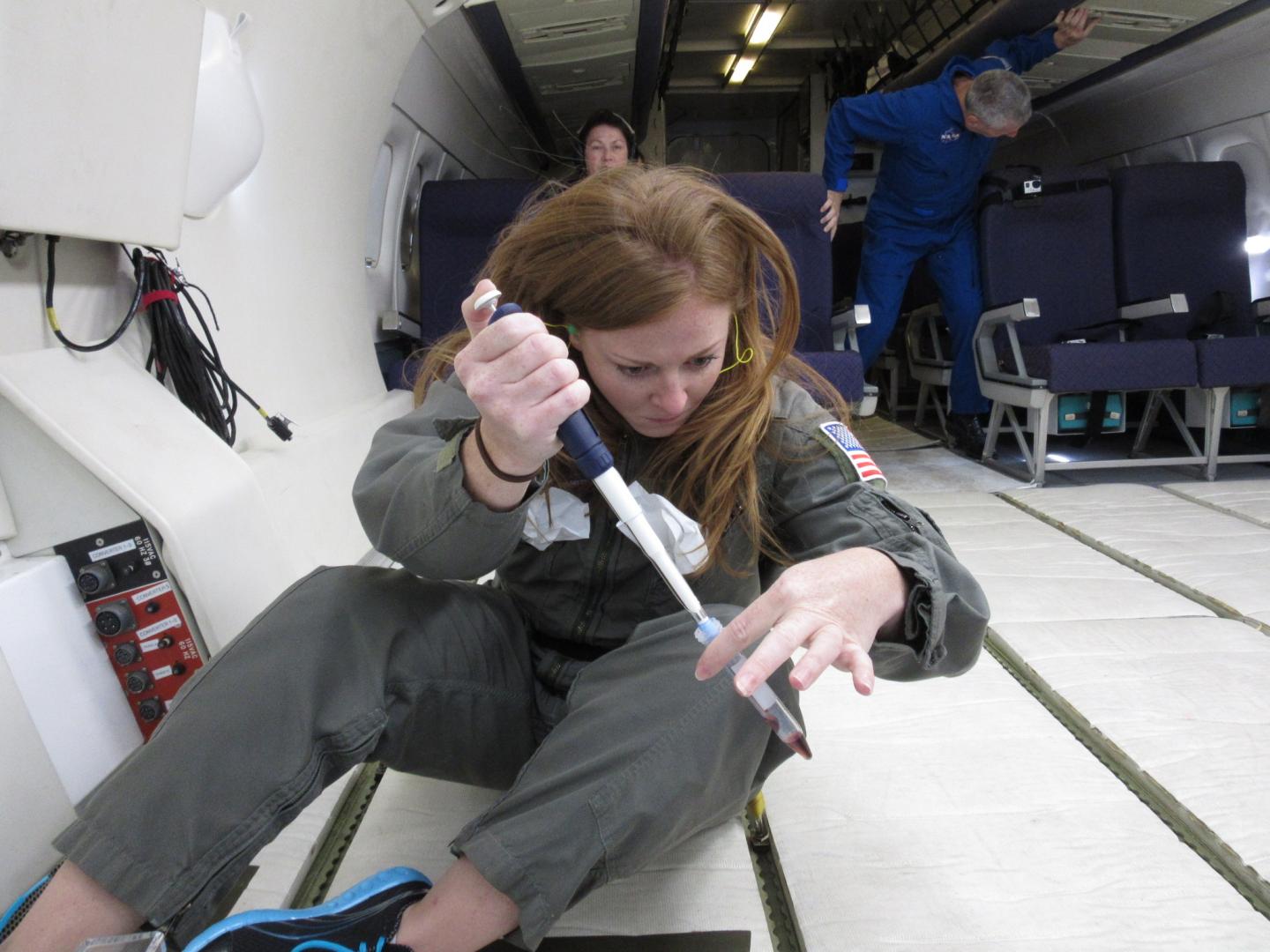
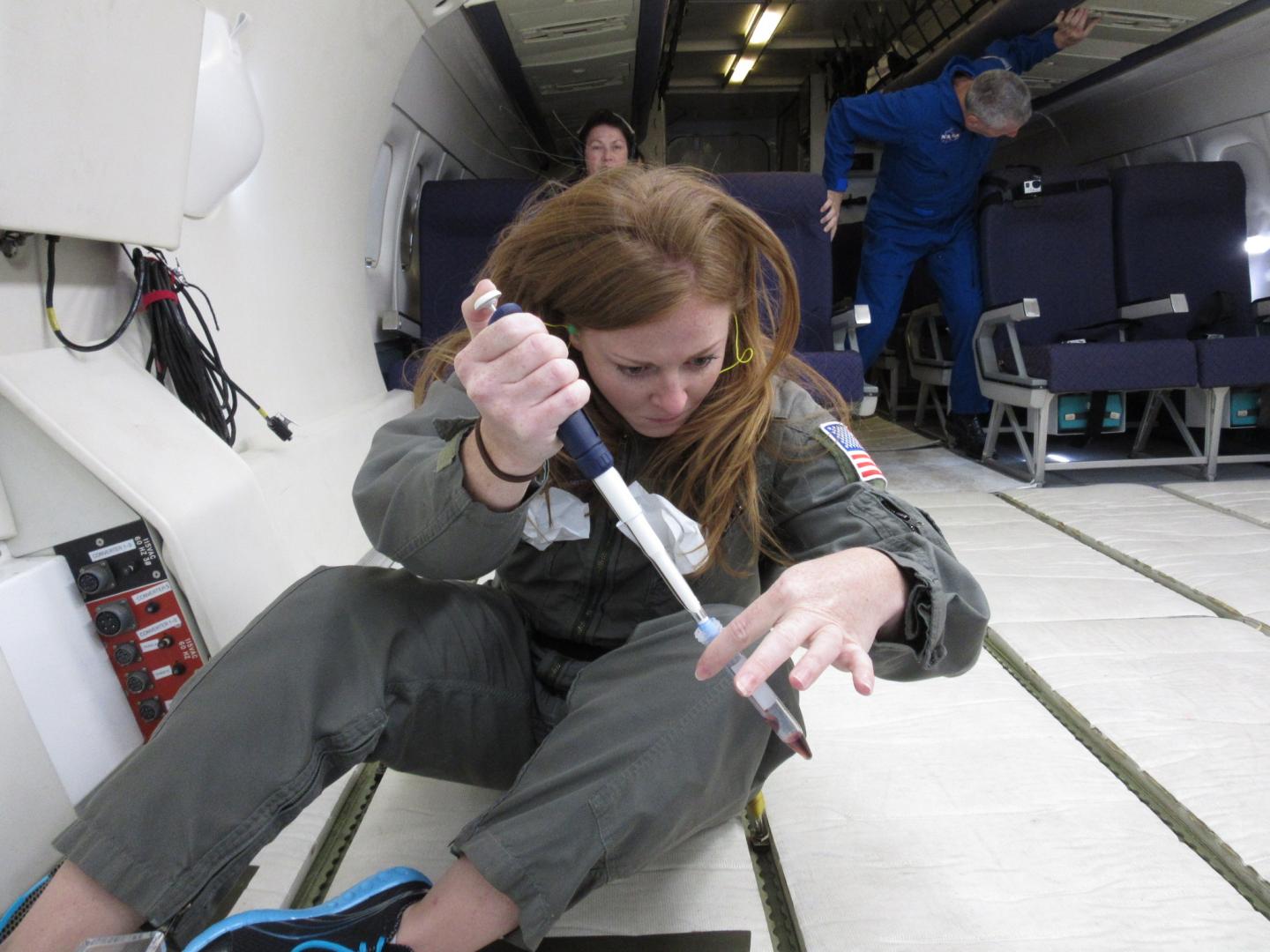
On an aircraft that is used as a parabolic flight analog to create short periods of simulated microgravity, Twins Study Investigators Dr. Andrew Feinberg and Lindsay Rizzardi of Johns Hopkins Medicine tested a theory that liquids could be transferred safely in microgravity using a pipettor, which is a slender, graduated measurement tube. Previously researchers thought transferring biological fluids in space could pose risks to precisely controlling the sample.
"This analog demonstrated that pipetting of open fluids is relatively simple and easily controlled and that all fluid transfer steps associated with centrifugation can be replicated in microgravity," Feinberg said. "When dealing with genetic material, research requires precise transfer of liquids among different types of tubes in order to purify DNA, RNA or protein from biological samples to perform molecular analyses."
Coinciding with the fluid transfer research was cell isolation research being conducted by NASA immunologists Brian Crucian, Clarence Sams, Hawley Kunz and NASA astronaut and molecular biologist Kate Rubins. NASA researchers tested terrestrial protocols for cell purification in microgravity using the parabolic flight analog. They found that cell isolation and purification could both be performed in microgravity. Rubins also confirmed some of these findings in space. They published their research with Feinberg and Rizzardi in the July 2016 issue of NPJ Microgravity.
Crucian said, "Laboratory procedures for isolating and purifying cells typically require sensitive gradient centrifugation, careful extraction of isolated cells, and general open pipetting of liquids for washing and transferring the isolated cells."
Being able to transfer fluids and isolate cells in space is significant for a variety of reasons. Mars is a challenging distance from Earth if diagnostics are ever needed of a crewmember. Enabling astronauts to conduct more human research independently could help diagnose an illness more quickly, possibly saving a life in a medical emergency.
As NASA prepares for its journey to Mars, the way researchers handle and processes biological samples in space could change. The protocols validated by the Johns Hopkins and NASA investigators demonstrate that standard cell isolation protocols may indeed be performed in space, something which may enable certain types of genetic, or 'omics', research onboard the space station. Molecular biology technologies such as hand-held sequencers continue to evolve pushing the boundaries of scientific research. HRP will continue to adapt its methodologies to support novel research that protects and ensures the safety of future crews on long-duration missions while opening the door for innovative opportunities.
###
NASA's Human Research Program (HRP) is dedicated to discovering the best methods and technologies to support safe, productive human space travel. HRP enables space exploration by reducing the risks to human health and performance using ground research facilities, the International Space Station, and analog environments. This leads to the development and delivery of a program focused on: human health, performance, and habitability standards; countermeasures and risk mitigation solutions; and advanced habitability and medical support technologies. HRP supports innovative, scientific human research by funding more than 300 research grants to respected universities, hospitals and NASA centers to over 200 researchers in more than 30 states.
Amy Blanchett
Laurie Abadie
NASA Human Research Engagement & Communications
Media Contact
Amy Blanchett
[email protected]
@NASA_Johnson
http://www.nasa.gov/centers/johnson/home
Original Source
https://www.nasa.gov/feature/squeezing-innovation-out-of-the-nasa-twins-study-pipetting-and-cell-isolation-in-space http://dx.doi.org/10.1038/npjmgrav.2016.25