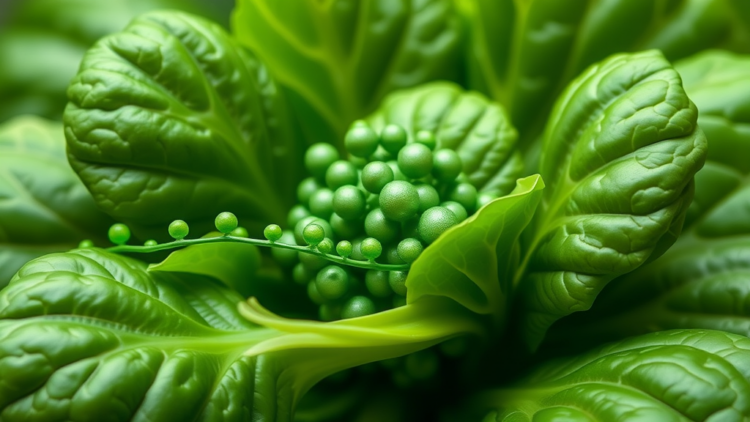
A common leafy vegetable found in kitchens across South Asia may soon have a second life in the laboratory. Researchers at Davangere University in Karnataka, India, report that an ordinary aqueous extract of Basella alba L., the plant better known as Malabar spinach or Ceylon spinach, can drive the clean, low-cost synthesis of manganese dioxide nanoparticles with striking antibacterial, antioxidant, and anticancer properties. The study, published in Discover Green Chemistry, adds to a rapidly growing body of work showing that humble plant extracts can replace the harsh reagents traditionally used to manufacture functional nanomaterials.
The appeal of green synthesis lies in its simplicity. Conventional nanoparticle production often relies on toxic solvents, high temperatures, and chemical reducing agents that leave hazardous residues and carry a heavy environmental footprint. Biogenic methods, by contrast, use phytochemicals as both the reducing and the stabilizing agents. In this case, the team prepared a cold aqueous extract from shade-dried Basella alba leaves and added it dropwise to a dilute solution of potassium permanganate. Phytochemicals in the extract, including phenolics, flavonoids, alkaloids, proteins, and carbohydrates, donated electrons in redox reactions that converted permanganate ions into manganese dioxide, while the same biomolecules adsorbed onto the particle surfaces and capped them, preventing the clumping that plagues many synthetic routes.
The transformation was visible to the naked eye: the pink permanganate solution turned dark brown as the reaction proceeded, a classic signature of manganese dioxide formation. Before synthesis, the researchers had confirmed through qualitative phytochemical screening that the aqueous leaf extract contained alkaloids, phenols, and terpenoids, the molecular workhorses responsible for reduction and stabilization. The plant itself is a nutritional powerhouse, rich in vitamins A and C, folate, manganese, betalain pigments, carotenoids, bioflavonoids, beta-sitosterol, and lupeol, compounds previously linked to antioxidant, antimicrobial, anti-inflammatory, and antiproliferative effects.
Characterization confirmed that the resulting material, dubbed Ba-MnO2-NPs, was genuinely nanoscale and crystalline. Ultraviolet-visible spectroscopy showed a sharp absorption peak at 357 nanometers, consistent with manganese dioxide nanoparticle formation. Fourier-transform infrared spectroscopy revealed the functional groups at work: a broad band at 3421 reciprocal centimeters corresponding to hydroxyl groups from phenolic compounds that served as reducing agents, aliphatic carbon-hydrogen stretches between 2920 and 2850 reciprocal centimeters, a carbonyl band at 1632 reciprocal centimeters pointing to proteins and flavonoids involved in surface stabilization, and strong signals between 1200 and 1000 reciprocal centimeters characteristic of the carbohydrates and polysaccharides acting as capping agents.
Electron microscopy painted a picture of predominantly spherical, slightly agglomerated particles in the range of roughly 200 to 400 nanometers, which the authors classify as zero-dimensional nanostructures based on their geometry. Energy-dispersive X-ray spectroscopy verified the elemental composition, detecting manganese and oxygen as expected. Powder X-ray diffraction displayed four distinct peaks at 2-theta angles of 23, 31, 43, and 65 degrees, confirming the crystalline nature and phase purity of the product. Particle size analysis in aqueous suspension gave an average hydrodynamic diameter of 159.6 nanometers, a figure larger than the dry electron-microscopy measurement because it includes the hydration shell and the layer of adsorbed plant phytochemicals surrounding each particle core.
The biological results were the most eye-catching part of the study. Against Klebsiella pneumoniae, a Gram-negative pathogen notorious for drug resistance, the nanoparticles produced inhibition zones of 4, 9, and 16 millimeters at concentrations of 30, 60, and 90 micrograms respectively, outperforming a 25-microgram ampicillin standard that managed only 9 millimeters. Against the Gram-positive Staphylococcus aureus, the zones grew from 5 to 8 to 23 millimeters across the same concentration range, dwarfing the 8-millimeter zone of the standard drug. Broth micro-dilution assays pinned the minimum inhibitory concentrations at 20 micrograms per milliliter for K. pneumoniae and 40 micrograms per milliliter for S. aureus, potent figures for a plant-derived nanomaterial.
Antioxidant testing using the DPPH free-radical assay showed dose-dependent scavenging, peaking at 67.04 percent inhibition at 250 micrograms per milliliter, compared with 89.19 percent for the ascorbic acid reference. The reported half-maximal inhibitory concentration values place the nanoparticles in a range comparable to other biogenic manganese dioxide materials described in recent literature, including those synthesized with green tea extract, Viola betonicifolia leaf extract, and Gardenia resinifera leaves, all of which showed similar concentration-dependent behavior in radical neutralization and microbial inhibition.
The anticancer findings may prove the most consequential. Using the MTT viability assay on A549 human lung cancer cells, with cisplatin as a positive control, the researchers observed a steep, dose-dependent drop in cell survival. Viability fell from 84.65 percent at 20 micrograms per milliliter to just 25.81 percent at 100 micrograms per milliliter, yielding an IC50 of 70.55 micrograms per milliliter. Microscopy of the treated cultures revealed the hallmarks of programmed cell death: cell shrinkage, elongation, turgidity changes, and the appearance of apoptotic bodies. Because manganese dioxide is considered relatively low in toxicity and biocompatible, the authors suggest these nanoparticles could be candidates for further development against lung cancer, one of the deadliest malignancies worldwide.
The work fits into a broader shift in green chemistry, in which agricultural and medicinal plants serve as renewable nanofactories. Previous studies have shown biogenic manganese dioxide nanoparticles with strong antibiofilm activity, low toxicity toward normal cells, and even the ability to improve chickpea seed germination when formulated with plant root extracts. What distinguishes the new study is the combination of a widely cultivated, edible plant with a full panel of physicochemical characterization and three independent biological assays, providing an unusually complete profile for a single green-synthesized material.
Caveats remain before any clinical translation. All of the results are in vitro, and the road from a microplate assay to a therapeutic agent involves pharmacokinetics, toxicity in animal models, large-scale manufacturing consistency, and regulatory scrutiny. The hydrodynamic size of nearly 160 nanometers, while nanoscale, sits above the conventional 10-to-100-nanometer window, and the authors attribute this to phytochemical capping and drying-induced aggregation, factors that would need careful control in any scaled-up process. Still, the prospect of turning a backyard spinach relative into a sustainable source of antibacterial and anticancer nanomaterials captures the essence of green chemistry: simpler inputs, cleaner reactions, and outputs that could matter to medicine. As antimicrobial resistance escalates and lung cancer continues to claim lives, plant-powered nanoparticles like these offer a low-cost, environmentally benign starting point for the next generation of biomedical materials.
Subject of Research: Green synthesis of manganese dioxide nanoparticles from Basella alba leaf extract and their antibacterial, antioxidant, and anticancer properties
Article Title: Bio-fabrication of sustainable MnO2 nanoparticles using Basella alba L. aqueous extract, its physicochemical characterization and in-vitro biological explorations
Article References: Chidre, P., Shankarappa, V., Bosepalaiah, K., Dharmanaik, C., & Hulikunte Mallikarjunaiah, N. (2026). Bio-fabrication of sustainable MnO2 nanoparticles using Basella alba L. aqueous extract, its physicochemical characterization and in-vitro biological explorations. Discover Green Chemistry, 1(1), Article 35. https://doi.org/10.1007/s44509-026-00039-7
Image Credits: AI Generated
DOI: 10.1007/s44509-026-00039-7
Keywords: green synthesis, manganese dioxide nanoparticles, Basella alba, nanomedicine, antibacterial activity, antioxidant, anticancer, lung cancer A549, DPPH assay, phytochemicals, green chemistry, nanoparticle characterization
Cite Scienmag News
APA MLA Chicago
Nathaniel Bowman. (September 20, 2026). Spinach Relative Yields Green-Made Nanoparticles That Attack Bacteria and Lung Cancer Cells. Scienmag. https://scienmag.com/spinach-relative-yields-green-made-nanoparticles-that-attack-bacteria-and-lung-cancer-cells/
Nathaniel Bowman. “Spinach Relative Yields Green-Made Nanoparticles That Attack Bacteria and Lung Cancer Cells.” Scienmag, 20 September 2026, https://scienmag.com/spinach-relative-yields-green-made-nanoparticles-that-attack-bacteria-and-lung-cancer-cells/. Accessed 20 September 2026.
Nathaniel Bowman. “Spinach Relative Yields Green-Made Nanoparticles That Attack Bacteria and Lung Cancer Cells.” Scienmag. September 20, 2026. https://scienmag.com/spinach-relative-yields-green-made-nanoparticles-that-attack-bacteria-and-lung-cancer-cells/
Copy citation Download RIS
Tags: antibacterial activityantibacterial properties of plant-derived nanomaterialsanticanceranticancer potential of green-synthesized nanoparticlesantioxidantantioxidant activity of plant-based nanoparticlesBasella albabiogenic nanoparticle synthesis from Basella albaDPPH assayenvironmentally friendly nanomaterial fabricationgreen chemistrygreen chemistry in nanotechnologygreen synthesisgreen synthesis of manganese dioxide nanoparticleslung cancer A549manganese dioxide nanoparticlesNanomedicinenanomedicine applications of green-synthesized manganese dioxidenanoparticle characterizationphytochemical reduction of metal ionsphytochemicalsplant extract-mediated nanomaterial stabilizationplant-based nanoparticle productionsustainable methods for nanoparticle production