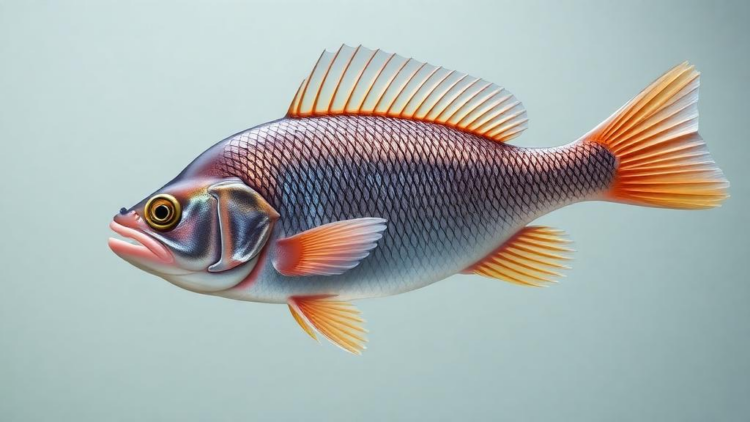
In the world of fish breeding, one of the strangest reproductive tricks is gynogenesis: a process in which sperm from one species is used to trigger egg development in another, without contributing any genetic material to the offspring. The result is a fish that is genetically almost identical to its mother, yet whose early embryonic development was set in motion by foreign sperm. A new study published in BMC Genomics by a team at Hunan Normal University in China suggests that this seemingly passive sperm involvement, a phenomenon the researchers call microhybridization, leaves measurable fingerprints on the offspring, reshaping the community of microbes living in the gut and rewiring how the fish regulates its blood sugar metabolism.
The research focused on the blunt snout bream (Megalobrama amblycephala), an economically important omnivorous freshwater fish farmed widely in China, and the Chinese perch (Siniperca chuatsa), a carnivorous predator from a different family. By exposing bream eggs to perch sperm, the team produced natural gynogenetic blunt snout bream, abbreviated GBSB. Because gynogenesis normally blocks the paternal genome, these offspring carry essentially maternal genetics. Yet the researchers suspected that the heterologous sperm, the sperm of a different species, might still influence early developmental events, and that these influences could cascade into differences in physiology, digestion, and the gut microbiome that persist into later life.
To test this idea, the team collected intestinal tissues from the gynogenetic bream, from normal blunt snout bream, and from both parental species. They then applied a battery of complementary techniques: metagenomic sequencing to catalogue the gut microbial communities and their functional genes, histological examination to inspect gut structure under the microscope, enzyme activity assays to measure digestive and antioxidant capacity, and quantitative gene expression analysis to track the activity of key metabolic genes. Finally, Pearson correlation analysis was used to link the abundance of microbial functions with the expression levels of host metabolic genes, providing a statistical bridge between the microbiome and the fish’s own biochemistry.
The first striking result concerned digestive performance. The intestines of the gynogenetic bream showed higher activity of several digestive enzymes than those of normal blunt snout bream, including alkaline xylanase, acid phosphatase, and lipase. These enzymes break down plant fibers, phosphorus-containing compounds, and fats respectively, and elevated activity suggests the gynogenetic fish were better equipped to extract energy and nutrients from their food. The gynogenetic fish also displayed stronger antioxidant defenses, with higher levels of catalase activity and reduced glutathione, molecules that protect tissues from the damaging reactive oxygen species generated during normal metabolism and stress.
Metabolic gene expression told a subtler story. In the gynogenetic bream, the expression of glycolysis-related genes, including GAPDH (glyceraldehyde-3-phosphate dehydrogenase) and Idha (isocitrate dehydrogenase alpha), was downregulated compared with the maternal line. Glycolysis is the classic first step of glucose breakdown, converting sugar into pyruvate for energy. In contrast, genes of the pentose phosphate pathway, Pgd (phosphogluconate dehydrogenase) and Taldo1 (transaldolase 1), were upregulated. The pentose phosphate pathway is a parallel glucose-processing route that generates NADPH, a reducing agent crucial for antioxidant defense and biosynthesis, along with ribose sugars for DNA and RNA production. This shift suggests the gynogenetic fish may be channeling glucose away from straightforward energy production and toward cellular maintenance and protection, consistent with their elevated antioxidant capacity.
The gut microbiota analysis revealed a pattern of both continuity and change. Overall, the microbial community in the gynogenetic bream closely resembled that of the maternal parent, with the genus Bacillus dominating in both. This maternal inheritance of gut microbes is not surprising, since gynogenetic offspring develop from maternal eggs and are reared in similar environments, and gut microbiota in fish is shaped heavily by diet, environment, and vertical transmission. However, the researchers did detect shifts within two major bacterial phyla, Bacteroidota and Pseudomonadota, indicating that the gynogenetic process was not without microbial consequences. These phyla include many species involved in carbohydrate fermentation and the production of short-chain fatty acids, metabolites that feed the gut lining and influence host metabolism.
Perhaps the most intriguing finding came from the correlation analysis linking microbial functions to host gene expression. The data suggested that the heterologous sperm induction altered host gene expression, and that these changes in the host in turn drove a restructuring of the gut microbiota through host-microbiota interactions in sugar metabolism. In other words, even though the perch sperm contributed no genes to the offspring’s genome, its role in triggering development appears to have set off a chain of physiological adjustments in the fish, and those adjustments selected for a somewhat different community of gut microbes. This host-first model, in which the animal’s own metabolic state shapes which microbes thrive, offers a mechanistic explanation for how a purely maternal genome can end up with a subtly different microbiome than its mother.
The broader significance of the work lies in aquaculture. Gynogenesis is a valuable tool for fish breeders because it rapidly produces highly inbred, nearly homozygous lines, which can then be used to create hybrid vigor or fixed desirable traits. Blunt snout bream is a cornerstone species of Chinese freshwater aquaculture, and improving its digestion, growth efficiency, and disease resistance has direct economic value. The finding that microhybridization can enhance digestive enzyme activity and antioxidant capacity suggests that gynogenetic lines may carry practical advantages, but also that their altered glucose metabolism means feeding strategies designed for ordinary bream may not be optimal for gynogenetic stock. The authors note that these host metabolism-microbiota dynamics are crucial for optimizing feeding strategies and health management in novel gynogenetic fish breeds.
The study also fills a genuine gap in the scientific literature. Although gut microbiota is recognized as a critical player in host nutrition and metabolism across the animal kingdom, research on the intestinal physiology and microbiomes of gynogenetic offspring, particularly those produced by crossing an omnivorous mother with a carnivorous father, has been scarce. By combining metagenomics, histology, enzymology, and gene expression profiling in a single comparative framework spanning three fish types, the Hunan Normal University team, led by corresponding authors Ping Wu, Qizhi Liu, and Shaojun Liu, has provided one of the most complete pictures to date of how gynogenesis reverberates through the gut axis of a farmed fish.
Looking ahead, the work raises questions that extend well beyond bream. If the mere act of fertilization by foreign sperm can shift host metabolism and microbiome composition in gynogenetic offspring, similar effects might operate in other systems where interspecific sperm exposure occurs, including hybridization events in wild fish populations and assisted reproduction techniques in conservation programs. The interplay between the pentose phosphate pathway, antioxidant defenses, and microbial community structure also mirrors themes familiar from human metabolic research, where gut microbes and host glucose handling are tightly intertwined. For now, the gynogenetic bream stands as a vivid example that reproduction is more than genetics: the cellular drama of fertilization itself can echo through the gut, the microbiome, and the metabolic machinery of an entire organism.
Subject of Research: Effects of microhybridization on gut microbiota and glucose metabolism in gynogenetic blunt snout bream
Article Title: Microhybridization enhances intestinal microbiota and glycometabolic regulation in natural gynogenic blunt snout bream derived from the blunt snout bream (Megalobrama amblycephala, ♀) × Chinese perch (Siniperca chuatsi, ♂)
Article References: Wei, Y., Dai, R., Hu, M., Lei, S., Tang, J., Weng, S., Zeng, Y., Ding, Y., Qin, Q., Yi, T., Wang, M., Tao, M., Zhang, C., Wu, P., Liu, Q., & Liu, S. (2026). Microhybridization enhances intestinal microbiota and glycometabolic regulation in natural gynogenic blunt snout bream derived from the blunt snout bream (Megalobrama amblycephala, ♀) × Chinese perch (Siniperca chuatsi, ♂). BMC Genomics. https://doi.org/10.1186/s12864-026-13359-6
Image Credits: AI Generated
DOI: 10.1186/s12864-026-13359-6
Keywords: gynogenesis, microhybridization, gut microbiota, blunt snout bream, Chinese perch, glucose metabolism, glycolysis, pentose phosphate pathway, digestive enzymes, aquaculture, host-microbe interactions, metagenomics
Cite Scienmag News
APA MLA Chicago
Morgan Morrow. (October 3, 2026). Sperm-Triggered Hybrid Trick Reshapes Gut Microbes and Sugar Metabolism in Gynogenetic Bream. Scienmag. https://scienmag.com/sperm-triggered-hybrid-trick-reshapes-gut-microbes-and-sugar-metabolism-in-gynogenetic-bream/
Morgan Morrow. “Sperm-Triggered Hybrid Trick Reshapes Gut Microbes and Sugar Metabolism in Gynogenetic Bream.” Scienmag, 3 October 2026, https://scienmag.com/sperm-triggered-hybrid-trick-reshapes-gut-microbes-and-sugar-metabolism-in-gynogenetic-bream/. Accessed 3 October 2026.
Morgan Morrow. “Sperm-Triggered Hybrid Trick Reshapes Gut Microbes and Sugar Metabolism in Gynogenetic Bream.” Scienmag. October 3, 2026. https://scienmag.com/sperm-triggered-hybrid-trick-reshapes-gut-microbes-and-sugar-metabolism-in-gynogenetic-bream/
Copy citation Download RIS
Tags: aquacultureblunt snout breamChinese perchChinese perch and blunt snout bream hybridizationdigestive enzymeseffects of foreign sperm on fish physiologyfish embryonic development and microbiome interactionfish reproductive tricksglucose metabolismglycolysisgut microbiotagut microbiota reshaping in gynogenetic fishgynogenesisgynogenesis in fishhost-microbe interactionshybridization impact on fish gut microbesinfluence of heterologous sperm on embryonic developmentmetagenomicsmicrohybridizationmicrohybridization effects on gut microbiomepentose phosphate pathwayreproductive mechanisms in freshwater fishsperm-triggered gut microbial changessugar metabolism regulation in fish