• HOME
  • NEWS
  • EXPLORE
    • CAREER
      • Companies
      • Jobs
    • EVENTS
    • iGEM
      • News
      • Team
    • PHOTOS
    • VIDEO
    • WIKI
  • BLOG
  • COMMUNITY
    • FACEBOOK
    • INSTAGRAM
    • TWITTER
Monday, November 9, 2026
BIOENGINEER.ORG
No Result
View All Result
  • Login
  • HOME
  • NEWS
  • EXPLORE
    • CAREER
      • Companies
      • Jobs
        • Lecturer
        • PhD Studentship
        • Postdoc
        • Research Assistant
    • EVENTS
    • iGEM
      • News
      • Team
    • PHOTOS
    • VIDEO
    • WIKI
  • BLOG
  • COMMUNITY
    • FACEBOOK
    • INSTAGRAM
    • TWITTER
No Result
View All Result
Bioengineer.org
No Result
View All Result
Home NEWS Science News Technology

Spent Coffee Grounds Ash Activates Slag Mortars, Study Finds

by
October 29, 2026
in Technology
Reading Time: 2 mins read
0
Spent Coffee Grounds Ash Activates Slag Mortars, Study Finds

Spent Coffee Grounds Ash Activates Slag Mortars, Study Finds

Share on FacebookShare on TwitterShare on LinkedinShare on RedditShare on Telegram

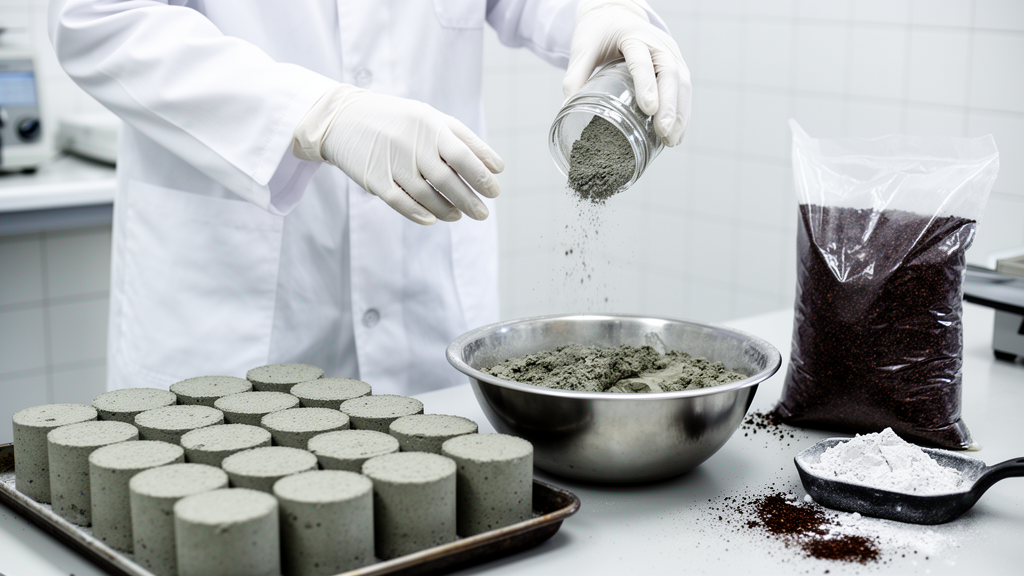
Spent coffee grounds ash can serve as a bio-derived alkaline activator for ground granulated blast-furnace slag (GGBFS) mortars, according to a peer-reviewed study published open access in Discover Materials on 29 October 2026 by Shayan Mohammadalizadeh, Hadi Nazarpour, Seyed Sina Mousavi and Mehdi Dehestani. The work responds to growing demand for alternative and waste-derived construction materials by testing whether ash from discarded coffee grounds can replace conventional potassium hydroxide in alkali-activated mortars.

The researchers incorporated the ash, abbreviated SCGA, at levels corresponding to 16%, 31% and 51% of the equivalent potassium oxide (Kâ‚‚O) content, and compared the resulting mortars with KOH-activated counterparts. A reference mixture containing no alkaline activator showed how little GGBFS reacts on its own: it reached compressive strengths of only 1.30 MPa at 28 days and 1.57 MPa at 56 days, underscoring the importance of an alkaline environment for slag activation.

Among the SCGA-containing mixtures, the lowest dose proved the most effective. The mortar designated AAM-SCGA-16% achieved compressive strengths of 31.08 MPa at 28 days and 33.04 MPa at 56 days. Raising the ash content reduced performance: AAM-SCGA-31% reached 15.80 and 17.43 MPa at the same ages, while AAM-SCGA-51% managed only 12.22 and 13.35 MPa. The same dose-dependent trend appeared in other mechanical measures. AAM-SCGA-16% recorded tensile and flexural strengths of 2.13 and 6.20 MPa, respectively, whereas the 31% and 51% mixtures dropped to tensile strengths of 2.08 and 1.63 MPa and flexural strengths of 4.92 and 4.74 MPa.

KOH-activated mortars generally exhibited higher mechanical strengths than their SCGA counterparts, and the authors are explicit that the coffee ash is not a like-for-like replacement in performance terms.

The study also probes the chemistry behind the activation. X-ray diffraction and Fourier-transform infrared spectroscopy results indicated that the alkaline activity of SCGA is mainly associated with potassium carbonate, K₂CO₃. Because potassium carbonate is a milder alkaline source than potassium hydroxide, it provides a slower and more controlled activation process compared with KOH, which the authors link to the behaviour of the mortars. The findings are limited to laboratory mortars at the tested substitution levels, and the reported strengths are specific to those mixes; further work would be needed before any practical application.

Subject of Research: Using spent coffee grounds ash as a bio-derived alkaline activator for ground granulated blast-furnace slag mortars

Article Title: Valorization of spent coffee grounds ash as a novel bio-derived alkaline activator for ground granulated blast-furnace slag mortars

Article References: Mohammadalizadeh, S., Nazarpour, H., Mousavi, S. S., & Dehestani, M. (2026). Valorization of spent coffee grounds ash as a novel bio-derived alkaline activator for ground granulated blast-furnace slag mortars. Discover Materials. https://doi.org/10.1007/s43939-026-01054-y

Image Credits: AI Generated

DOI: 10.1007/s43939-026-01054-y

Keywords: spent coffee grounds ash, alkali-activated mortars, GGBFS, alkaline activator, potassium carbonate, compressive strength, construction materials, waste valorization, XRD, FTIR, Valorization, spent

News Source: Denise Maddox. (October 29, 2026). Spent Coffee Grounds Ash Activates Slag Mortars, Study Finds. Scienmag.

Tags: alkali-activated mortarsalkaline activatorcompressive strengthconstruction materialsFTIRGGBFSpotassium carbonatespentspent coffee grounds ashvalorizationwaste valorizationXRD
Share12Tweet7Share2ShareShareShare1

Related Posts

Single Mutation Creates Highly Specific Maltose Biosensor

Single Mutation Creates Highly Specific Maltose Biosensor

November 9, 2026
Machine Learning Accurately Forecasts Monthly Malaria Incidence Across Southeastern Senegal Districts

Machine Learning Accurately Forecasts Monthly Malaria Incidence Across Southeastern Senegal Districts

November 9, 2026

Radiolabelled PSMA Shows Potential as Theranostic Target in High-Grade Glioma

November 9, 2026

Model Quantifies Uncertainty in Kidney Function Decline for Diabetic Patients

November 9, 2026

POPULAR NEWS

  • Ulinastatin Shortens ICU Stays in Post-Traumatic Sepsis Trial

    Ulinastatin Shortens ICU Stays in Post-Traumatic Sepsis Trial

    29 shares
    Share 12 Tweet 7
  • Simulation Study Reveals Bias in Self-Controlled Drug Safety Designs

    29 shares
    Share 12 Tweet 7
  • Metabolic Enzyme and Protein Lactylation Markers Signal Laryngeal Cancer Progression

    29 shares
    Share 12 Tweet 7
  • Marine Compounds Identified as Potential GLP-1 Receptor Agonists

    29 shares
    Share 12 Tweet 7

About

We bring you the latest biotechnology news from best research centers and universities around the world. Check our website.

Follow us

Recent News

Somali children with severe neck infections show vacuum therapy linked to deeper disease

Single Mutation Creates Highly Specific Maltose Biosensor

Research report: Balloon flotation pacing for severe post-reperfusion syndrome in adult liver transplantation: a four-patient case series

Subscribe to Blog via Email

Enter your email address to subscribe to this blog and receive notifications of new posts by email.

Join 86 other subscribers
  • Contact Us

Bioengineer.org © Copyright 2023 All Rights Reserved.

Welcome Back!

Login to your account below

Forgotten Password?

Retrieve your password

Please enter your username or email address to reset your password.

Log In
No Result
View All Result
  • Homepages
    • Home Page 1
    • Home Page 2
  • News
  • National
  • Business
  • Health
  • Lifestyle
  • Science

Bioengineer.org © Copyright 2023 All Rights Reserved.