• HOME
  • NEWS
  • EXPLORE
    • CAREER
      • Companies
      • Jobs
    • EVENTS
    • iGEM
      • News
      • Team
    • PHOTOS
    • VIDEO
    • WIKI
  • BLOG
  • COMMUNITY
    • FACEBOOK
    • INSTAGRAM
    • TWITTER
Monday, May 18, 2026
BIOENGINEER.ORG
No Result
View All Result
  • Login
  • HOME
  • NEWS
  • EXPLORE
    • CAREER
      • Companies
      • Jobs
        • Lecturer
        • PhD Studentship
        • Postdoc
        • Research Assistant
    • EVENTS
    • iGEM
      • News
      • Team
    • PHOTOS
    • VIDEO
    • WIKI
  • BLOG
  • COMMUNITY
    • FACEBOOK
    • INSTAGRAM
    • TWITTER
  • HOME
  • NEWS
  • EXPLORE
    • CAREER
      • Companies
      • Jobs
        • Lecturer
        • PhD Studentship
        • Postdoc
        • Research Assistant
    • EVENTS
    • iGEM
      • News
      • Team
    • PHOTOS
    • VIDEO
    • WIKI
  • BLOG
  • COMMUNITY
    • FACEBOOK
    • INSTAGRAM
    • TWITTER
No Result
View All Result
Bioengineer.org
No Result
View All Result
Home NEWS Science News Biology

Special delivery: Macromolecules via spider’s ‘bite’

Bioengineer by Bioengineer
May 24, 2017
in Biology
Reading Time: 2 mins read
0
Share on FacebookShare on TwitterShare on LinkedinShare on RedditShare on Telegram
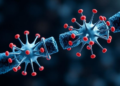
IMAGE

Credit: Kyoto University

Kyoto, Japan — Our cells are rich in proteins which are potential targets for therapy. But study of these proteins' behavior, using externally delivered biomacromolecules, has often been stymied by the difficulty of gaining access to the interiors of living cells.

Now scientists at Kyoto University have used a reengineered spider venom peptide to deliver biomacromolecules – such as an antibody — into a cell. Their strategy, appearing in Nature Chemistry, not only allows researchers to track the antibodies visually, but also makes it possible for the antibodies to interact with target proteins, modulating their functions.

"Efficient labeling of intracellular proteins with antibodies allows us to dramatically improve our understanding of their behavior and significance," explains first author Misao Akishiba. "Cells can take in antibodies through membrane-bound vesicles called 'endosomes'. But normally once inside these endosomes, the antibodies have trouble escaping."

The researchers found that a simple redesign of spider venom peptide 'M-lycotoxin' enables the efficient release of antibodies from their endosome cages.

"We took M-lycotoxin and replaced a leucine residue with glutamic acid, which we then called 'L17E'," continues Akishiba. "When L17E enters the cell, it specifically interacts with endosome membranes, breaking them down and releasing the antibodies."

The research team then showed that functional antibodies, such as those involved in suppressing gene expression, could be delivered as well.

"This will benefit not only basic science, but also the development of new treatments and drugs," concludes team leader Shiroh Futaki. "Moreover, this tool could potentially be used to transport other bioactive macromolecules — and even nanoparticles — into cells."

As a next step, the researchers hope to improve the efficiency of macromolecule uptake by endosomes, thereby increasing the amount of cargo that can be transported.

###

The paper "Cytosolic antibody delivery by lipid-sensitive endosomolytic peptide" appeared 22 May 2017 in the Nature Chemistry, with doi: 10.1038/nchem.2779

Kyoto University is one of Japan and Asia's premier research institutions, founded in 1897 and responsible for producing numerous Nobel laureates and winners of other prestigious international prizes. A broad curriculum across the arts and sciences at both undergraduate and graduate levels is complemented by numerous research centers, as well as facilities and offices around Japan and the world. For more information please see: http://www.kyoto-u.ac.jp/en

Media Contact

Raymond Kunikane Terhune
[email protected]
81-757-535-728
@KyotoU_News

http://www.kyoto-u.ac.jp/en

############

Story Source: Materials provided by Scienmag
Share12Tweet8Share2ShareShareShare2

Related Posts

Uncovering C. elegans Immunity via Genetic Screens — Biology

Uncovering C. elegans Immunity via Genetic Screens

May 16, 2026
Single mother must adapt swiftly — the survival of her colony depends on it — Biology

Single mother must adapt swiftly — the survival of her colony depends on it

May 15, 2026

Why Are Nearly Everyone Right-Handed? It Might Be Linked to How We Learned to Walk

May 15, 2026

Excessive Neuronal Activity Initiates Severe Autoimmune Brain Disorder

May 15, 2026
Please login to join discussion

POPULAR NEWS

  • Research Indicates Potential Connection Between Prenatal Medication Exposure and Elevated Autism Risk

    844 shares
    Share 338 Tweet 211
  • New Study Reveals Plants Can Detect the Sound of Rain

    731 shares
    Share 292 Tweet 182
  • Salmonella Haem Blocks Macrophages, Boosts Infection

    62 shares
    Share 25 Tweet 16
  • Breastmilk Balances E. coli and Beneficial Bacteria in Infant Gut Microbiomes

    58 shares
    Share 23 Tweet 15

About

We bring you the latest biotechnology news from best research centers and universities around the world. Check our website.

Follow us

Recent News

Controlling Surrounding Rock Failure in Coal Pillar Retreats

Gut Microbiome Nitrogen Shift Boosts Ulcerative Colitis Treatment

Sharpening Our View of Bacteria

Subscribe to Blog via Email

Enter your email address to subscribe to this blog and receive notifications of new posts by email.

Join 82 other subscribers
  • Contact Us

Bioengineer.org © Copyright 2023 All Rights Reserved.

Welcome Back!

Login to your account below

Forgotten Password?

Retrieve your password

Please enter your username or email address to reset your password.

Log In
No Result
View All Result
  • Homepages
    • Home Page 1
    • Home Page 2
  • News
  • National
  • Business
  • Health
  • Lifestyle
  • Science

Bioengineer.org © Copyright 2023 All Rights Reserved.