


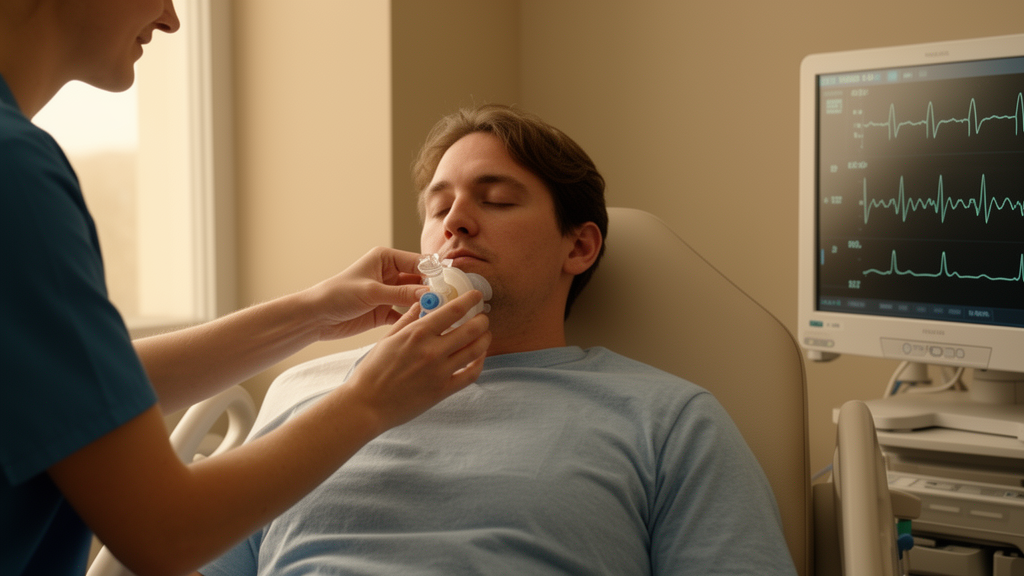
Tracheostomized patients undergoing speaking valve training show a striking split in how their bodies respond: breathing mechanics and autonomic stress reactions appear immediately while the valve is in place, but the much-anticipated gains in blood oxygen levels only emerge after the valve is removed, according to a prospective observational study published in Critical Care.
Although the intervention is widely used, the dynamic, multi-system physiological responses it provokes, and the timing of those responses, have remained poorly characterized. The study aimed to comprehensively evaluate cardiopulmonary adaptations during and following speaking valve training using wearable sensing technology.
The researchers enrolled 120 tracheostomized patients and monitored them continuously with a wearable sensor across three phases: a baseline period (T0), the speaking valve intervention itself (T1), and a recovery period after valve removal (T2). From the continuous recordings, the team extracted a multidimensional panel of 86 parameters spanning four domains: macroscopic vital signs, the structure of the respiratory cycle, respiratory complexity, and heart rate variability, a window into autonomic nervous system activity.
A key safety finding preceded the physiological analysis: speaking valve training was well tolerated across the cohort, with no participants meeting the predefined safety stopping criteria.
During the intervention phase, compared with baseline, patients showed immediate respiratory mechanical adaptation together with significantly enhanced respiratory complexity, reflected in increased multiscale entropy at scales 1 to 5 (adjusted p < 0.05).
The same intervention phase, however, carried a cardiovascular cost. Heart rate variability analysis revealed acute cardiovascular stress in the form of vagal withdrawal, with decreases in RMSSD, high-frequency power, and total power. These markers indicate reduced parasympathetic, or vagal, influence on the heart while the valve was in use. Notably, oxygenation metrics did not change during this phase, despite the visible shifts in breathing pattern and autonomic balance.
The picture changed after the valve came off. Significant improvements in oxygenation, including increased minimum SpO2 and a reduced desaturation burden, emerged exclusively during the recovery phase when compared with baseline (adjusted p < 0.05). In other words, the clinical benefit that clinicians ultimately seek from speaking valve use was not visible while the valve was on, but only in the period that followed.
Autonomic recovery also lagged behind. The low-frequency to high-frequency ratio of heart rate variability rose significantly from the training phase to the recovery phase (p = 0.02), a pattern the authors describe as persistent sympathetic predominance after valve removal. The stress response triggered by speaking, it appears, does not switch off the moment the device is removed.
The study’s central conclusion is this temporal decoupling: speaking valve training triggers an immediate respiratory regulation response and acute cardiovascular stress, whereas the beneficial effects on oxygenation manifest as a delayed phenomenon during recovery. The authors argue that this dissociation underscores the need to incorporate monitored recovery periods into speaking valve clinical protocols, rather than ending observation when the valve is taken off.
Subject of Research: Temporal physiological responses to speaking valve training in tracheostomized patients measured with wearable sensors
Article Title: Temporal dissociation of physiological adaptations during speaking valve training in tracheostomized patients: a wearable device-based study
Article References: Li, L., Niu, G., Yuan, T., Zhang, C., Gao, Z., Li, Y., Zhao, D., Xia, W., Zhang, Z., & Jiang, H. (2026). Temporal dissociation of physiological adaptations during speaking valve training in tracheostomized patients: a wearable device-based study. Critical Care. https://doi.org/10.1186/s13054-026-06391-1
Image Credits: AI Generated
DOI: 10.1186/s13054-026-06391-1
Keywords: speaking valve, tracheostomy, wearable sensors, heart rate variability, oxygenation, respiratory complexity, autonomic nervous system, ventilator weaning, critical care, physiological monitoring, Temporal, dissociation
News Source: Ophelia Keating. (October 29, 2026). Speaking valve training reshapes breathing and heart rhythms on different timescales. Scienmag.



