Credit: NASA
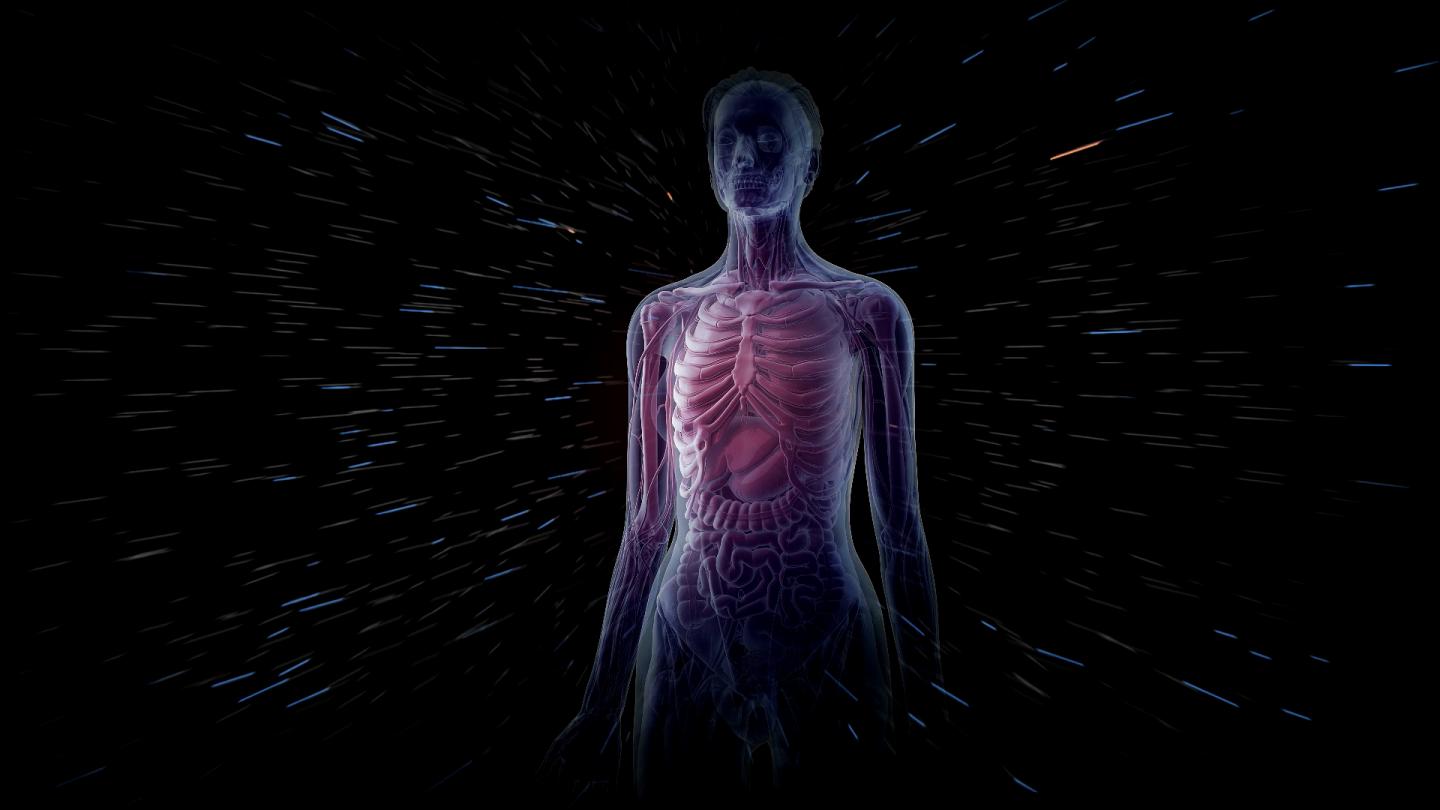
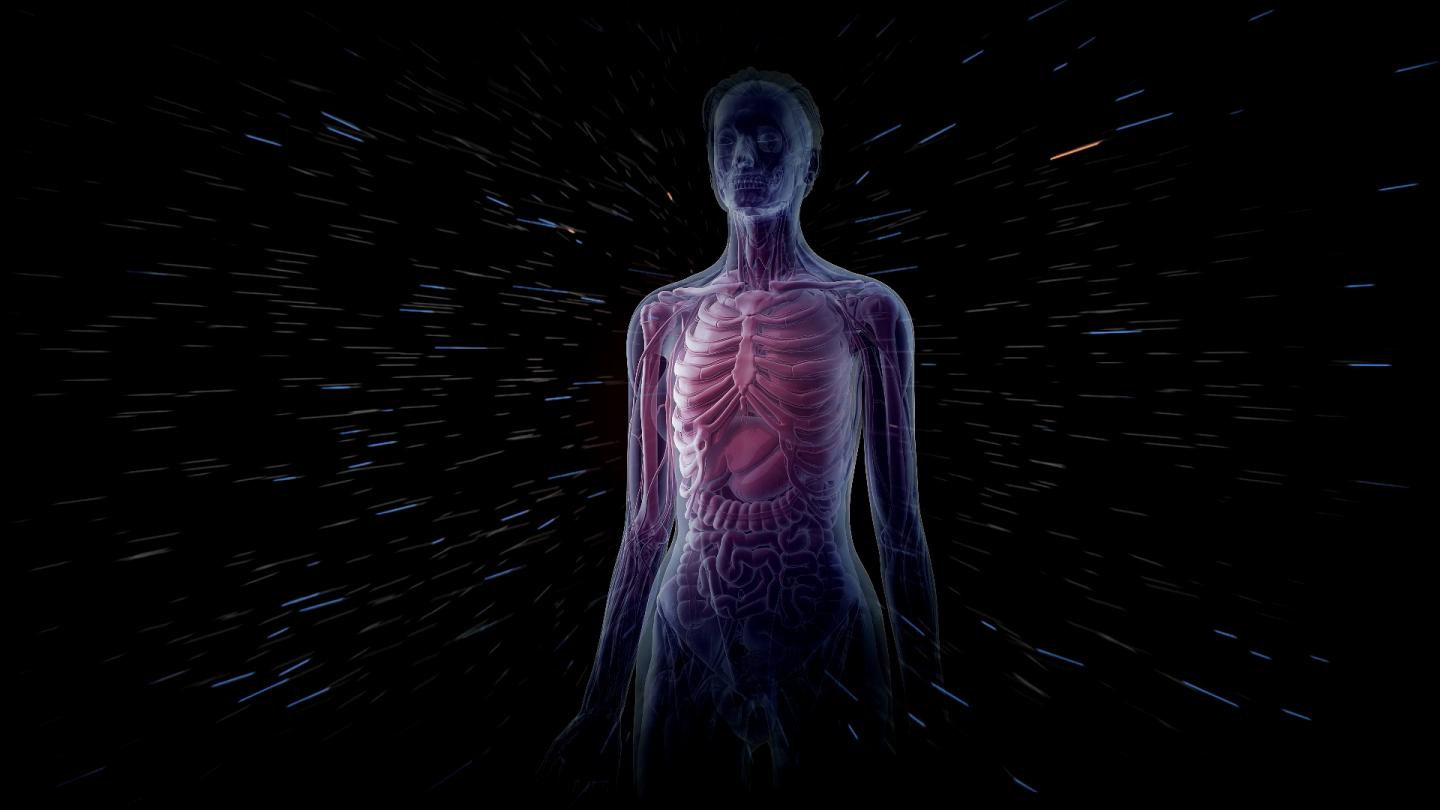
While people protect their eyes from the sun's radiation during a solar eclipse, NASA's Human Research Program (HRP) is working to protect the whole human body from radiation in space. Space radiation is dangerous and one of the primary health risks for astronauts.
"Determining astronaut health consequences following radiation exposure involve very complex processes," said Tony Slaba, Ph.D., NASA research physicist. "It's difficult to quantify exactly how radiation is interacting with tissues and cells — and more complicated to quantify and determine what long-term outcomes are going to be in terms of the potential diseases and biological system effects."
Virtually any cell in the body is susceptible to radiation damage. The HRP is concerned with long-term health consequences of radiation exposure such as cancer, as well as adverse effects to the central nervous and cardiovascular systems.
"The primary means by which radiation effects cells is by damaging DNA — breaks in strands could be experienced," said Peter Guida, Ph.D., liaison biologist for NASA Space Radiation Laboratory. "DNA bases (adenine, guanine, cytosine, and thymine) can also be knocked out. The cell will make an attempt to repair these damages. Sometimes it's effective and sometimes it's not, and sometimes it can be misrepaired. Genes that have been misrepaired can become mutations, and the accumulation of these mutations over time can potentially lead to cancer."
Space radiation can lead to other effects. Radiation can alter the cardiovascular system, damaging the heart, harden and narrow arteries, and/or eliminate some of the cells in linings of the blood vessels, leading to cardiovascular disease. Radiation exposure can hinder neurogenesis, the process of generating new cells. If neurons or supporting cells are damaged or killed, there is less potential for the development of new cells, especially at the rate a person would need to minimize or eliminate the damage. In the central nervous system, this could lead to cognitive impairment and memory deficits.
"In space, outside Earth's protective magnetic field and atmosphere, there is a very complex radiation field of protons and all the elements on the periodic table are coming in at energies approaching the speed of light," Slaba said. "Exposure to radiation in space is quite different than exposure to radiation on Earth (like X-rays and gamma rays)."
The HRP is investigating various solutions. Concepts such as shielding materials for transport vehicles, habitats and space suits, pharmaceutical countermeasures, and even faster rockets to reduce the time spent in space are all being studied. Innovations developed to protect human health reduce the risk of space exploration and enable future integrated one-year missions.
###
NASA's Human Research Program (HRP) is dedicated to discovering the best methods and technologies to support safe, productive human space travel. HRP enables space exploration by reducing the risks to astronaut health and performance using ground research facilities, the International Space Station, and analog environments. This leads to the development and delivery of a program focused on: human health, performance, and habitability standards; countermeasures and risk mitigation solutions; and advanced habitability and medical support technologies. HRP supports innovative, scientific human research by funding more than 300 research grants to respected universities, hospitals and NASA centers to over 200 researchers in more than 30 states.
Amy Blanchett
Laurie Abadie
NASA Human Research Strategic Communications
Media Contact
Amy Blanchett
[email protected]
@NASA_Johnson
http://www.nasa.gov/centers/johnson/home
Original Source
https://www.nasa.gov/feature/space-radiation-is-risky-business-for-the-human-body