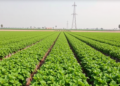
Land is becoming one of the Southeast United States’ most contested resources, and the consequences are reaching far beyond property markets. As farms and forests are converted for housing, commercial development and other uses, young farmers are finding it increasingly difficult to acquire the acreage needed to start or inherit an agricultural operation. Family farms face mounting pressure to remain profitable, while rural communities risk losing the economic activity, food production and environmental services associated with working land.
The University of Tennessee Institute of Agriculture and the Tennessee Farm Bureau Federation will convene regional leaders to address the problem at the inaugural Southeast Farm and Forest Land Summit on October 12, 2026, at the Tennessee Farm Bureau headquarters in Columbia, Tennessee. The event is designed to move the discussion from documenting land loss toward identifying practical interventions that could help keep farms and forests in production across the Southeast.
The summit comes as land-use change reshapes the region’s agricultural geography. When farmland is fragmented or converted, the effects are not limited to the individual parcel. Smaller and more isolated fields can make farming less efficient, increase travel distances between fields and facilities, and reduce access to shared infrastructure such as irrigation systems, storage, processing and transportation networks. Forest conversion can also remove carbon-storage capacity, wildlife habitat and natural systems that help regulate water quality and flooding.
For young and beginning farmers, the central challenge is often access to land rather than a lack of interest or technical knowledge. Farmland prices may reflect development potential instead of agricultural value, placing productive acreage beyond the reach of people who are trying to build an operation. In addition to purchasing land, new farmers must finance equipment, seed, fertilizer, livestock, labor and insurance. High entry costs can delay farm formation, force producers into short-term leases or prevent the transfer of viable operations to the next generation.
The summit will bring together farmers, agricultural industry representatives, state agencies and university researchers from across the Southeast. Its program will examine the economic forces influencing land markets and explore how profitability, public policy and long-term planning interact. Speakers are expected to discuss farmland investment, the regional economic outlook and the condition of the agricultural economy, while panel discussions will focus on land-use trends, policy options and succession planning for farm and forest owners.
Farm profitability is a critical part of any strategy to preserve working land. If agricultural income cannot compete with the financial returns offered by development, owners may be pushed toward selling, subdividing or converting their property. Improving profitability can involve better market access, efficient production systems, value-added processing, risk management and technologies that reduce input costs. However, technological advances alone cannot solve land-access problems if farmers lack secure tenure or if the cost of acreage continues to rise faster than farm income.
Succession planning will also receive attention because the transfer of land between generations can determine whether an operation remains intact. Without early legal and financial planning, farms may be divided among heirs, sold to settle estate obligations or transferred without a clear management structure. A successful transition can require conservation agreements, carefully designed ownership arrangements, tax planning, business training and open communication among family members. These measures can help preserve the productive scale of a farm while giving younger operators a realistic pathway into ownership and management.
Organizers hope the Tennessee gathering will demonstrate how universities, agricultural organizations and government agencies can work together on a regional land-use challenge. Research institutions can provide data on development patterns, farm economics, soil productivity and environmental impacts. Industry groups can communicate the practical realities facing producers, while public agencies can evaluate incentives, zoning approaches, conservation programs and financing tools. Coordinated action is especially important because land markets, watersheds, transportation systems and agricultural supply chains cross county and state boundaries.
Keith Carver, senior vice chancellor and senior vice president of UTIA, described the summit as an opportunity to bring Southeast leaders together around an issue affecting producers and rural communities. Eric Mayberry, president of the Tennessee Farm Bureau Federation, said farmers across the region are confronting both profitability challenges and rapid land-use change. The summit will cost $20 to attend, and registration is available through the University of Tennessee. Organizers say the meeting could become a model for future regional efforts aimed at keeping farm and forest land available for the next generation.
Subject of Research: Farmland and forestland loss in the southeastern United States, including its effects on young farmers, farm succession, agricultural profitability and rural economies.
Article Title: Southeast Land-Use Crisis Puts Young Farmers and Family Farms at Risk
Web References: https://tiny.utk.edu/2026-land-summit; https://utia.tennessee.edu/
Image Credits: Photo by T. Cronin, courtesy UTIA.
Keywords: Agriculture, farming, farmland loss, forestland conservation, land-use change, young farmers, beginning farmers, farm succession, rural economies, Tennessee, Southeast United States, agricultural policy
Tags: agricultural land access issueseconomic effects of land loss in rural communitiesfamily farm sustainabilityfarmland preservation challengesforest land conservation strategiesimpact of land development on farmsland conservation in Southeast USregional land management policiesrural land use changesSoutheast Farm and Forest Land Summitsustainable agriculture and forestry in Southeastyoung farmers land acquisition