Inducing pseudopregnancy in female recipient rodents represents a foundational requirement for successful embryo transfer procedures, yet conventional protocols depend heavily on natural mating encounters with surgically sterilized male partners. In a comparative laboratory investigation conducted with female Sprague-Dawley rats, researchers demonstrated that mechanical cervicovaginal stimulation delivered through sonic vibration sustained the hormone-dependent diestrus stage for a substantially longer interval than natural cohabitation with vasectomized males. The team tracked estrous cycle progression and monitored temporal molecular changes within exfoliated vaginal smear cells to evaluate whether an artificial instrument could replicate the reproductive environment achieved through sterile copulation. By examining reproductive stage duration alongside the expression profiles of key epithelial genes across early, middle, and late diestrus, the experimental protocol directly compared the biological consistency of mechanical induction against conventional surgical approaches. The resulting observations revealed that acoustic vibration not only reliably triggered a sustained pseudopregnant state but also maintained broadly comparable patterns of vaginal epithelial gene expression throughout the prolonged diestrus interval.
Standard embryo transfer workflows rely on vasectomized males to stimulate the female reproductive tract, triggering the neuroendocrine reflexes necessary to sustain functional corpora lutea and receptive uterine conditions without fertilizing the transferred embryos. Maintaining colonies of vasectomized males introduces significant logistical and welfare demands, requiring specialized surgical procedures, continuous post-operative care, dedicated cage space, and recurring expenditures for animal housing and monitoring. Furthermore, natural mating protocols are inherently vulnerable to individual behavioral variability, fluctuating copulatory performance, and inconsistent physical stimulation during cohabitation, all of which can compromise pseudopregnancy synchronization across experimental groups. Mechanical induction utilizing precise sonic vibration has emerged as a promising technical alternative capable of providing standardized cervicovaginal stimulation while reducing overall dependence on male colonies. Prior research established that vibration-induced pseudopregnancy could support embryonic development through to live offspring, yet questions remained regarding whether the physiological duration of diestrus and the accompanying epithelial molecular signatures faithfully mirrored the conditions induced by natural cohabitation with vasectomized males.
To rigorously examine these comparative dynamics under controlled conditions, the investigators utilized female Sprague-Dawley rats aged twelve weeks, synchronizing their reproductive cycles through the intraperitoneal administration of two hundred micrograms of luteinizing hormone-releasing hormone. Following hormone administration, vaginal smear cytology was assessed after four days, confirming that all recipient animals had entered the proestrus stage before experimental assignment. Nine synchronized females were allocated to the artificial stimulation cohort, while seven females were assigned to cohabitation with seven thirteen-week-old male rats that had previously undergone bilateral vasectomy. Postoperative care for the surgical male cohort included subcutaneous carprofen administration at five milligrams per kilogram once daily across three days, followed by a two-week physical recovery period and ten days of solitary housing prior to mating trials. The day on which either overnight cohabitation or instrumented sonic vibration took place was designated as day zero of pseudopregnancy, establishing a synchronized starting baseline for temporal monitoring.
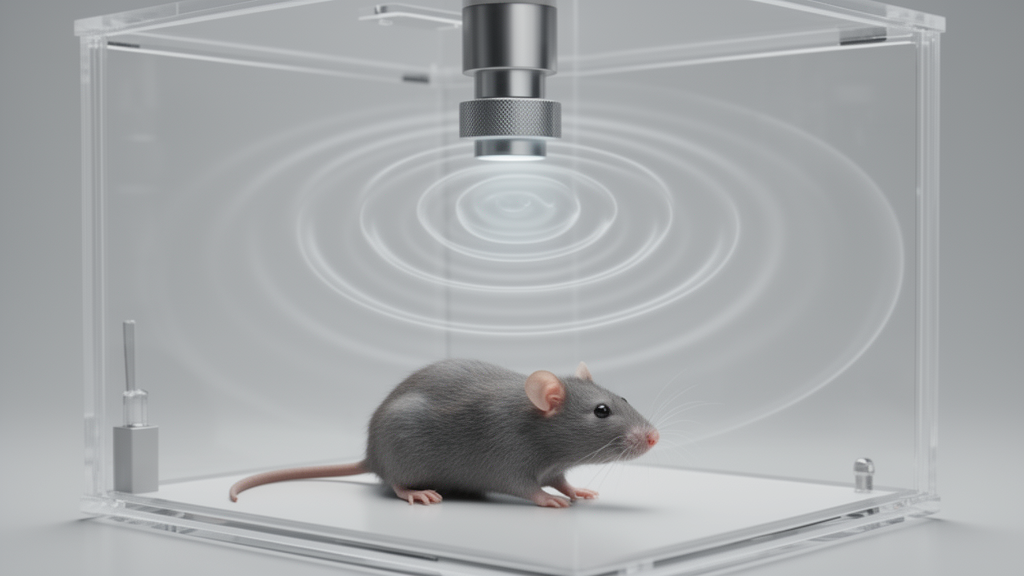
The mechanical induction procedure employed a custom-built sonic vibrator engineered to operate at a rated output of zero point seventy-five watts and a delivery frequency of twenty thousand cycles per minute. The stimulation apparatus was fitted with a specialized fluororesin probe measuring four millimeters in diameter and seven centimeters in total length, designed for atraumatic vaginal insertion. During the procedure, the probe was gently advanced into the vaginal cavity until establishing direct physical contact with the cervical canal, after which vibration was administered in two distinct thirty-second stimulation intervals separated by a thirty-second rest period. Following induction, reproductive cycle stages were classified through routine vaginal smear cytology conducted at intervals of one to two days, utilizing crystal violet staining to assess shifting proportions of nucleated epithelial cells, cornified epithelial sheets, and infiltrating leukocytes. The total duration of pseudopregnancy was quantitatively defined as the unbroken sequence of days during which females remained in continuous diestrus prior to the cytological reappearance of proestrus or estrus.
Cytological tracking demonstrated that both experimental protocols successfully shifted females from estrus on day zero into the prolonged diestrus phase, but the persistence of this stage diverged notably between the two experimental groups. Females paired overnight with vasectomized male rats progressed into metestrus and diestrus by day four, maintaining the characteristic leukocyte-predominant diestrus smear until day ten to twelve before resuming cyclic estrous activity. In contrast, female rats subjected to mechanical sonic vibration entered diestrus rapidly by day two and exhibited a markedly extended diestrus interval that persisted between twelve and twenty-two days. The return to proestrus and estrus cytology occurred gradually across an extended timeframe spanning day fourteen to day twenty-four among the vibration-treated animals. This experimental outcome indicated that direct acoustic vibration of the cervicovaginal canal generated an unusually resilient luteal maintenance response that exceeded the temporal window achieved through conventional sterile mating encounters under identical housing environments.
To evaluate whether the extended diestrus period preserved normal vaginal epithelial physiology, the investigators isolated total ribonucleic acid from residual cotton swab samples collected at three specific experimental milestones: early diestrus on the first day of entry, mid-diestrus, and late diestrus immediately preceding the return to proestrus. Following slide preparation, the swab tips were agitated in ice-cold phosphate-buffered saline, centrifuged at three hundred times gravity for one minute, and processed with commercial extraction reagents. Complementary deoxyribonucleic acid was synthesized from five hundred to one thousand nanograms of purified total ribonucleic acid, followed by quantitative real-time polymerase chain reaction assays using green fluorescent master mixes. Gene amplification data were normalized against glyceraldehyde-3-phosphate dehydrogenase expression and quantified using the comparative threshold cycle method. Statistical significance across sampling points and induction methods was determined through two-way analysis of variance on delta threshold values coupled with Bonferroni multiple comparisons, alongside verification of model normality and homoscedasticity using Shapiro-Wilk and Spearman testing.
The selected gene panel encompassed key molecular markers representing steroid hormone responsiveness, terminal epithelial cornification, mucosal inflammatory signaling, and intercellular junctional integrity within the vaginal mucosa. Expression of the progesterone receptor reflected tissue responsiveness to luteal steroid hormones, while cytokeratin 14 served as a structural marker of basal epithelial cell layers and cellular turnover during cycle transitions. Epithelial differentiation and keratinization dynamics were monitored through filaggrin expression, which corresponds to the cyclical maturation of the cornified rodent vaginal barrier. Mucosal immune activity was assessed by measuring transcripts for interleukin-1 beta, an innate immune cytokine that undergoes natural cyclic fluctuations across the reproductive cycle. In addition, the structural cohesion and barrier properties of the epithelial layer were evaluated by tracking four major junction-associated transcripts, specifically zonula occludens-1, occludin, claudin-1, and cadherin-1, which mediate intercellular seal formation and adhesive tissue architecture.
During early diestrus, transcript abundance for all eight evaluated target genes exhibited closely matched baseline levels between the sonic vibration group and the vasectomized mating cohort, confirming equivalent initial epithelial reprogramming. As animals transitioned into mid-diestrus, divergence appeared in specific functional markers: females mated with vasectomized males demonstrated elevated progesterone receptor expression relative to the vibration group, whereas vibration-treated females exhibited significantly higher cytokeratin 14 transcript levels. Concurrently, interleukin-1 beta expression increased during mid-diestrus across both experimental groups without establishing a statistically significant difference between the two stimulation modalities. As animals reached late diestrus immediately prior to cycle resumption, filaggrin expression rose significantly higher in the vasectomized mating group than in the vibration cohort. The vasectomized cohort also displayed elevated late-diestrus levels of cytokeratin 14 and interleukin-1 beta, reflecting subtle temporal differences in late epithelial cornification and mucosal remodeling before cyclic estrus resumed.
In contrast to the selective variations observed in differentiation and receptor markers, the four structural junction-associated genes maintained equivalent expression patterns across both experimental groups throughout all stages of diestrus. Transcripts encoding zonula occludens-1, occludin, claudin-1, and cadherin-1 displayed coordinated stage-dependent fluctuations, exhibiting a progressive upregulation as the reproductive tract advanced toward late diestrus. Crucially, two-way analysis of variance detected no statistically significant differences in junctional transcript abundance between females stimulated mechanically and those co-housed with vasectomized males at any sampling point. This coordinated late-stage increase across both experimental cohorts suggests that the assembly and reinforcement of epithelial junctional barriers represent an intrinsic property of diestrus progression that proceeds unaffected by the physical method utilized to trigger luteal maintenance. Consequently, the mechanical probe delivered a physical stimulus sufficient to support normal barrier-associated gene dynamics within exfoliated vaginal cell populations.
The prolonged diestrus duration observed following sonic vibration likely stems from the biomechanical consistency of artificial cervicovaginal stimulation relative to variable natural mating behaviors. In female rats, mechanical or copulatory stimulation of the cervix initiates a neuroendocrine reflex through the brain-pituitary-ovary axis, triggering nocturnal and diurnal prolactin surges that provide luteotropic support to corpora lutea and sustain progesterone production. Natural copulation involves variable numbers of intromissions and differing physical vigor across individual male pairs, which can yield fluctuating levels of pituitary stimulation and variable luteal lifespans. The standardized frequency of twenty thousand cycles per minute and controlled contact pressure delivered by the fluororesin probe may provide a more reliable and robust neural stimulus, thereby delaying luteolysis and extending diestrus up to twenty-two days. While earlier investigations by Kaneko and colleagues documented diestrus maintenance lasting approximately fourteen days after acoustic vibration, the extended twenty-two-day duration observed here represents an unusually sustained progesterone-dominant cytological state requiring future endocrine confirmation.
Notwithstanding these promising findings, the researchers noted several experimental boundaries that require dedicated follow-up investigation before widespread laboratory adoption. Circulating endocrine concentrations of prolactin, progesterone, and estradiol were not directly quantified in this protocol, leaving the precise systemic hormonal drivers of the twenty-two-day diestrus interval open to ongoing endocrine profiling. Furthermore, because vaginal smear specimens consist primarily of exfoliated epithelial cells interspersed with stage-dependent leukocyte populations, complementary histological and immunohistochemical analyses of intact vaginal, cervical, and uterine tissues will be necessary to confirm tissue-level architecture. Most importantly, the study focused on cytological persistence and molecular transcript expression rather than direct functional embryological endpoints, such as implantation percentages, fetal resorption rates, and live birth yields following embryo transfer. Future investigations combining systemic endocrine measurements, histopathological evaluations of recipient reproductive tracts, and surgical embryo transfers will be critical to establishing whether sonic vibration can fully replace vasectomized males in high-throughput rodent reproductive facilities.
Subject of Research: Comparison of diestrus duration and vaginal gene expression in pseudopregnant rats induced by mechanical vibration or sterile mating
Article Title: Comparison of diestrus duration and temporal gene expression patterns in vaginal smear samples from pseudopregnant rats induced by sonic vibration or mating with vasectomized males
Article References: Hong, S., Kang, K. S., Kim, H., Kim, R., Kim, K., Ha, Y., Kim, N., Kim, M., Yun, J.-W., & Kim, T. M. (2026). Comparison of diestrus duration and temporal gene expression patterns in vaginal smear samples from pseudopregnant rats induced by sonic vibration or mating with vasectomized males. Laboratory Animal Research, 42(1), Article 28. https://doi.org/10.1186/s42826-026-00290-w
Image Credits: AI Generated
DOI: 10.1186/s42826-026-00290-w
Keywords: pseudopregnancy, Sprague-Dawley rats, sonic vibration, vasectomized males, diestrus duration, vaginal cytology, embryo transfer, progesterone receptor, cytokeratin 14, interleukin-1 beta, filaggrin, zonula occludens-1, occludin, claudin-1, cadherin-1, quantitative real-time PCR, assisted reproduction
News Source: Drew Townsend. (November 18, 2026). Sonic Vibration Extends Diestrus Duration in Pseudopregnant Rats Compared With Mating. Scienmag.