

• HOME
  • NEWS
  • EXPLORE
    • CAREER
      • Companies
      • Jobs
    • EVENTS
    • iGEM
      • News
      • Team
    • PHOTOS
    • VIDEO
    • WIKI
  • BLOG
  • COMMUNITY
    • FACEBOOK
    • INSTAGRAM
    • TWITTER
Saturday, October 31, 2026
BIOENGINEER.ORG
No Result
View All Result
  • Login
  • HOME
  • NEWS
  • EXPLORE
    • CAREER
      • Companies
      • Jobs
        • Lecturer
        • PhD Studentship
        • Postdoc
        • Research Assistant
    • EVENTS
    • iGEM
      • News
      • Team
    • PHOTOS
    • VIDEO
    • WIKI
  • BLOG
  • COMMUNITY
    • FACEBOOK
    • INSTAGRAM
    • TWITTER
No Result
View All Result
Bioengineer.org
No Result
View All Result
Home NEWS Science News Technology

Solar-Geothermal Hybrid Heating Cuts Borehole Heat Extraction in Xining

by
October 29, 2026
in Technology
Reading Time: 2 mins read
0
Solar-Geothermal Hybrid Heating Cuts Borehole Heat Extraction in Xining

Solar-Geothermal Hybrid Heating Cuts Borehole Heat Extraction in Xining

Share on FacebookShare on TwitterShare on LinkedinShare on RedditShare on Telegram

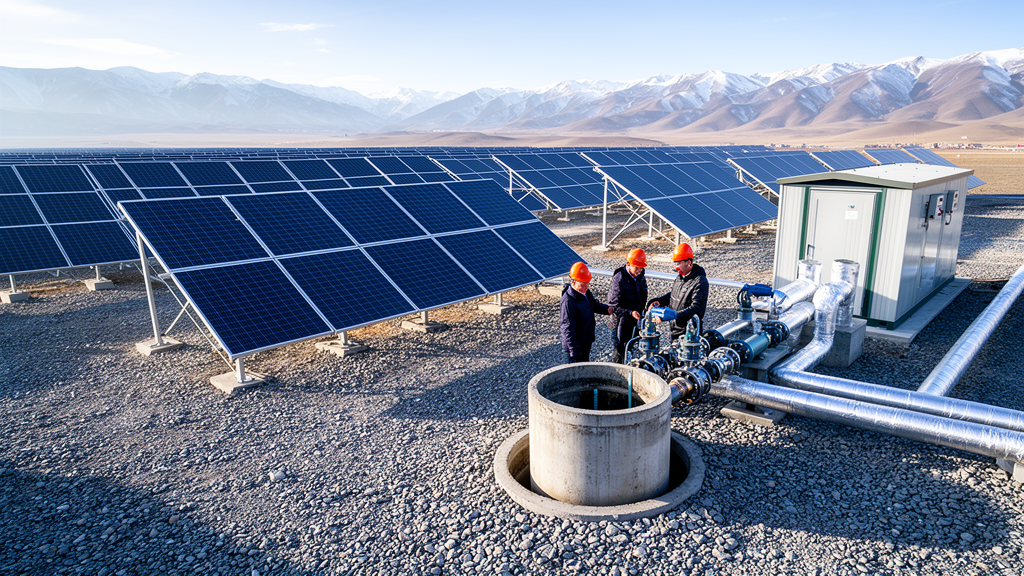
A modeling study published in the journal Geothermal Energy examined two heating options for a building in Xining, Qinghai Province, China, an alpine city where winter heating demand is high. Using the TRNSYS simulation platform, the researchers modeled a medium-deep borehole heat exchanger (DBHE) heating system and a coupled system that adds a solar thermal subsystem to the same borehole setup, known as ST-DBHE. They then compared the two designs on heating performance, energy consumption, and environmental benefits over a simulated operating period.

The simulated DBHE system alone drew water at an average supply temperature of 37.62 °C from the geothermal well and returned it at 36.49 °C. Over the simulation it extracted a cumulative 141,133.48 kWh of heat from the well, achieved an average system coefficient of performance (COP) of 2.30, and consumed 70,299.82 kWh of energy annually.

The coupled ST-DBHE configuration showed a different thermal profile at the well. Average supply and return water temperatures rose slightly to 38.68 °C and 37.76 °C, while cumulative heat extraction from the geothermal well fell to 110,756.04 kWh. The solar subsystem delivered a cumulative 47,410.96 kWh of thermal recharge to the ground. However, the average system COP was marginally lower at 2.26, and annual energy consumption rose to 75,992.99 kWh.

Solar preheating improved conditions at the heat pump itself: the heat pump unit’s COP increased from 3.77 in the DBHE system to 3.79 in the coupled system. More significantly for long-term operation, geothermal heat extraction dropped by 21.52%, and the average formation temperature at the end of the simulation period was 2.65 °C higher than in the standalone borehole system.

The authors frame this contrast as a question of timescales. In the short term, the DBHE system alone holds a slight advantage in energy consumption. Over longer horizons, however, the solar thermal recharge reduces the burden placed on the underground formation each heating season, which the study identifies as more favorable for formation thermal recovery and the sustainable long-term use of the geothermal resource.

Both simulated systems also showed substantial emission-reduction benefits when compared against conventional coal-fired heating. Because the comparison was conducted in simulation rather than as a multi-year field trial, the reported COPs, extraction volumes, and temperature changes represent modeled performance for this specific building and site in Xining, and the authors note the findings favor sustainable geothermal utilization in the coupled configuration despite its higher modeled annual energy use.

Subject of Research: Simulation-based comparison of medium-deep borehole geothermal and solar-coupled heating systems for a building in Xining, China

Article Title: Solar–geothermal combined heating in an alpine region: coupling, performance, and environmental benefits —a case study of Xining, Qinghai, China

Article References: Zhan, X., Yan, B., Zhao, Z., Qin, G., Yu, Y., Han, C., & Xie, X. (2026). Solar–geothermal combined heating in an alpine region: coupling, performance, and environmental benefits —a case study of Xining, Qinghai, China. Geothermal Energy. https://doi.org/10.1186/s40517-026-00403-7

Image Credits: AI Generated

DOI: 10.1186/s40517-026-00403-7

Keywords: geothermal heating, solar thermal, borehole heat exchanger, heat pump, TRNSYS, Xining, Qinghai, COP, emission reduction, formation temperature recovery, Solar, geothermal

News Source: Denise Maddox. (October 29, 2026). Solar-Geothermal Hybrid Heating Cuts Borehole Heat Extraction in Xining. Scienmag.


Tags: borehole heat exchangerCOPEmission reductionformation temperature recoverygeothermalgeothermal heatingheat pumpQinghaisolarsolar thermalTRNSYSXining
Share12Tweet7Share2ShareShareShare1

Related Posts

Systematic review maps sustainability tensions in offshore wind development

Systematic review maps sustainability tensions in offshore wind development

October 30, 2026
Amateur maps and sketches helped put Hong Kong's wartime pillboxes on official charts

Amateur maps and sketches helped put Hong Kong’s wartime pillboxes on official charts

October 30, 2026

Heavier logging trucks only pay off when the road network lets them work

October 30, 2026

Supersulfated cement outperforms Portland cement in curbing concrete’s alkali-silica reaction

October 30, 2026

POPULAR NEWS

  • Microbial Sources and Stress Shape the Hidden Endophytes of an Invasive Plant

    Microbial Sources and Stress Shape the Hidden Endophytes of an Invasive Plant

    29 shares
    Share 12 Tweet 7
  • Firebreaks Leave Lasting Scars in Grasslands While Wildfire Heals Fast

    29 shares
    Share 12 Tweet 7
  • ZNF207 shields glutamine transporter ASCT2 from degradation to fuel liver cancer growth

    29 shares
    Share 12 Tweet 7
  • Systematic review maps sustainability tensions in offshore wind development

    29 shares
    Share 12 Tweet 7

About

We bring you the latest biotechnology news from best research centers and universities around the world. Check our website.

Follow us

Recent News

Microbial Sources and Stress Shape the Hidden Endophytes of an Invasive Plant

Firebreaks Leave Lasting Scars in Grasslands While Wildfire Heals Fast

ZNF207 shields glutamine transporter ASCT2 from degradation to fuel liver cancer growth

Subscribe to Blog via Email

Enter your email address to subscribe to this blog and receive notifications of new posts by email.

Join 86 other subscribers
  • Contact Us

Bioengineer.org © Copyright 2023 All Rights Reserved.

Welcome Back!

Login to your account below

Forgotten Password?

Retrieve your password

Please enter your username or email address to reset your password.

Log In
No Result
View All Result
  • Homepages
    • Home Page 1
    • Home Page 2
  • News
  • National
  • Business
  • Health
  • Lifestyle
  • Science

Bioengineer.org © Copyright 2023 All Rights Reserved.
