Researchers at Ajayi Crowther University in Oyo, Nigeria, have isolated and optimised two microbial producers of L-asparaginase, an enzyme used in leukaemia treatment and in the food industry to prevent acrylamide formation. The study, published in BMC Microbiology, screened soil-dwelling bacteria and fungi and identified Bacillus subtilis SSB55 and Aspergillus flavus SSF23 as the most promising enzyme producers.
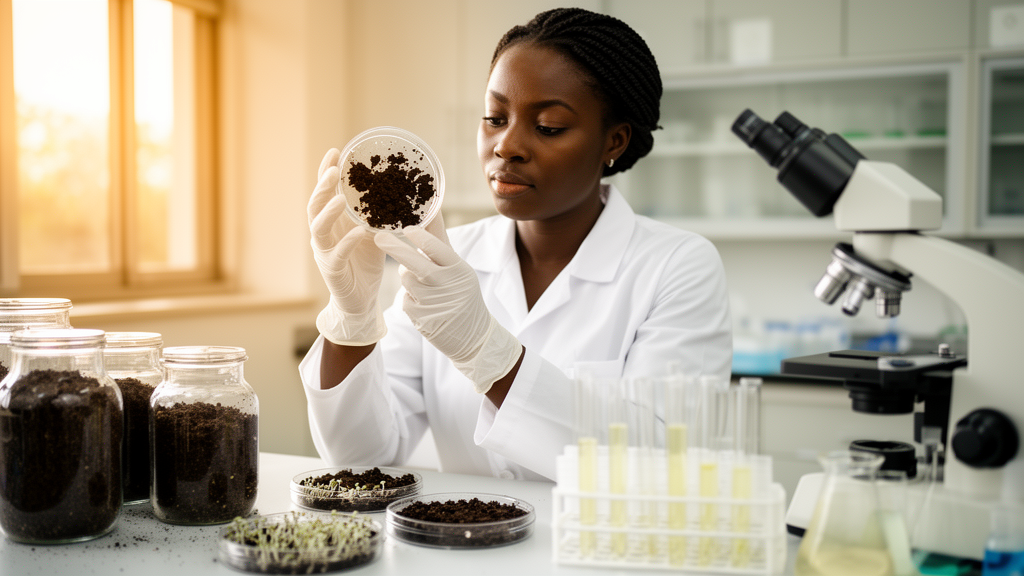
The team collected soil samples from the university grounds and used the pour plate method to isolate bacteria and fungi. In total, 65 bacterial isolates and 73 fungal isolates were obtained. Initial screening on agar plates showed that 25 of the bacterial isolates and 18 of the fungal isolates could produce L-asparaginase, which hydrolyses L-asparagine into ammonia and L-aspartic acid.
That reaction underlies the enzyme’s medical value: depleting circulating L-asparagine starves certain tumour cells that cannot synthesise the amino acid themselves. The most active producers were identified to species level using molecular methods, and their enzyme activity was quantified with the Nesslerisation method.
Optimisation of fermentation conditions revealed striking differences between the two organisms. Bacillus subtilis SSB55 reached its peak production of 16,553 U/mL when lactose served as the carbon source and ammonium nitrate as the nitrogen source, at pH 7.0, with a 5% (v/v) inoculum of 1.5 × 10⁸ CFU/mL over 48 hours of fermentation.
Aspergillus flavus SSF23, by contrast, performed best on a medium containing fructose rather than lactose, also with ammonium nitrate as the nitrogen source at pH 7.0. Its optimum was reached with three circular plugs of 7 mm diameter as inoculum over a longer 96-hour incubation, yielding 19,047 U/mL of the enzyme.
Characterisation of the crude enzymes showed that temperature had a marked effect on activity. The Bacillus subtilis enzyme peaked at 60 °C, reaching 24,513 U/mL, while the Aspergillus flavus enzyme performed best at a much cooler 25 °C, with 20,327 U/mL.
The study also found that L-asparaginase activities were significantly affected by pH, metal ions and their concentrations, with statistical significance reported at ρ ≤ 0.05.
The authors report that yields from both organisms were successfully optimised and that environmental conditions and metal ions significantly influenced enzyme activity.
Subject of Research: Optimisation and characterisation of microbial L-asparaginase from soil-isolated Bacillus subtilis and Aspergillus flavus
Article Title: Production, optimisation and characterisation of L-asparaginase from Bacillus subtilis SSB55 and Aspergillus flavus SSF23
Article References: Tairu, H. M., Fashogbon, R. O., & Fasiku, S. A. (2026). Production, optimisation and characterisation of L-asparaginase from Bacillus subtilis SSB55 and Aspergillus flavus SSF23. BMC Microbiology. https://doi.org/10.1186/s12866-026-05862-3
Image Credits: AI Generated
DOI: 10.1186/s12866-026-05862-3
Keywords: L-asparaginase, Bacillus subtilis, Aspergillus flavus, enzyme optimisation, leukaemia, acrylamide, soil microbiology, fermentation, Nigeria, biotechnology, Production, optimisation
News Source: Roger Howard. (October 28, 2026). Soil bacteria and fungi yield high-activity L-asparaginase in Nigerian study. Scienmag.