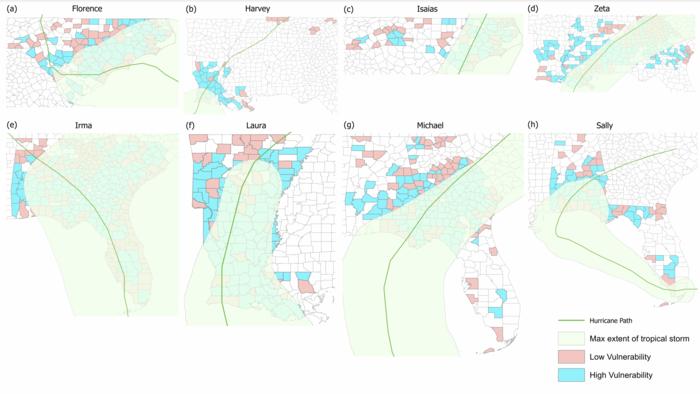
Communities with more socioeconomic vulnerability experience longer-duration power outages than more advantaged communities, according to a study. Research has shown that environmental disasters hit economically and socially vulnerable communities hardest. Scott Ganz and colleagues assessed the unequal impacts caused by the procedures electric utilities follow to restore power to customers after extreme-weather related outages. Using data from eight Atlantic hurricanes that made landfall between January 2017 and October 2020, which knocked out power for a total of over 15 million customers in 588 counties in the Southeast, the authors find people with lower socioeconomic status wait longer for the lights to go back on. Socioeconomic status was measured using the socioeconomic status theme of the Social Vulnerability Index, a metric produced by the Centers for Disease Control and Prevention, which combines quantitative data on themes including poverty, housing costs, education, health insurance, racial & ethnic minority status, housing type, and transportation access. A one-decile drop in socioeconomic status is associated with a 6.1% longer outage duration, which corresponds to an extra 170 minute wait for power to be restored. Elucidating the precise mechanisms that causes this relationship will require more granular data, according to the authors. The authors contend that their results point to the necessity of re-examining post-storm resource allocation policies. In addition, the authors note that investing in energy infrastructure and renewable energy in these vulnerable communities may help buffer them from negative outage impacts.
Credit: Ganz et al.
Communities with more socioeconomic vulnerability experience longer-duration power outages than more advantaged communities, according to a study. Research has shown that environmental disasters hit economically and socially vulnerable communities hardest. Scott Ganz and colleagues assessed the unequal impacts caused by the procedures electric utilities follow to restore power to customers after extreme-weather related outages. Using data from eight Atlantic hurricanes that made landfall between January 2017 and October 2020, which knocked out power for a total of over 15 million customers in 588 counties in the Southeast, the authors find people with lower socioeconomic status wait longer for the lights to go back on. Socioeconomic status was measured using the socioeconomic status theme of the Social Vulnerability Index, a metric produced by the Centers for Disease Control and Prevention, which combines quantitative data on themes including poverty, housing costs, education, health insurance, racial & ethnic minority status, housing type, and transportation access. A one-decile drop in socioeconomic status is associated with a 6.1% longer outage duration, which corresponds to an extra 170 minute wait for power to be restored. Elucidating the precise mechanisms that causes this relationship will require more granular data, according to the authors. The authors contend that their results point to the necessity of re-examining post-storm resource allocation policies. In addition, the authors note that investing in energy infrastructure and renewable energy in these vulnerable communities may help buffer them from negative outage impacts.
Journal
PNAS Nexus
Article Title
“Socioeconomic vulnerability and differential impact of severe weather-induced power outages”
Article Publication Date
3-Oct-2023
COI Statement
No