• HOME
  • NEWS
  • EXPLORE
    • CAREER
      • Companies
      • Jobs
    • EVENTS
    • iGEM
      • News
      • Team
    • PHOTOS
    • VIDEO
    • WIKI
  • BLOG
  • COMMUNITY
    • FACEBOOK
    • INSTAGRAM
    • TWITTER
Wednesday, July 15, 2026
BIOENGINEER.ORG
No Result
View All Result
  • Login
  • HOME
  • NEWS
  • EXPLORE
    • CAREER
      • Companies
      • Jobs
        • Lecturer
        • PhD Studentship
        • Postdoc
        • Research Assistant
    • EVENTS
    • iGEM
      • News
      • Team
    • PHOTOS
    • VIDEO
    • WIKI
  • BLOG
  • COMMUNITY
    • FACEBOOK
    • INSTAGRAM
    • TWITTER
  • HOME
  • NEWS
  • EXPLORE
    • CAREER
      • Companies
      • Jobs
        • Lecturer
        • PhD Studentship
        • Postdoc
        • Research Assistant
    • EVENTS
    • iGEM
      • News
      • Team
    • PHOTOS
    • VIDEO
    • WIKI
  • BLOG
  • COMMUNITY
    • FACEBOOK
    • INSTAGRAM
    • TWITTER
No Result
View All Result
Bioengineer.org
No Result
View All Result
Home NEWS Science News

Social eating leads to overeating, especially among men

Bioengineer by Bioengineer
December 6, 2016
in Science News
Reading Time: 2 mins read
0
Share on FacebookShare on TwitterShare on LinkedinShare on RedditShare on Telegram
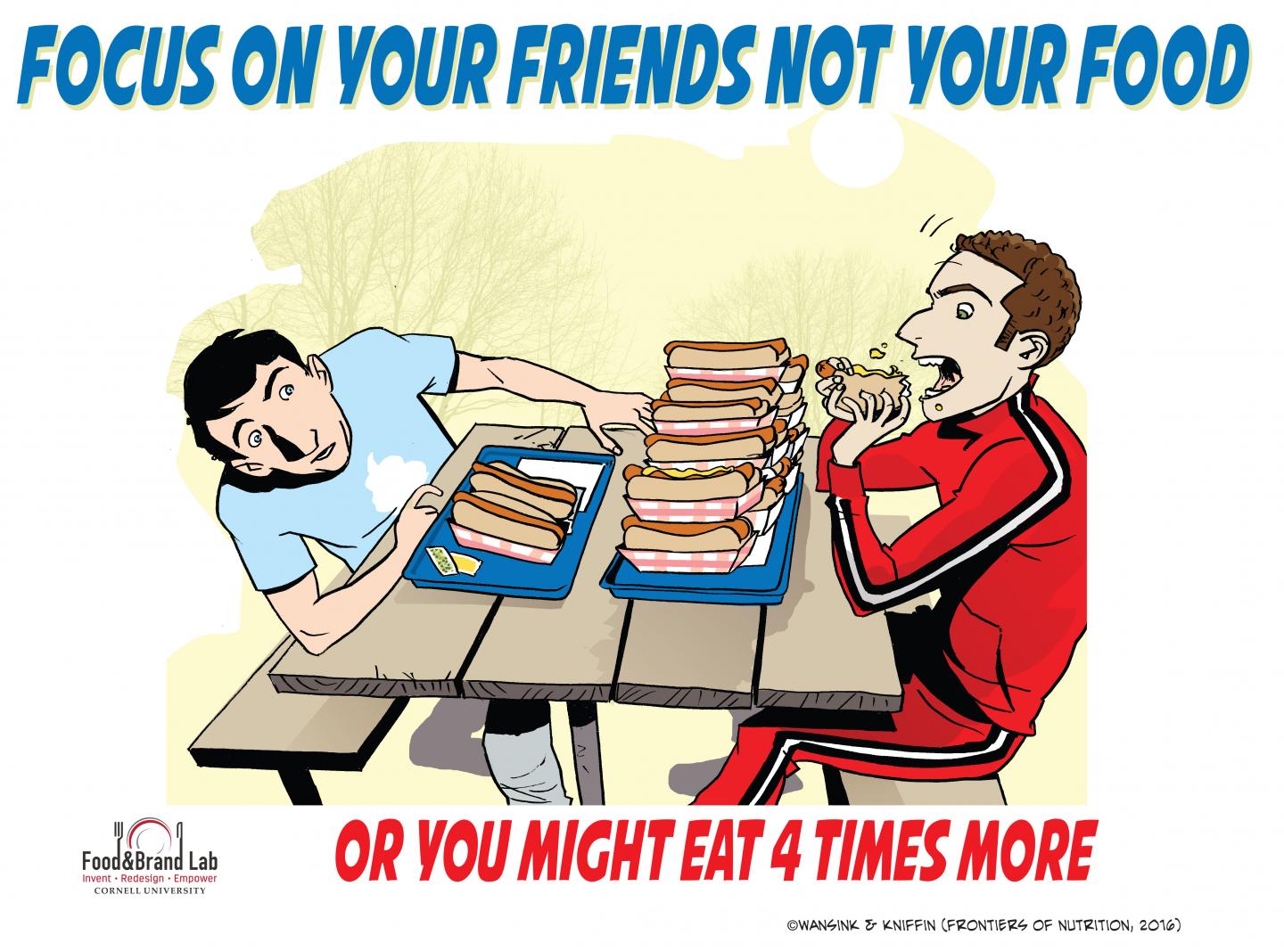
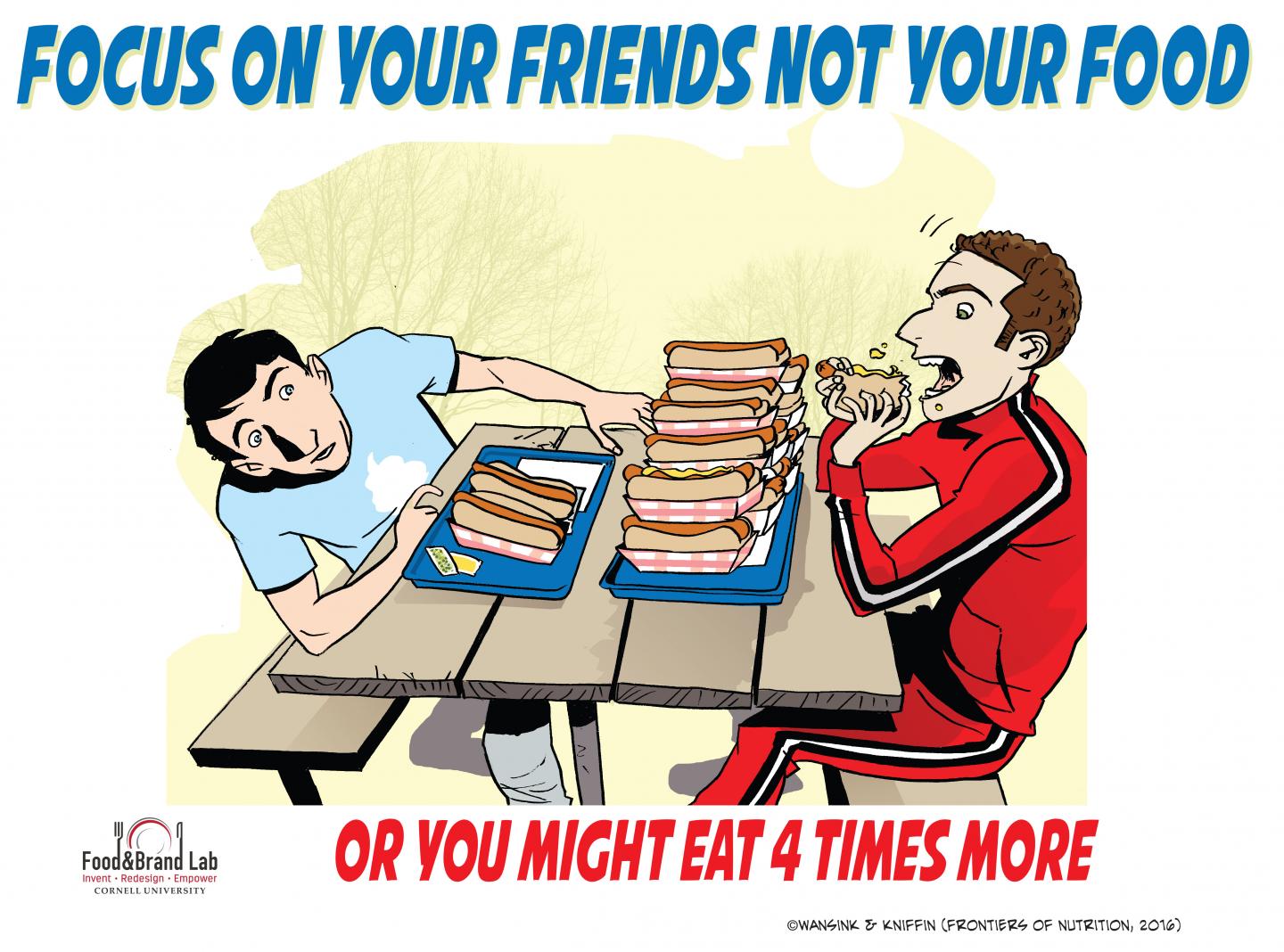
IMAGE

Credit: Daniel Miller

Gorging at a holiday meal or friend's BBQ might have more to do with your ego than the quality of the food — especially if you're a man.

A new Cornell Food and Brand Lab study finds that men are at particular risk of overeating in social situations even when there is no incentive to do so. "Even if men aren't thinking about it, eating more than a friend tends to be understood as a demonstration of virility and strength," explains co-author Kevin Kniffin, PhD.

For the study published in Frontiers in Nutrition, researchers recruited college aged students of similar weight to participate in either a competitive chicken wing eating challenge with cheering spectators, or a competitive chicken wing eating challenge with no spectators. The prize for eating the most wings was a worthless plastic medal, but competitors still ate about 4 times more food than normal. Men who ate in front of spectators ate 30% more than those without spectators and described the experience as challenging, cool and exhilarating. Women, on the other hand, ate less with spectators than without them and described the experience as slightly embarrassing.

"Focus on your friends and not the food," suggests lead author, Brian Wansink, PhD, Director of the Cornell Food and Brand Lab and author of Slim by Design. He notes that these findings have obvious implications– from tailgates, to holidays, to all-you-can-eat night– and concludes, "If you want to prove how macho you are, challenge your friend to a healthy arm wrestle instead of trying to out-eat him."

###

Media Contact

Katie Baildon
[email protected]
607-255-6090
@CUFood_BrandLab

http://foodpsychology.cornell.edu/

############

Story Source: Materials provided by Scienmag
Share12Tweet8Share2ShareShareShare2

Related Posts

Major NSF grant boosts quantum technology innovation in Connecticut

Major NSF grant boosts quantum technology innovation in Connecticut

July 15, 2026

Fred Hutch Announces 2026 Evergreen Fund Awardees

July 15, 2026

Movies, theater, and museums may slow physiological aging, study suggests

July 15, 2026

England study finds lockdown-born children harder to focus and manage emotions at four

July 15, 2026
Please login to join discussion

POPULAR NEWS

  • New Drug Candidate Developed at McMaster Shows Potential for Treating Brain Cancer

    58 shares
    Share 23 Tweet 15
  • A varied menu

    51 shares
    Share 22 Tweet 12
  • 研究人员开发认知工具包,实现阿尔茨海默症早期检测

    50 shares
    Share 20 Tweet 13
  • Porcine Heart Transplant

    50 shares
    Share 20 Tweet 13

About

We bring you the latest biotechnology news from best research centers and universities around the world. Check our website.

Follow us

Recent News

Major NSF grant boosts quantum technology innovation in Connecticut

Fred Hutch Announces 2026 Evergreen Fund Awardees

Movies, theater, and museums may slow physiological aging, study suggests

Subscribe to Blog via Email

Enter your email address to subscribe to this blog and receive notifications of new posts by email.

Join 85 other subscribers
  • Contact Us

Bioengineer.org © Copyright 2023 All Rights Reserved.

Welcome Back!

Login to your account below

Forgotten Password?

Retrieve your password

Please enter your username or email address to reset your password.

Log In
No Result
View All Result
  • Homepages
    • Home Page 1
    • Home Page 2
  • News
  • National
  • Business
  • Health
  • Lifestyle
  • Science

Bioengineer.org © Copyright 2023 All Rights Reserved.