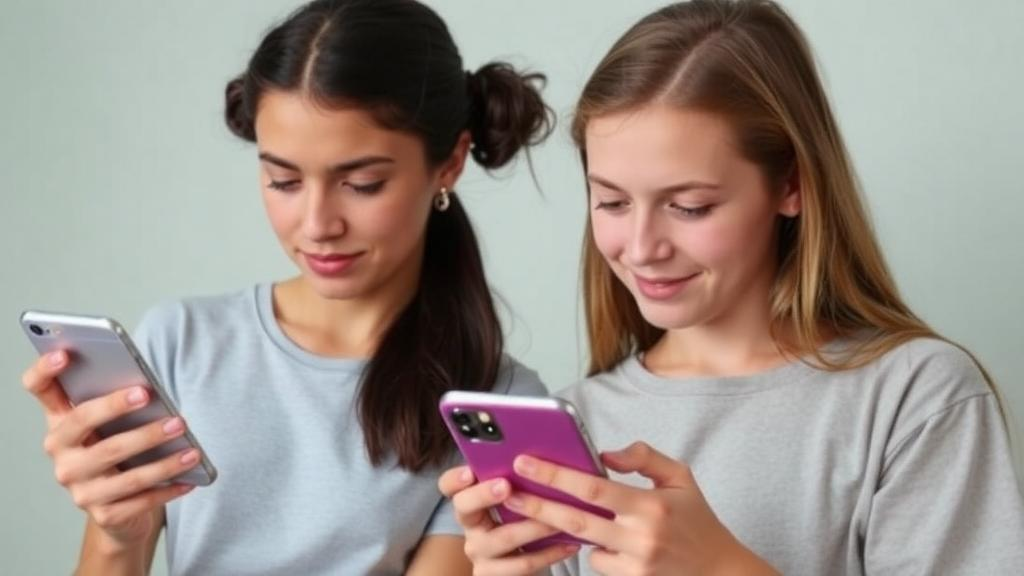
Not all time spent on social media affects adolescent mental health in the same way, according to a new study of Norwegian teenagers. The research, published in Child and Adolescent Psychiatry and Mental Health, examined five specific aspects of social media use and their associations with symptoms of five common mental disorders, and found that social comparison and exposure to hostility from others stood out as the strongest correlates.
The study drew on cross-sectional data from the PULS study, a school-based survey of 4,011 adolescents with a mean age of 14 years, of whom 50.5% were boys. Participants were recruited from 21 lower secondary schools in South-Eastern Norway in autumn 2025.
Social media use was measured with the short-form Social Media Use Scale, which covers five subscales: hostility from others, social comparison, passing time, seeking support, and hostility towards others. Symptoms of attention deficit hyperactivity disorder (ADHD), oppositional defiant disorder (ODD), generalized anxiety disorder (GAD), social anxiety disorder (SAD), and major depressive disorder (MDD) were assessed with validated scales from the Brief Child and Family Phone Interview version 2 Youth Self-Report Questionnaire for ages 12 to 18.
Analyses were conducted separately for boys and girls.
The results showed that social comparison was the strongest predictor across all five symptom domains. It accounted for approximately 20 to 26 percent of the variance in symptoms of the internalizing conditions GAD, SAD, and MDD, and 6 to 9 percent in symptoms of the externalizing conditions ADHD and ODD, for both boys and girls.
Experiencing hostility from others was the second most important predictor, explaining 3 to 6 percent of variance across the outcomes. Showing hostility towards others showed a different pattern: it was moderately associated with symptoms of ODD, accounting for 8 to 11 percent of variance, but only weakly associated with symptoms of the internalizing conditions.
In contrast, two other aspects of social media use showed little independent association with symptoms. Passing time and seeking support on social media had negligible independent associations with any of the symptom groups once the other aspects were taken into account.
The authors conclude that not all aspects of social media use are equally relevant to adolescent mental health, and that social comparison and exposure to hostility from others show the strongest associations with mental health symptoms, particularly internalizing conditions.
Because the data are cross-sectional, the study cannot establish whether social media use contributes to symptoms or whether adolescents with more symptoms use social media in these ways. The authors note that should future research confirm causal relationships, interventions may be more effective when targeting specific social media features rather than restricting overall use alone.
Subject of Research: Associations between specific aspects of social media use and symptoms of five mental disorders among Norwegian adolescents
Article Title: Specific aspects of social media use and their associations with symptoms of five mental disorders among adolescents
Article References: Brunborg, G. S., Zetterqvist, M., Bang, L., & Raninen, J. (2026). Specific aspects of social media use and their associations with symptoms of five mental disorders among adolescents. Child and Adolescent Psychiatry and Mental Health. https://doi.org/10.1186/s13034-026-01196-0
Image Credits: AI Generated
DOI: 10.1186/s13034-026-01196-0
Keywords: social media, adolescents, mental health, social comparison, hostility, ADHD, depression, anxiety, cross-sectional study, Norway, dominance analysis, internalizing symptoms
News Source: Glenn Wilkins. (October 28, 2026). Social Comparison and Hostility on Social Media Show Strongest Links to Adolescent Mental Health Symptoms. Scienmag.