


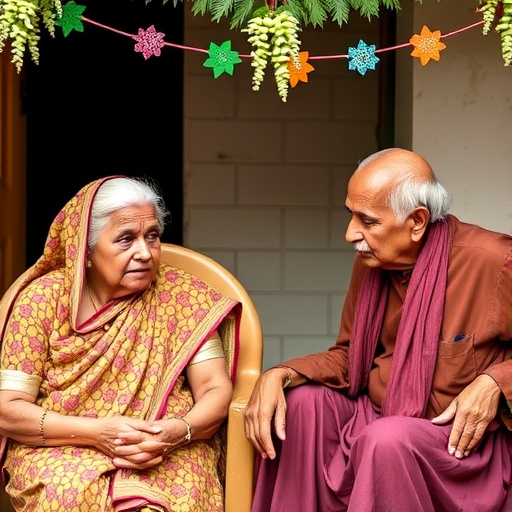
In recent years, the global discourse surrounding aging, uncertainty, and social capital has gained significant traction, shedding light on the complexities faced by the older adult population. A thought-provoking study by S.K. Gupta dives deep into these topics, focusing on a vital demographic residing in Uttar Pradesh, India. Through an institutional lens, Gupta’s research offers a nuanced exploration of how the intersection of aging and social dynamics can shape the lives of senior citizens in this unique cultural context.
Aging is a universal process, but it manifests differently across various societal and cultural paradigms. In Uttar Pradesh, one of India’s most populous states, the implications of aging are multifaceted, influenced by economic, social, and political factors. Gupta points out that older adults in this region often face significant hurdles, including economic insecurity, health challenges, and limited access to social services. This study seeks to unravel these challenges and provide insights that are both timely and critical, especially considering an aging global population.
One of the focal points of Gupta’s research is the concept of uncertainty, which profoundly impacts the mental and emotional well-being of older adults. As individuals transition into their senior years, uncertainties regarding health, financial security, and social connection can become paramount. Gupta emphasizes that such uncertainties are not just individual concerns; they are rippling through the fabric of family structures and community ties in Uttar Pradesh. This interconnectedness underscores the urgency for policymakers and social workers to prioritize the needs of this demographic.
Social capital plays a crucial role in mitigating the challenges posed by aging and uncertainty. Gupta’s findings highlight how older adults with strong social networks tend to navigate their circumstances more effectively. These networks can provide essential resources, emotional support, and companionship, which can alleviate feelings of isolation. The study reveals that although many older adults may face barriers in their daily lives, robust social ties can significantly enhance their resilience and overall quality of life.
The institutional study conducted by Gupta employs a mixed-methods approach, integrating quantitative data with qualitative interviews to paint a comprehensive picture of the older population in Uttar Pradesh. By engaging with community leaders, health professionals, and the elderly themselves, Gupta succeeds in capturing a holistic understanding of their experiences. This methodological rigor allows for a more profound analysis of the systemic issues at play and the potential pathways for improvement.
Gupta also discusses the role of government and non-governmental organizations in addressing the needs of older adults. In Uttar Pradesh, the political landscape significantly influences the availability and effectiveness of social services designed for seniors. Gupta stresses that without proper institutional support, many older adults are left to navigate their harsh realities alone, often leading to exacerbated feelings of loneliness and despair. The findings serve as a clarion call for renewed efforts to strengthen institutional frameworks that can safeguard the interests of this vulnerable population.
Furthermore, Gupta sheds light on the intersection of gender and aging, highlighting how older women in particular face unique challenges. Societal norms and patriarchal structures often limit their access to resources and decision-making power. The study reveals that older women are more likely to experience social isolation and economic vulnerability compared to their male counterparts. Gupta’s research suggests that addressing gender disparities should be a fundamental aspect of any strategy aimed at improving the situation for older adults in Uttar Pradesh.
As Gupta’s study unfolds, it becomes evident that cultural perceptions of aging significantly affect how older adults are treated within families and communities. In Uttar Pradesh, reverence for elders exists alongside certain stigmas and stereotypes, which can marginalize older individuals. The research indicates that changing these perceptions is critical for fostering an inclusive environment where older adults can thrive. By promoting positive narratives around aging, communities can enhance the social standing of seniors and, in turn, their overall well-being.
Health care access is another critical component of Gupta’s analysis. In a state where health infrastructure can be lacking, older adults often contend with barriers when seeking medical attention. Gupta’s findings highlight the urgency of developing age-friendly health services that cater specifically to the needs of the elderly. There’s a need for healthcare systems to adapt, ensuring that they can effectively serve this growing demographic while taking into account the unique challenges they face.
Additionally, Gupta’s research reveals the importance of financial security as a cornerstone of social capital among older adults. Issues of poverty and economic instability can leave seniors vulnerable and disconnected from their communities. Programs aimed at improving financial literacy and offering employment opportunities for older adults can serve as effective interventions. Gupta advocates for policies that encourage inclusive economic practices as a means to bolster the social capital of older populations in Uttar Pradesh.
As the study highlights, the COVID-19 pandemic has exacerbated existing vulnerabilities but has also provided an opportunity for innovation in elderly care. Gupta notes that the crisis has spurred new initiatives focusing on the implementation of digital technologies in promoting social connectivity among older adults. Telehealth services and online community programs have emerged as lifelines during times of isolation, demonstrating the potential of technology to bridge gaps in care and support.
In sum, Gupta’s study presents a compelling overview of the myriad challenges and opportunities that shape the lives of older adults in Uttar Pradesh. It advocates for a comprehensive framework that intertwines aging, uncertainty, and social capital, calling for targeted interventions that address the specific needs of this demographic. By prioritizing these issues within academic research and public policy, society can work towards a more equitable future for its aging population.
The implications of Gupta’s research extend beyond Uttar Pradesh, presenting a model that can inform the understanding of aging and social dynamics globally. The findings resonate with various stakeholders, including researchers, practitioners, and policymakers, emphasizing that the complexities of aging warrant sustained attention and action. Moving forward, efforts to empower older adults through social capital and institutional support will be vital for fostering resilience and enhancing the quality of life for this essential segment of society.
In conclusion, Gupta’s pioneering work lays the groundwork for future inquiries into the intersection of aging, social capital, and institutional trust. As communities strive to foster environments conducive to the well-being of older adults, Gupta’s insights can serve as a roadmap for programs and policies that aim to enhance social integration, improve health outcomes, and ultimately enrich the lives of seniors across diverse contexts.
Subject of Research: Aging, Uncertainty, and Social Capital in Older Adults
Article Title: Ageing, Uncertainty and Social Capital: An Institutional Study of Older Adults in Uttar Pradesh, India
Article References:
Gupta, S.K. Ageing, Uncertainty and Social Capital: An Institutional Study of Older Adults in Uttar Pradesh, India.
Ageing Int 50, 19 (2025). https://doi.org/10.1007/s12126-025-09596-x
Image Credits: AI Generated
DOI:
Keywords: Aging, social capital, uncertainty, older adults, Uttar Pradesh, India, institutional support, gender disparities, healthcare access, financial security, community engagement, technology, COVID-19 impacts.
Tags: aging population challengescultural context of agingeconomic insecurity among seniorshealth challenges for elderlyinstitutional perspectives on agingmental well-being of senior citizensolder adults in Uttar Pradeshpolitical factors affecting agingsocial capital and aging in Indiasocial dynamics and elderly caresocial services access for older adultsuncertainties faced by older adults



