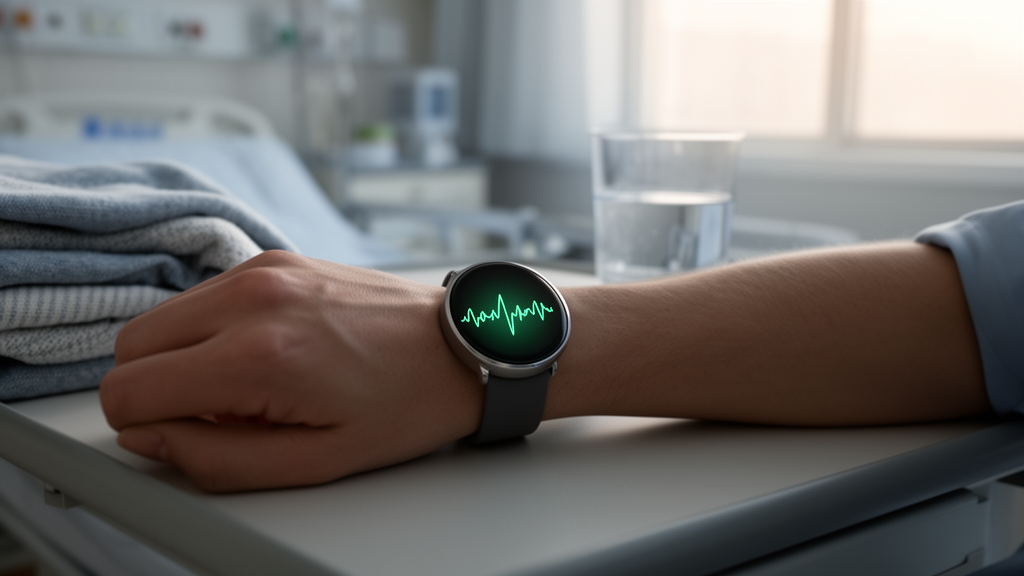
For millions of people who undergo surgery each year, the operation is only the beginning of the story. A substantial fraction go on to develop persistent postsurgical pain, a condition in which pain lingers for months or years after the incision has healed. Estimates of its prevalence range from 5 percent to 58 percent depending on the type of procedure, and it remains one of the most stubborn complications in modern medicine. Now, a team of researchers at the University of Michigan has found that ordinary consumer fitness trackers may be able to detect the physiological fingerprints of this condition before it is ever formally diagnosed, offering a tantalizing glimpse of a future in which a smartwatch could warn patients and clinicians that chronic pain is brewing.
The new study, published in the journal iScience, drew on an unusual treasure trove of data: minute-level recordings from personal Fitbit devices worn by participants in the National Institutes of Health’s All of Us Research Program, linked to their electronic health records. The researchers, led by Ruby Kim along with Julia Evanski, Tristin Smith, circadian biologist Daniel Forger, pain specialist Chelsea Kaplan, chronic pain researcher Daniel Clauw, and rehabilitation scientist Daniel Whibley, asked a deceptively simple question. Do sleep patterns and circadian rhythms, the internal biological cycles that govern everything from heart rate to hormone release, change in the days and weeks leading up to the moment a clinician documents persistent pain following a procedure?
To answer it, the team identified 116 clinical records of persistent pain following a procedure across 98 participants, each dated at least 90 days after a surgical operation, the conventional threshold at which pain is considered persistent rather than part of normal healing. The procedures involved ranged from hysterectomies to hip and knee replacements to thoracic aortic replacement. For each record, the researchers examined the 30 days of wearable data preceding it, extracting two families of measurements. The first came from Fitbit’s sleep tracking: bedtime, waketime, and total sleep duration. The second was more novel, derived from a mathematical model that decomposes the 24-hour rhythm of heart rate into three parameters: the mesor, or midline level of the daily rhythm; the amplitude, or the size of its daily swing; and the phase, or the timing of its nightly trough.
The results fell into two strikingly different patterns. Across the full 30-day window, one signal emerged gradually: participants woke progressively earlier as the date of the pain record approached, with waketimes shifting by roughly 0.012 hours, about 43 seconds, per day. This trend reached statistical significance even after accounting for age and sex, though it weakened slightly when the researchers added a battery of confounders including comorbidity burden, opioid and gabapentinoid use, and histories of depression, anxiety, and sleep disorders. Bedtimes, sleep duration, and the timing of the heart rate rhythm showed no comparable gradual drift.
The second pattern was far more dramatic and appeared only in the final 48 hours before documentation. In that short window, both the amplitude and the mesor of the heart rate rhythm jumped significantly, by roughly 4.2 beats per minute each, while waketimes advanced by more than half an hour. In plain terms, patients’ hearts were beating with both a higher baseline and a larger daily swing, and they were rising earlier in the morning, right around the time their pain was being recorded in the medical chart. Crucially, these heart rate effects survived every robustness check the researchers threw at them, remaining essentially unchanged after adjustment for comorbidities and medications, and holding up across nearly the entire range of missing-data assumptions in sensitivity analyses.
What makes these findings genuinely surprising is what the researchers found when they ran the same analysis on a comparison group. They assembled a matched cohort of 98 surgical patients who never received a persistent pain diagnosis, assigning each an arbitrary reference date drawn from a routine, non-pain clinical encounter. None of the four signals appeared in this group. The gradual advance in waketime was absent, the near-record spikes in heart rate amplitude and mesor never materialized, and formal statistical tests confirmed that the time-by-cohort interactions were significant, meaning the physiological changes were specific to the persistent pain cohort rather than a generic feature of postoperative life or of medical visits in general.
The physiological interpretation is provocative. An elevated heart rate mesor and amplitude together suggest what the authors describe as a possible state of autonomic hyperactivation, an upregulation of the sympathetic nervous system that has long been documented in chronic pain conditions such as fibromyalgia. Just as intriguing is what did not change: the phase of the heart rate rhythm stayed fixed even as waketimes shifted earlier. This decoupling of the sleep timing system from the cardiac circadian system hints that the two oscillators, usually tightly entwined, may come apart in the run-up to persistent pain, and it points to heart rate rhythms specifically, rather than sleep timing alone, as the more promising candidate marker.
The researchers are careful about what the data can and cannot say. An electronic health record documents when pain was recorded, not when it began. The physiological changes in the days before documentation could reflect the true onset of persistent pain, a flare of pain that was already established, medication changes, or even the behavioral and administrative processes surrounding a patient’s decision to seek care. The authors argue that this imprecision would inject noise that blurs any true association, making the detection of systematic signals despite that noise all the more remarkable, but they emphasize that prospective studies with frequent, standardized pain assessments are needed to pin down the temporal relationship.
The study also offers an unusually candid lesson about the pitfalls of digital health research. The team attempted to build machine learning models to predict the timing of pain documentation from the wearable data, but discovered that model performance was inflated by a subtle artifact: wearable data completeness is itself systematically structured, with coverage dropping to about 65 percent on the day of a clinical record compared with 88 percent on other days. Missingness, in other words, carries information, and prediction models can exploit it for the wrong reasons. The researchers withheld those results and flagged the problem as a broader challenge for the field of electronic health record-anchored digital phenotyping.
Despite the caveats, the implications are considerable. Persistent postsurgical pain affects more than one in five adults with chronic pain overall, and sleep disturbance accompanies an estimated 75 percent of chronic non-cancer pain cases, yet clinical tools to identify at-risk patients before pain becomes entrenched remain elusive. If heart rate rhythm metrics from a device many people already wear on their wrists can flag a developing problem days in advance, clinicians could theoretically intervene earlier, adjusting pain management, sleep treatment, or rehabilitation before the condition consolidates. The authors caution that their cohort was modest, predominantly female, and drawn from a subset of patients with records meeting strict criteria, and that consumer wearables, while roughly 86 to 88 percent accurate for sleep-wake classification against polysomnography, vary across device models. Still, the study marks a compelling proof of concept: the body’s circadian machinery may broadcast the approach of chronic pain, and the devices to hear that broadcast are already on millions of wrists.
Subject of Research: Wearable-derived sleep and circadian heart rate features preceding persistent postsurgical pain documentation
Article Title: Wearable-derived sleep and circadian features associated with electronic health record-documented persistent postsurgical pain
Article References: Kim, R., Evanski, J. M., Smith, T., Forger, D. B., Kaplan, C., Clauw, D. J., & Whibley, D. (2026). Wearable-derived sleep and circadian features associated with electronic health record-documented persistent postsurgical pain. iScience, 29(11), Article 117930. https://doi.org/10.1016/j.isci.2026.117930
Image Credits: AI Generated
DOI: 10.1016/j.isci.2026.117930
Keywords: persistent postsurgical pain, wearables, Fitbit, circadian rhythms, heart rate, sleep, NIH All of Us, electronic health records, chronic pain, digital health, autonomic nervous system, iScience
News Source: Ophelia Keating. (October 18, 2026). Smartwatch Data Reveal Heart Rhythm Shifts Days Before Chronic Pain Is Diagnosed After Surgery. Scienmag.