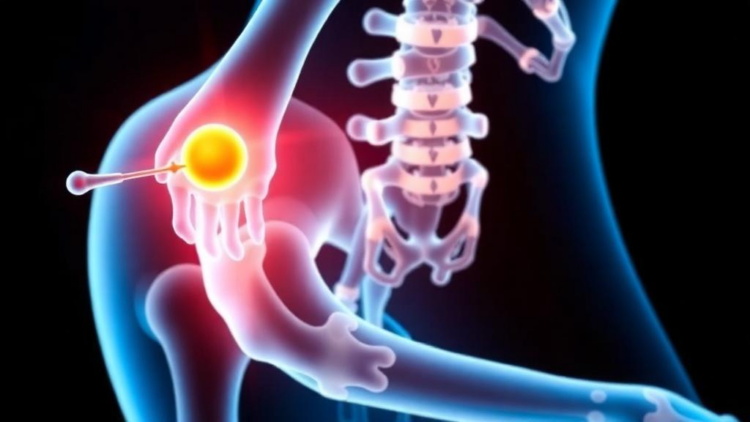
Postmenopausal osteoporosis affects hundreds of millions of women worldwide, and current drugs often fall short because they cannot distinguish diseased bone from healthy tissue. Now a team of researchers reporting in Materials Today Bio has engineered a supramolecular nanocarrier that homes in on bone, senses the oxygen-starved microenvironment of osteoporotic skeleton, and releases its therapeutic payload precisely where the disease is most active. The system, called RLX@PnAC4A, combines a clinically approved osteoporosis drug, raloxifene, with a cleverly designed calixarene host molecule decorated with bone-binding phosphonate groups and a hypoxia-sensitive azo linkage.
The design draws on the third generation of macrocyclic host molecules in supramolecular chemistry. Calixarenes, which followed cyclodextrins and cucurbiturils, offer a rigid cup-shaped cavity capable of stable host-guest complexation combined with exceptional chemical tunability. The researchers integrated two functional motifs into a single calix[4]arene scaffold. Phosphonate groups exhibit strong affinity for hydroxyapatite, the mineral that gives bone its rigidity, while azobenzene linkers are reducible under the low-oxygen, chemically reducing conditions characteristic of hypoxic tissue. When the azo bond is cleaved, the host-guest assembly destabilizes and the cargo is released.
In aqueous solution, the carrier PnAC4A spontaneously self-assembles into quasi-spherical nanoassemblies roughly 150 to 160 nanometers in diameter, a size that remained stable over 36 hours in serum-containing conditions. Fluorescence competitive titration demonstrated that the host binds raloxifene with an apparent association constant of approximately 2.44 x 10^5 per molar, fitted well by a 1:1 binding model. When sodium dithionite was used as an in vitro mimic of azoreductase activity, the azo bond was rapidly reduced and a model dye cargo was quickly released, confirming the hypoxia-responsive release mechanism at the molecular level.
The team then tested whether the formulation could correct the oxidative stress that defines the osteoporotic bone niche. Using flow cytometry-based profiling of reactive oxygen species in MC3T3-E1 osteoblast-lineage cells and primary bone marrow-derived macrophages, they found that under normal oxygen conditions free raloxifene actually suppressed ROS more effectively than the loaded formulation. But the picture inverted dramatically under hypoxia. In oxygen-deprived and inflamed environments, mimicked with lipopolysaccharide stimulation, RLX@PnAC4A achieved the deepest suppression of intracellular ROS in both cell types, consistent with hypoxia-triggered payload release from the carrier.
That microenvironment-dependent advantage extended to functional outcomes. Under hypoxia and combined hypoxia plus inflammation, RLX@PnAC4A elicited the strongest mineralization response in osteoblast cultures, as measured by Alizarin Red S staining, and the most pronounced increase in alkaline phosphatase activity along with elevated RUNX2, OSX, and OPN protein expression. The pattern held in primary mouse bone marrow mesenchymal stem cells. On the other side of the remodeling balance, the formulation suppressed osteoclast differentiation most effectively under hypoxic and inflammatory stress, reducing NFATc1 and cathepsin K protein abundance, disrupting the peripheral F-actin rings that mature osteoclasts need to polarize, and markedly shrinking resorption lacunae on bone slices examined by scanning electron microscopy.
To verify skeletal targeting in living animals, the researchers injected Cy5-labeled carrier into ovariectomized mice, a standard model of postmenopausal bone loss. Fluorescence appeared in skeletal regions within one hour and grew progressively more prominent in the spine and limbs at 6 and 12 hours, remaining elevated through 48 hours. Critically, the phosphonated carrier accumulated in bone far more than a non-phosphonated control or free dye, demonstrating that chemical anchoring to mineral surfaces, rather than nonspecific distribution, drives skeletal localization. Meanwhile, signals in liver and kidney peaked around 12 hours and then declined.
The therapeutic results in ovariectomized mice were substantial. After six weeks of tail-vein treatment every three days, micro-computed tomography showed that RLX@PnAC4A restored approximately 56 percent of the ovariectomy-induced deficit in bone mineral density, 63 percent of bone volume fraction, and 67 percent of trabecular number, while correcting about 85 percent of the increase in trabecular separation. Dynamic histomorphometry with fluorochrome double labeling confirmed increased mineral apposition rate and bone formation rate, immunohistochemistry showed elevated osteocalcin and reduced cathepsin K, and serum markers of resorption and formation shifted toward healthy levels.
Transcriptomic profiling of bone tissue added a systems-level dimension. Ovariectomy produced a broad transcriptional shift dominated by B-cell immune activation, whereas the carrier alone preferentially shifted programs toward collagen fibril organization and extracellular matrix remodeling. The full therapeutic formulation induced a distinct module of 112 genes uniquely altered by treatment, enriched in extracellular matrix organization, angiogenesis regulation, and vascular endothelial growth factor receptor signaling. Notably, Tigit was the only gene shared across disease, carrier, and therapy comparisons, with its protein abundance in bone dropping after ovariectomy and recovering nearly to sham levels with treatment, positioning it as a tissue-level marker of osteoimmune remodeling.
Safety data from the six-week regimen were encouraging. Histological examination of heart, liver, spleen, lung, and kidney revealed no treatment-related injury, and serum markers of hepatic and renal function remained normal. Rather than provoking systemic inflammation, the loaded formulation reduced the elevated circulating IL-6, IL-17, and TNF-alpha characteristic of estrogen deficiency. The authors caution, however, that only one dose was tested, that long-term fate of the calixarene scaffold remains unresolved, and that fluorescence decay in organs does not prove complete material clearance.
The study positions RLX@PnAC4A as a microenvironment-adaptive strategy that extends responsive biomaterial design from local implant interfaces toward systemic pharmacological regulation of osteoporotic bone. By coupling phosphonate-mediated mineral anchoring, hypoxia-triggered destabilization of a host-guest assembly, and redox correction of the diseased niche, the system addresses key limitations of conventional raloxifene therapy, including poor oral bioavailability and off-target estrogenic effects. Translational hurdles remain, including dose optimization, chronic toxicology, and validation in larger animal models, but the work offers a mechanistically grounded template for precision intervention in metabolic bone disease.
Subject of Research: A hypoxia-responsive, bone-targeted calixarene supramolecular drug delivery system for treating postmenopausal osteoporosis
Article Title: A hypoxia-responsive calixarene supramolecular system enables redox-regulated matrix remodeling for postmenopausal osteoporosis
Article References: Luo, G., Yang, H., Wang, Z.-H., Cui, J., Tang, Q., Fan, Y., Yang, H., Long, Y., Li, S., Guo, D.-S., Sun, T., & Jin, X. (2026). A hypoxia-responsive calixarene supramolecular system enables redox-regulated matrix remodeling for postmenopausal osteoporosis. Materials Today Bio, 41, Article 103685. https://doi.org/10.1016/j.mtbio.2026.103685
Image Credits: AI Generated
DOI: 10.1016/j.mtbio.2026.103685
Keywords: osteoporosis, supramolecular chemistry, calixarene, raloxifene, hypoxia-responsive drug delivery, bone targeting, phosphonate, oxidative stress, osteoclasts, osteoblasts, ovariectomized mice, nanomedicine
Cite Scienmag News
APA
MLA
Chicago
Denise Maddox. (October 4, 2026). Smart Bone-Seeking Nanocarrier Releases Osteoporosis Drug Only Where Oxygen Runs Low. Scienmag. https://scienmag.com/smart-bone-seeking-nanocarrier-releases-osteoporosis-drug-only-where-oxygen-runs-low/
Denise Maddox. “Smart Bone-Seeking Nanocarrier Releases Osteoporosis Drug Only Where Oxygen Runs Low.” Scienmag, 4 October 2026, https://scienmag.com/smart-bone-seeking-nanocarrier-releases-osteoporosis-drug-only-where-oxygen-runs-low/. Accessed 4 October 2026.
Denise Maddox. “Smart Bone-Seeking Nanocarrier Releases Osteoporosis Drug Only Where Oxygen Runs Low.” Scienmag. October 4, 2026. https://scienmag.com/smart-bone-seeking-nanocarrier-releases-osteoporosis-drug-only-where-oxygen-runs-low/
Copy citation
Download RIS
Tags: bone mineral affinity nanocarriersbone targetingbone-binding phosphonate groupscalixarenecalixarene-based drug delivery systemshypoxia-responsive azo linkagehypoxia-responsive drug deliveryhypoxia-targeted bone therapyNanomedicinenanomedicine for postmenopausal osteoporosisosteoblastsosteoclastsosteoporosisosteoporosis nanocarrierovariectomized miceOxidative stressoxygen-sensitive drug deliveryphosphonateprecision osteoporosis therapeuticsraloxifenestimuli-responsive drug releasesupramolecular chemistrysupramolecular nanocarrier designtargeted osteoporosis treatment