


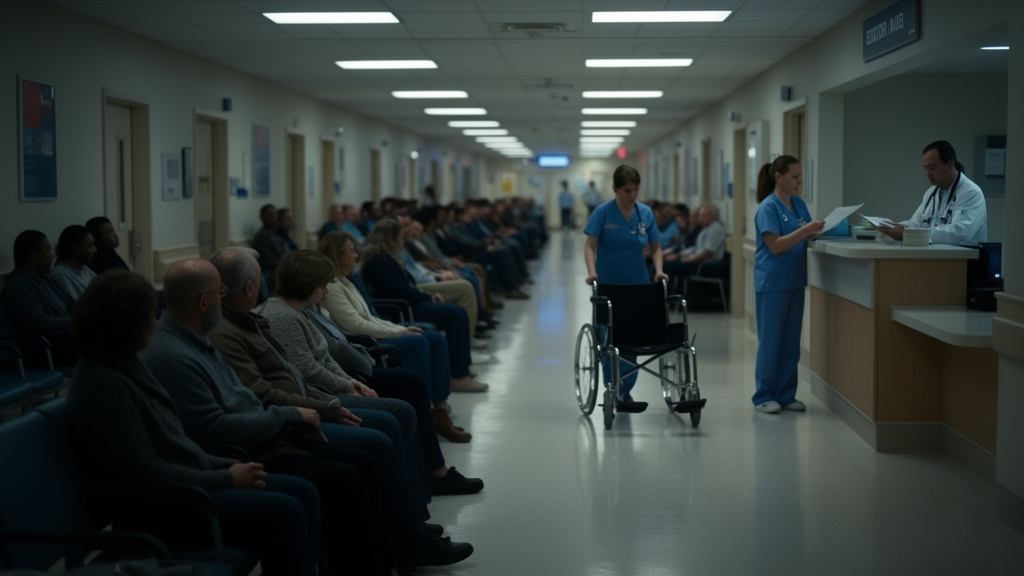
A single year of emergency department activity at a high-volume urban tertiary hospital shows how a small group of patients can dominate attendance. Among 466,884 unique adult patients who generated 726,696 emergency presentations, 26,871 patients — 5.8% — were classified as high-frequency users, meaning they made four or more visits within the 12-month study window. Those patients accounted for 148,322 presentations, or 20.4% of all visits, and roughly one-fifth (21.0%) of cumulative laboratory, imaging and medication costs.
The study, published in BMC Emergency Medicine as open-access research, was retrospective and observational, analyzing all adult presentations at one center over a single year. High-frequency user status was assigned at the patient level, while individual visits were examined for triage category, timing, mode of arrival, resource use and per-visit costs. Patient-level characteristics such as age, sex and diagnostic spectrum were compared using Mann–Whitney U and Pearson chi-square tests, with effect sizes reported alongside p values.
Perhaps the most striking economic detail is what did not differ: total cost per visit was essentially identical between groups, with a median of 6.39 USD in both. Individual cost components did reach statistical significance, but the effect sizes were small — rank-biserial correlations of +0.03 for laboratory costs, −0.05 for radiology and +0.08 for medication. The authors conclude that the principal finding is therefore the cumulative resource burden of repeated attendance rather than any higher cost of the individual encounter.
Resource use per visit did show modest differences in composition. A higher proportion of high-frequency user presentations involved any laboratory test (29.3% versus 26.7%) and any medication order (57.8% versus 51.4%), while radiologic imaging was less frequent among these patients (40.5% versus 44.7%). Yellow-triage presentations predominated among high-frequency users, and symptom-based and pain-related diagnoses were over-represented in the group.
Demographic and logistical patterns were also visible. High-frequency users were marginally younger on average, presented more often during the night shift, and were less likely to arrive by ambulance (3.5% versus 5.0% of presentations). In a patient-level multivariable model, male sex, a history of yellow- or red-triage presentation, a history of evening- or night-shift presentation, and multiple symptom-based diagnostic groups were associated with high-frequency status, whereas a history of ambulance arrival was associated with lower odds.
The authors suggest the pattern is consistent with a contribution of out-of-hours access and symptom-driven presentation, but they are explicit about the limits of the design: observational data from a single center cannot establish these mechanisms, nor identify which interventions would reduce frequent emergency department use. The findings speak to emergency care planning and resource allocation rather than to clinical management of any individual patient.
Subject of Research: Resource utilization patterns among high-frequency emergency department users
Article Title: Impact of frequent emergency department visits on resource utilization
Article References: Bas, R. K., & Cakmak, S. (2026). Impact of frequent emergency department visits on resource utilization. BMC Emergency Medicine. https://doi.org/10.1186/s12873-026-01784-5
Image Credits: AI Generated
DOI: 10.1186/s12873-026-01784-5
Keywords: emergency department, high-frequency users, resource utilization, health care costs, triage, observational study, emergency medicine, hospital utilization, patient visits, diagnostic testing, Impact, frequent
News Source: Ophelia Keating. (October 30, 2026). Small share of ED patients drives one-fifth of visits and testing costs. Scienmag.



