Sex-specific processes in schizophrenia and bipolar disorder
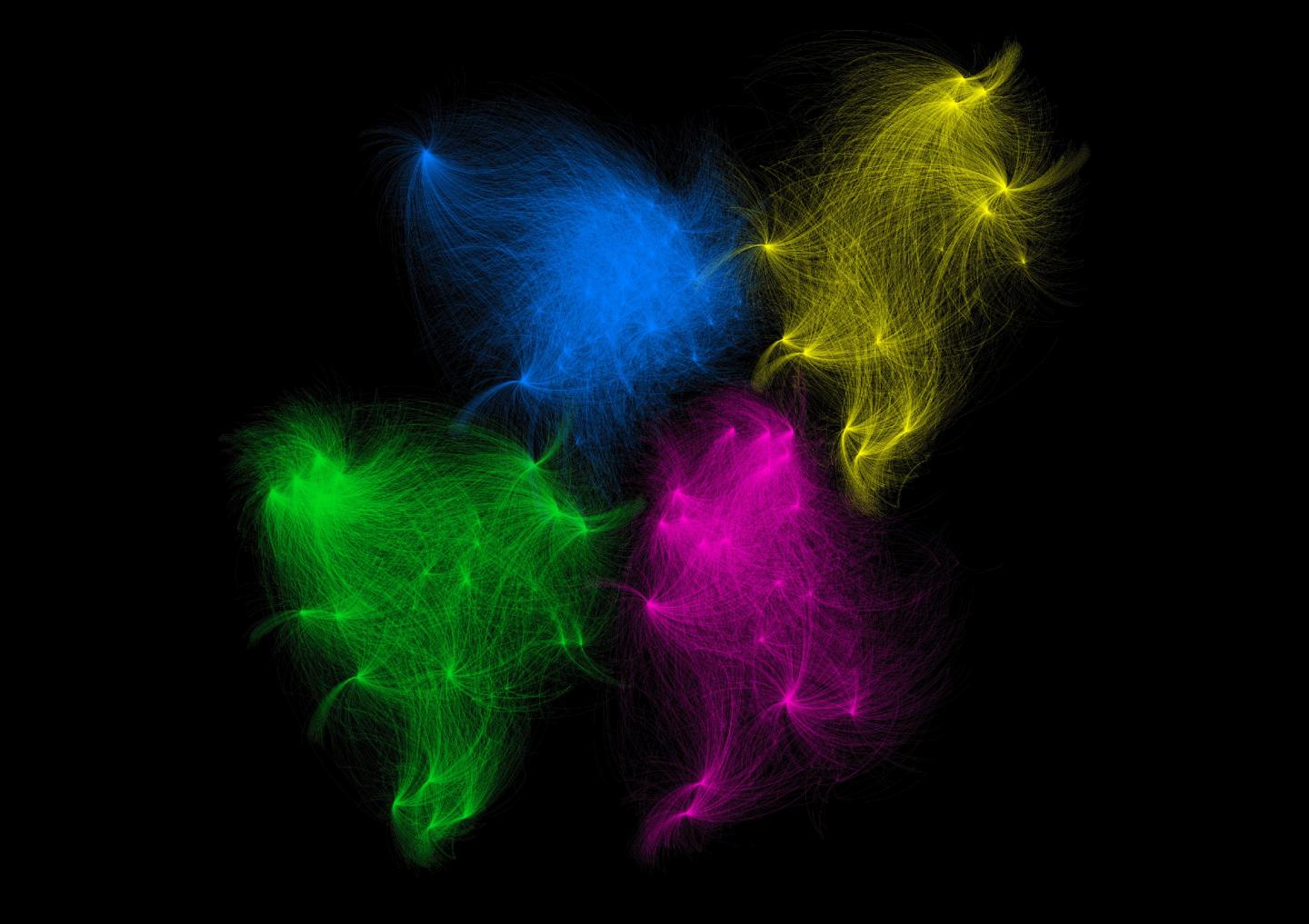
Credit: Sebastian Lobentanzer
FRANKFURT. Recent studies have found a high genetic similarity of the psychiatric diseases schizophrenia and bipolar disorder, whose disease-specific changes in brain cells show an overlap of more than 70 percent. These changes affect gene expression, i.e., transcription of genes for the purpose of translation into functional proteins. A collaborative study carried out by the Institute of Pharmacology and Clinical Pharmacy at Goethe University (Professor Jochen Klein) and the Institute of Neurosciences at the Hebrew University of Jerusalem (Professor Hermona Soreq) now shows sex-specific biases in these changes, as well as in cellular control mechanisms based on endogenous short ribonucleic acid (RNA) chains.
The scientists identified an important role of microRNAs, a special group of these small RNA molecules, known for their extensive control of gene expression in all human cells. Targeting of a gene by one of these microRNAs can lead to a significant restriction of its expression. “The main problem is the enormous variety of possible combinations,” says Sebastian Lobentanzer, lead author of the article published in the journal Cell Reports. “The human expresses about 2,500 of these microRNAs, and a single one can influence hundreds, maybe even thousands of genes.”
For this reason, the researchers investigated gene expression in patient brains as well as human cultured nerve cells with a combination of RNA sequencing and bioinformatics. They found a difference in the expression of immune-related genes between men and women, especially with regard to cytokines, the messenger substances of immune cells. Upon exposition of the cultured male and female neuronal cells to some of these cytokines, the researchers found a transformation of nerve cells into to cholinergic neurons, defined by their use of the neurotransmitter “acetylcholine”.
By sequencing the microRNAs at several time points during this process, the scientists were able to paint a detailed picture of the microRNA interface between the immune and neuronal systems. They identified the involvement of 17 partially sex-dependent families of microRNAs and generated an extensive network of 12,495 regulated genes. Using a multi-stage selection process, the most influential of these microRNA families were identified and confirmed in dedicated experiments. This led to the identification of the two sex-specifically expressed families mir-10 and mir-199 as interface between cytokines and cholinergic functions.
Psychiatric diseases are an important field for new therapeutic approaches because of their high genetic complexity and their inaccessibility to conventional forms of therapy. On the one hand, the current study demonstrates molecular parallels to the long-observed but previously unexplained clinical differences between disease-affected men and women. On the other hand, mechanisms on the basis of small RNA molecules could open up new avenues by influencing a large number of disease-relevant genes – a promising approach in the search for alternatives to traditional antipsychotic drugs. “Studies such as ours, which enable a comprehensive representation of microRNA interactions, are the first step on the path to developing new therapeutic substances,” says Lobentanzer.
###
Publication: Lobentanzer S, Hanin G, Klein J & Soreq H (2019). Integrative Transcriptomics Reveals Sexually Dimorphic Control of the Cholinergic/Neurokine Interface in Schizophrenia and Bipolar Disorder. Cell Reports. ElsevierCompany. 1-19. doi: 10.1016/j.celrep.2019.09.017.
An image may be downloaded here: http://www.
Caption:
The illustration shows a network of 212 microRNAs and their 12,495 targeted genes, deconstructed into four fields according to their sex-specific changes. (Copyright: Sebastian Lobentanzer)
Further information: Sebastian Lobentanzer, research scientist; Professor Jochen Klein; Institute for Pharmacology and Clinical Pharmacy, Riedberg Campus; [email protected], [email protected]. https:/
Current news about science, teaching, and society can be found on GOETHE-UNI online
Goethe University is a research-oriented university in the European financial centre Frankfurt am Main. The university was founded in 1914 through private funding, primarily from Jewish sponsors, and has since produced pioneering achievements in the areas of social sciences, sociology and economics, medicine, quantum physics, brain research, and labour law. It gained a unique level of autonomy on 1 January 2008 by returning to its historic roots as a “foundation university”. Today, it is one of the three largest universities in Germany. Together with the Technical University of Darmstadt and the University of Mainz, it is a partner in the inter-state strategic Rhine-Main University Alliance. Internet: http://www.
Publisher: The President of Goethe University Editor: Dr. Anke Sauter, Science and Humanities Editor, International Communication, PR & Communication Department, Theodor-W.-Adorno-Platz 1, 60323 Frankfurt am Main, Tel: +49(0)69 798-13066, Fax +49(0)69 798-761 12531, [email protected].
Media Contact
Sebastian Lobentanzer
[email protected]
Original Source
https:/
Related Journal Article
http://dx.