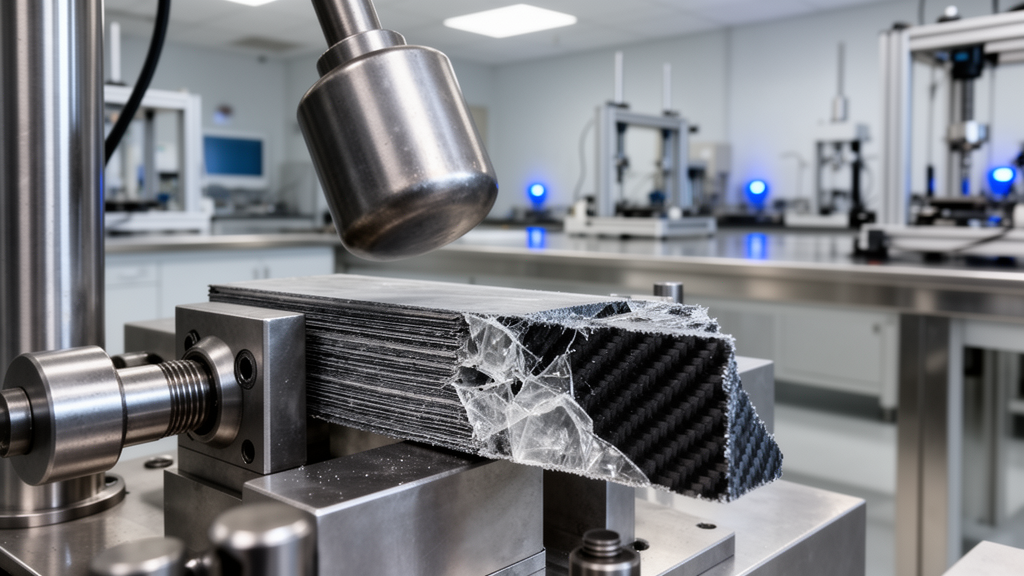
Researchers have evaluated machine-learning performance on small composite materials datasets by reanalysing a five-formulation hybrid polyester composite system. The study, conducted by P. Sundaravadivel, S. Sathees Kumar, and R. Muthalagu, examined a formulation set comprising jute fibre (JF), Prosopis juliflora bark (PJb), and kenaf fibre (KF). In the investigated material, jute fibre was fixed at 50 wt%, while the proportions of PJb and KF were varied complementarily across five specimens designated A through E. Before conducting predictive modelling, the researchers identified and corrected an existing data-alignment error in the dataset.
To model the material properties, the team evaluated fourteen distinct regression algorithms using leave-one-out cross-validation (LOOCV), alongside feature-importance analysis, principal component analysis (PCA), t-distributed stochastic neighbour embedding (t-SNE), and k-means clustering. The analysis revealed that predicting mechanical performance from very small experimental sample sizes produces starkly contrasting results depending on the specific mechanical metric under evaluation. For tensile strength, all fourteen regression algorithms returned negative LOOCV coefficient of determination (R²) values. The best-performing model for tensile strength was support vector regression with a radial basis function kernel (SVR-RBF), which reached an R² of -0.376.
In sharp contrast to the poor predictability observed for tensile strength, impact strength was modelled with high accuracy. Ridge regression achieved an LOOCV R² of 0.883 and a mean absolute error (MAE) of 1.34 J/m² when predicting impact performance. The researchers attributed the failure of tensile predictions to the interaction between the limited five-formulation sample count, the presence of only a single effective compositional degree of freedom, and the peaked nature of the material’s tensile response curve.
Direct mechanical measurements across the specimens revealed distinct property changes as kenaf fibre content progressively increased from specimen A to specimen E. Higher KF content raised the flexural modulus by 37%, flexural strength by 17%, hardness by 17%, and impact strength by 50%. Conversely, tensile strength and tensile modulus did not increase monotonically across the formulations; instead, both metrics peaked at the balanced KF25/JF50/PJb25 composition identified as specimen C.
These findings demonstrate that the reliability of machine-learning models applied to small composite datasets does not depend on sample size alone, but represents a joint function of sample size, effective dimensionality, and response shape. To establish statistically defensible predictive modelling for this material class, the authors recommend expanding future experimental designs to 15 to 20 independently varied formulations accompanied by replicate measurements.
Subject of Research: Machine learning property prediction in hybrid natural fibre polyester composites
Article Title: Cross validated small data machine learning for composition property analysis of jute/prosopis juliflora bark/kenaf hybrid polyester composites
Article References: Sundaravadivel, P., Sathees Kumar, S., & Muthalagu, R. (2026). Cross validated small data machine learning for composition property analysis of jute/prosopis juliflora bark/kenaf hybrid polyester composites. Discover Materials. https://doi.org/10.1007/s43939-026-01040-4
Image Credits: AI Generated
DOI: 10.1007/s43939-026-01040-4
Keywords: jute fibre, Prosopis juliflora bark, kenaf fibre, hybrid polyester composites, leave-one-out cross-validation, ridge regression, support vector regression, tensile strength, impact strength, flexural modulus, flexural strength, hardness, principal component analysis, t-SNE, k-means clustering, feature importance, small data machine learning, data-alignment error
News Source: Teresa Odom. (November 16, 2026). Small Dataset Machine Learning Accurately Predicts Hybrid Composite Impact Strength. Scienmag.