


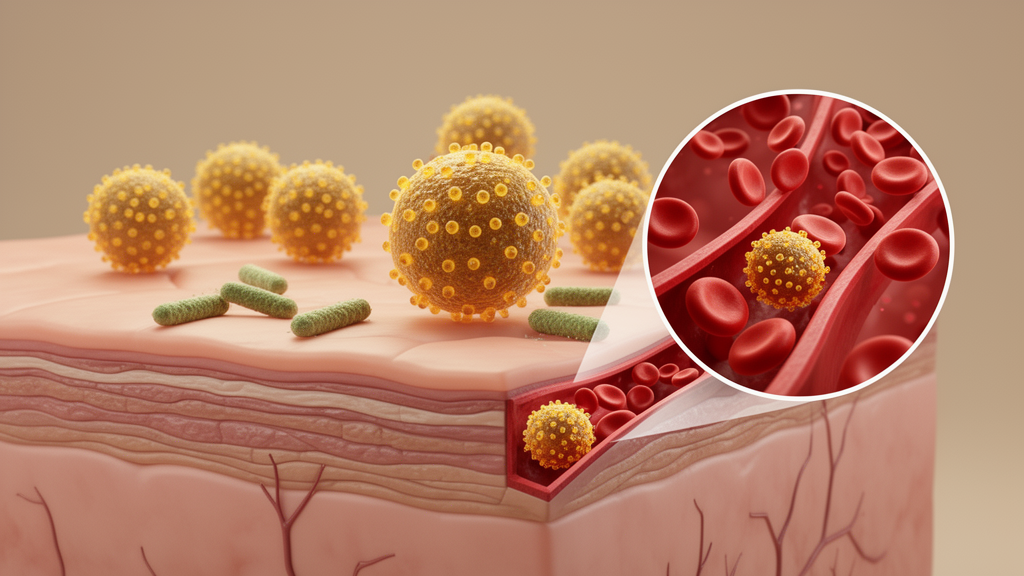
People who inject drugs appear to acquire Staphylococcus aureus bloodstream infections from bacteria already living on their own skin and from contaminated drug use equipment, according to a prospective study published in BMC Infectious Diseases. The research also found that most repeat episodes of S. aureus bacteremia in this population were relapses of the original infection rather than new infections with unrelated strains.
The research team, led by Kangning Yang, Benjamin Reimler and colleagues with senior author Laura Marks, prospectively recruited 101 patients with S. aureus bacteremia, including 50 patients who inject drugs. The central question was whether bacteremia in people who inject drugs arises from concomitant skin colonization or from re-use of contaminated drug use equipment, and whether repeat infections represent relapse with the same strain or reinfection with a different one. The researchers used hybrid assembly of short- and long-read whole genome sequencing data to compare whole genome single nucleotide polymorphism differences between blood culture, colonization, drug use equipment and community syringe isolates. Isolates were considered clonally related if they differed by 20 or fewer single nucleotide polymorphisms. Plasmidic contigs from isolates sharing at least 99.9 percent average nucleotide identity with other plasmids were flagged as potential plasmid transmission events. Hospitalized individuals with S. aureus bacteremia who reported no drug use served as a comparator group, and clinical data and hospitalization histories were abstracted from the electronic medical record.
The genomic comparisons showed that 22 percent of S. aureus bacteremia isolates from people who inject drugs in the prospective colonization study were related to colonization isolates, while 11 percent were related to isolates recovered from drug use equipment or discarded syringes. Network analysis of plasmid sharing suggested that potential plasmid transmission events were primarily driven by injection drug use related isolates, which accounted for 61.2 percent of these events, by MRSA status, which accounted for 72.6 percent, and by sequence type 8/1181 isolates, which accounted for 62.4 percent. These patterns point to shared fomites or common environments as routes through which S. aureus strains may spread locally among people who inject drugs.
To address the question of recurrence, the team sequenced bloodstream isolates from people who inject drugs with two or more admissions for S. aureus bacteremia between 2016 and 2024 where isolates of sufficient quality were available, a total of 47 patients. Among patients hospitalized with multiple admissions for recurrent bacteremia, 63.8 percent of the repeat episodes were attributed to relapse with related isolates rather than reinfection with unrelated strains. The authors conclude that S. aureus bacteremia may result from nonsterile injection practices that facilitate infection with colonizing organisms, as well as from shared fomites or common environments, and that these practices and factors may also contribute to local spread of S. aureus strains among people who inject drugs.
Subject of Research: Genomic links between skin colonization, drug use equipment and recurrent Staphylococcus aureus bloodstream infection in people who inject drugs
Article Title: Drug use equipment and skin colonization facilitate Staphylococcus aureus bloodstream infection and reinfection
Article References: Yang, K., Reimler, B., Wildenthal, J., Zhang, K., Olson, P., Bongu, J., Nolan, N., Habrock-Bach, T., Henderson, J., Dantas, G., Schwartz, D., & Marks, L. (2026). Drug use equipment and skin colonization facilitate Staphylococcus aureus bloodstream infection and reinfection. BMC Infectious Diseases. https://doi.org/10.1186/s12879-026-14687-4
Image Credits: AI Generated
DOI: 10.1186/s12879-026-14687-4
Keywords: Staphylococcus aureus, bacteremia, people who inject drugs, whole genome sequencing, skin colonization, drug use equipment, relapse, reinfection, MRSA, plasmid transmission, BMC Infectious Diseases, Drug
News Source: Kristina Jarvis. (October 29, 2026). Skin bacteria and shared drug equipment linked to recurrent Staphylococcus aureus bloodstream infections. Scienmag.



