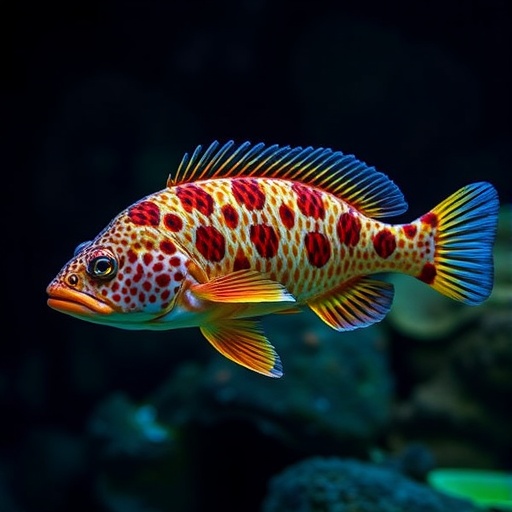
A single-cell transcriptomic study of the orange-spotted grouper, Epinephelus coioides, is offering an unprecedented view of how a fish gonad reorganizes itself during hormone-induced sex reversal. The research focuses on a remarkable biological system: this species is a protogynous hermaphrodite, meaning individuals typically mature first as females and may later transform into functional males. By examining thousands of individual gonadal cells rather than treating the entire gonad as one mixed tissue, the study maps the cellular changes associated with methyltestosterone, or MT, exposure and reveals how reproductive tissues shift from an ovarian to a testicular state.
Orange-spotted grouper are commercially important reef fish across the Indo-Pacific, but their reproductive biology is equally significant to scientists studying developmental plasticity. In a protogynous species, sex is not fixed permanently at birth in the same way it is in mammals. Social conditions, reproductive status and endocrine signals can influence the direction of gonadal development. When a dominant male is removed from a group, for example, a large female may begin a natural sex change. Methyltestosterone, a synthetic androgen, can accelerate or experimentally induce this transition. The process is not simply a matter of one reproductive organ disappearing and another appearing. It involves coordinated changes in hormone-producing cells, germ cells, connective tissue, immune populations and the regulatory networks that control gene activity.
The investigators used single-cell RNA sequencing, a technology capable of measuring gene-expression patterns in individual cells. In conventional transcriptomics, RNA is extracted from an entire gonad, producing an averaged molecular signal that can conceal rare or opposing cell populations. Single-cell analysis instead separates the tissue into individual cellular profiles and records which genes are active in each one. Computational methods then group cells according to their transcriptional signatures, allowing researchers to identify distinct populations and trace how their abundance or identity changes following MT treatment. This approach is especially valuable in sex-changing fish because ovarian and testicular features can coexist during the transition, creating a complex cellular landscape that bulk sequencing cannot resolve.
The resulting cellular atlas distinguishes the major compartments involved in gonadal remodeling and shows that MT exposure affects far more than germ-cell development. Steroidogenic cells, which synthesize sex hormones, undergo major transcriptional adjustments as the endocrine environment changes. Genes associated with androgen production, steroid metabolism and hormone receptors become central indicators of the transition. At the same time, supporting somatic cells surrounding germ cells alter their expression of signaling molecules, structural proteins and factors linked to tissue organization. These cells form the local environment in which eggs or sperm develop, and their transformation is considered essential to the conversion of ovarian tissue into a testis-like architecture.
One of the most important insights from the study is that sex reversal appears to proceed through a sequence of cellular states rather than a single abrupt switch. Ovarian-associated cells gradually lose gene programs linked to oocyte maintenance and female reproductive function, while testis-associated populations emerge or expand. Intermediate cells display mixed transcriptional profiles, suggesting that they may represent transitional states rather than fully differentiated cell types. In developmental biology, such intermediate populations are often the molecular footprints of cellular reprogramming. Their presence indicates that MT may not merely activate male genes directly; it may also suppress ovarian identity, alter cell communication and create conditions in which previously specialized cells can adopt new functions.
The analysis also highlights the importance of intercellular communication. Gonadal cells do not change independently, and the researchers identified signaling pathways that could connect steroid-producing cells, germ cells and somatic support populations during the transition. These pathways may include ligand-receptor systems involved in growth, differentiation, inflammation and extracellular matrix remodeling. The extracellular matrix, a network of proteins surrounding cells, provides both physical support and biochemical instructions. Its restructuring can alter how cells migrate, divide and respond to hormones. By linking gene-expression changes to possible cell-to-cell signaling routes, the study provides a framework for understanding how a local endocrine stimulus can produce coordinated tissue-wide remodeling.
Immune-related cells and inflammatory signaling also appear to be part of the process, an observation that challenges the idea that sex reversal is governed exclusively by reproductive hormones. Tissue transformation requires the removal, recycling or reorganization of existing structures, and immune cells can contribute to this remodeling by clearing damaged material and releasing regulatory molecules. Their activity may help create a permissive environment for new testicular structures to form. The single-cell data therefore place gonadal sex change within a broader biological context that includes immunity, metabolism, cell adhesion and tissue repair. These findings suggest that reproductive plasticity is a systems-level event involving multiple biological programs operating at the same time.
For aquaculture, the implications are potentially substantial. In many grouper species, males are larger or otherwise valuable for breeding, while natural sex reversal can be slow, variable or difficult to manage. MT has been used experimentally and in some production settings to influence sexual development, but its effects are not always predictable, and concerns remain about dosage, timing, environmental release and long-term consequences. A cellular map of MT-induced sex reversal could help identify molecular markers that indicate whether a fish is responding appropriately, progressing through a transitional stage or experiencing abnormal gonadal development. It may also support the development of more precise breeding strategies that reduce reliance on broad hormonal treatment.
The work could also inform wider questions in vertebrate biology. Many animals possess flexible mechanisms of sexual development, but the molecular logic of sex change remains poorly understood compared with the genetics of fixed-sex systems. The orange-spotted grouper offers a natural model for studying how differentiated tissues can be remodeled under endocrine control. By revealing which cells change first, which populations persist and how molecular identities are rebuilt, the study may help explain how organisms balance developmental stability with biological flexibility. Future research combining single-cell sequencing with spatial transcriptomics, hormone measurements and functional gene-editing experiments will be needed to determine whether the identified cell states directly drive sex reversal or simply accompany it. For now, the study transforms the grouper gonad from a seemingly unified reproductive organ into a dynamic ecosystem of cells, each responding to MT in its own way while contributing to one of nature’s most striking examples of developmental change.
Subject of Research: Single-cell transcriptomic analysis of gonadal cell differentiation during methyltestosterone-induced sex reversal in the orange-spotted grouper, Epinephelus coioides.
Article Title: Single-cell transcriptomics reveals the differential landscape of gonadal cells during MT-induced sex reversal in hermaphroditic protogynous orange-spotted grouper (Epinephelus coioides).
Image Credits: AI Generated
Keywords: orange-spotted grouper, Epinephelus coioides, protogynous hermaphroditism, sex reversal, methyltestosterone, MT, single-cell RNA sequencing, gonadal differentiation, steroidogenesis, germ cells, somatic cells, aquaculture, reproductive biology.
Tags: cellular mapping of gonadal transformationdevelopmental plasticity in reef fishendocrine regulation of fish sex changegonadal cell reorganization during fish sex reversalgonadal cell type transitions during sex reversalhormone-induced sex change in orange-spotted grouperimpact of social cues on fish reproductive developmentmethyltestosterone effects on fish gonadsprotogynous hermaphroditic fish reproductive biologyreef fish reproductive tissue dynamicsSingle-Cell RNA Sequencingsingle-cell transcriptomics in fish