


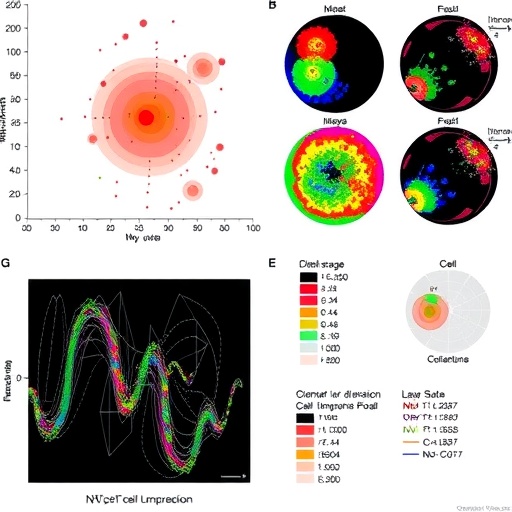
A new Nature Communications study reports a high-resolution immune atlas of natural killer/T-cell lymphoma using single-cell profiling, offering a clearer view of how tumor-linked immune states diversify across patients. The work highlights that even within what appears to be a single disease entity, the surrounding immune ecosystem can segregate into distinct programs with different biological signatures.
By integrating single-cell measurements from lymphoma samples, the researchers quantified heterogeneity among immune populations that interact directly or indirectly with malignant cells. Rather than treating immune infiltration as a uniform backdrop, the team mapped immune features at the cellular level, revealing stratified immune compartments that vary in composition and activation status.
A central finding is that the immune landscape forms identifiable layers, consistent with multiple immune “modes” coexisting across the cohort. These modes reflect differences in receptor and effector gene activity, suggesting that immune pressure and tumor evasion are not evenly distributed. The study therefore frames immune heterogeneity as a functional variable, not merely descriptive noise.
The authors also report technical strategies aimed at robust cell-state assignment, including quality-controlled clustering and marker-based annotation of immune lineages. This approach enabled reproducible identification of NK- and T-cell–associated states, as well as intermediate populations that may represent transitional phenotypes.
Mechanistically, the paper emphasizes that lymphoma-associated immune cells show coordinated shifts in pathways linked to cytotoxicity, interferon responsiveness, and immunomodulatory signaling. Such pathway-level remodeling implies that the tumor microenvironment can drive immune states toward either productive surveillance or dampened anti-tumor activity.
Importantly, the stratified patterns show potential therapeutic relevance. The study suggests that patient immune state classes could inform treatment selection by matching interventions to the dominant immune program present at diagnosis.
Overall, the research positions single-cell profiling as a practical route to refine lymphoma immunobiology and stratify immune features that may predict response or resistance. While clinical validation is still required, the results provide a roadmap for more personalized immunotherapeutic strategies.
The work appears in a 2026 article in Nature Communications by Cao, Cai, Dai and colleagues, doi:10.1038/s41467-026-76152-9.
Subject of Research: Natural killer/T-cell lymphoma; immune heterogeneity; single-cell profiling
Article Title: Single-cell profiling of natural killer/T-cell lymphoma reveals stratified immune features and potential therapeutic implications.
Article References: Cao, Y., Cai, J., Dai, D. et al. Nat Commun (2026). https://doi.org/10.1038/s41467-026-76152-9
Image Credits: AI Generated
DOI: 10.1038/s41467-026-76152-9
Keywords: single-cell profiling; natural killer/T-cell lymphoma; immune stratification; tumor microenvironment; cytotoxicity; interferon response
Tags: cellular heterogeneity in cancerhigh-resolution immune atlasimmune activation and exhaustion markersimmune cell composition analysisimmune cell lineage annotationimmune heterogeneity in lymphomaimmune landscape stratificationNatural killer/T-cell lymphomasingle-cell immune profilingstratified immune statestumor immune microenvironmenttumor-immune interactions


