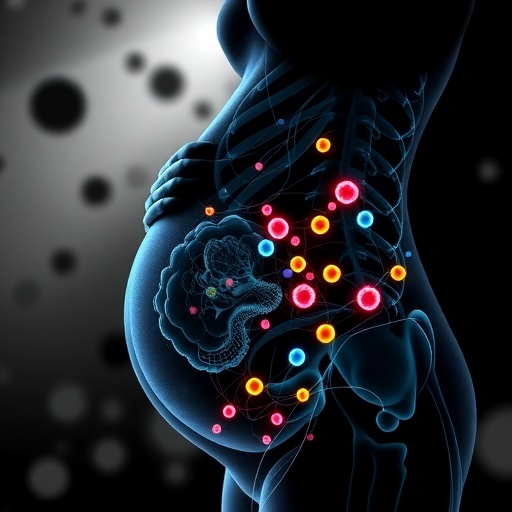
In a groundbreaking advance in immunological research, scientists have unveiled the intricate peripheral immune dynamics in pregnant women following administration of the Moderna mRNA COVID-19 vaccine. This study, recently published in the prestigious journal Genes & Immunity, employs cutting-edge single-cell mapping technologies to dissect the nuanced immune responses at a cellular level, offering unprecedented insights into how pregnancy modulates vaccine-induced immunity. The revelations from this research carry profound implications for maternal and fetal health, vaccine strategy optimization, and our broader understanding of immune adaptation during pregnancy.
Pregnancy represents a unique immunological milieu where the maternal immune system delicately balances tolerance towards the semi-allogeneic fetus with continued protection against pathogens. Vaccination during this period, particularly using novel mRNA platforms, has posed critical questions regarding safety, efficacy, and immunogenicity. The team led by Kang, Lu, and Cheng adopted a single-cell RNA sequencing approach to map peripheral blood immune cell populations and their transcriptional states longitudinally in pregnant women receiving the Moderna mRNA COVID-19 vaccine. This high-resolution method transcends conventional bulk assays, enabling the precise identification of dynamic cellular shifts and gene expression changes that accompany vaccination.
The researchers collected peripheral blood samples at multiple time points before and after administering the vaccine, capturing the temporal evolution of immune activation, differentiation, and memory formation. Their single-cell analyses revealed a complex orchestration of innate and adaptive immune responses. Notably, classical monocyte subsets exhibited early activation signatures, typified by upregulated expression of interferon-stimulated genes and antigen-processing machinery, consistent with vaccine-induced innate immune priming. This innate activation likely serves as a pivotal initiator of downstream adaptive immune events critical for developing durable protection.
Concurrently, the study detailed a robust expansion and phenotypic maturation of B-cell populations responsible for antibody production. Single-cell transcriptomic profiling uncovered enhanced expression of genes linked to germinal center formation, somatic hypermutation, and class-switch recombination—a testament to effective humoral immune induction by the Moderna mRNA platform. Importantly, these B-cell dynamics exhibited unique modulation in the context of pregnancy, reflecting a tailored immune adjustment that preserves fetal tolerance while fostering pathogen-specific immunity.
T-cell compartment analyses exposed pivotal shifts in relative subset frequencies and activation states. CD4+ helper T cells demonstrated heightened expression of Th1-associated cytokines and cytotoxic molecules, underpinning their role in orchestrating B-cell help and cytotoxic responses. Meanwhile, CD8+ cytotoxic T cells displayed increased proliferation markers and effector gene upregulation, indicating their participation in vaccine-mediated virus-specific clearance mechanisms. These T-cell responses were temporally correlated with antibody maturation, underscoring the coordinated synergy of cellular and humoral arms of immunity following mRNA vaccination.
A particularly striking aspect of this investigation was its focus on pregnancy-specific immunomodulation. The authors observed differential expression patterns in regulatory T cells (Tregs), which expanded transiently post-vaccination, likely contributing to the maintenance of immune homeostasis and preventing excessive inflammation that could jeopardize fetal development. Furthermore, the study illuminated altered cytokine milieu signatures in peripheral blood, featuring shifts in interleukin and chemokine profiles that mirror the delicate balance between immune activation and suppression in pregnancy.
Beyond interrogating individual cell populations, integrative pathway analyses delineated key signaling cascades activated by the mRNA vaccine. Prominent among these were type I interferon pathways, antigen presentation processes, and metabolic reprogramming events within immune cells. These multifaceted responses collectively underpin the robust immunogenicity of Moderna’s vaccine, validating its efficacy in a physiologically complex population such as pregnant women.
The implications of these findings extend well beyond academic curiosity. Vaccine hesitancy among expectant mothers remains a substantial public health challenge, often fueled by uncertainties regarding vaccine safety and immune effects during gestation. By characterizing the reassuring immune outcomes of the Moderna mRNA vaccine at a granular single-cell level, the study provides compelling scientific evidence to allay fears and support informed decision-making for maternal vaccination programs.
Moreover, the nuanced insights into how pregnancy modulates vaccine responses pave the way for designing tailored immunization strategies that account for gestational immunology. Future vaccine formulations could exploit these mechanistic understandings to enhance efficacy and minimize adverse effects, potentially improving outcomes for both mother and child.
This pioneering work also highlights the transformative power of single-cell technologies in vaccinology and reproductive immunology. By enabling the deconvolution of heterogeneous immune landscapes, these methods offer a potent toolkit to unravel complexities previously obscured by bulk analyses. As vaccine science advances, such approaches will be indispensable for optimizing protective interventions in specialized populations.
Additionally, the study underscores the adaptability of mRNA-based vaccines in generating potent, multi-dimensional immune responses within immunologically dynamic contexts. The Moderna vaccine’s ability to elicit coordinated innate and adaptive immunity in pregnant women exemplifies the versatility and promise of mRNA platforms beyond pandemic control, potentially extending into broader infectious disease prevention and therapeutic applications.
The research team also acknowledged certain limitations, such as the focused peripheral blood analysis which may not fully capture tissue-resident immune dynamics pivotal during pregnancy. Nonetheless, their comprehensive temporal profiling offers a valuable blueprint for subsequent investigations that can integrate placental and fetal immune compartments to yield an integrated maternal-fetal immunology picture.
In conclusion, the study by Kang, Lu, Cheng, and colleagues propels our understanding of vaccine-induced immune landscapes during pregnancy into new territory. Their meticulous single-cell mapping elucidates the harmonized immune choreography that ensues following Moderna mRNA COVID-19 vaccination, underscoring both its safety and immunogenic potency. These insights promise to influence clinical guidelines, public health policies, and future vaccine development tailored specifically for pregnant populations, ultimately safeguarding two lives with one critical protective intervention.
Subject of Research: Immune response dynamics in pregnant women after Moderna mRNA COVID-19 vaccination analyzed through single-cell mapping.
Article Title: Single-cell mapping of peripheral immune dynamics in pregnant women after Moderna mRNA COVID-19 vaccination.
Article References:
Kang, YT., Lu, TJ., Cheng, PL. et al. Single-cell mapping of peripheral immune dynamics in pregnant women after Moderna mRNA COVID-19 vaccination. Genes Immun (2026). https://doi.org/10.1038/s41435-026-00394-2
Image Credits: AI Generated
DOI: 14 April 2026
Tags: cellular immune response to Moderna vaccineimmune dynamics post-mRNA vaccinationimmunogenicity of COVID-19 vaccines during pregnancylongitudinal immune monitoring post-vaccinationmaternal immune adaptation to vaccinationmaternal-fetal immune toleranceModerna mRNA COVID-19 vaccine immune responseperipheral blood immune cell profilingsingle-cell immune mapping in pregnancysingle-cell RNA sequencing in pregnant womentranscriptomic analysis of immune cellsvaccine safety and efficacy in pregnancy