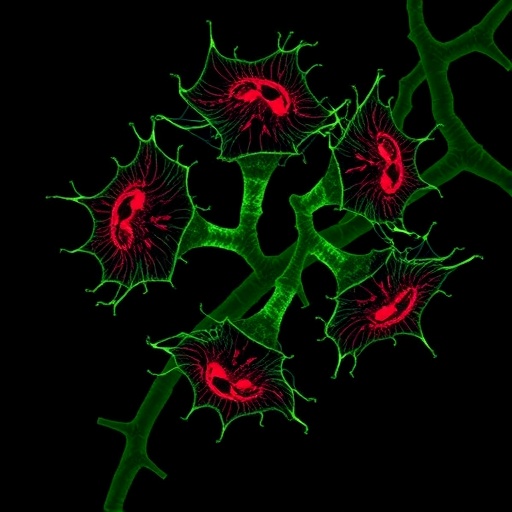
A groundbreaking study emerging from the collaborative efforts of the ASTAR Genome Institute of Singapore (ASTAR GIS), National Cancer Centre Singapore (NCCS), Singapore General Hospital (SGH), and KU Leuven in Belgium has unveiled critical insights into the resilience and metastatic potential of colorectal cancer cells following chemotherapy. Published in the prestigious journal Nature Cell Death & Disease, this investigation elucidates a nuanced biological adaptation—coined a “survival shift”—that empowers certain colorectal cancer cells to withstand conventional chemotherapy, particularly the widely used agent oxaliplatin, while simultaneously enhancing their capacity to propagate and invade distant tissues.
Colorectal cancer (CRC) stands as one of the most formidable health challenges globally, afflicting nearly 1.9 million individuals each year. In regions such as Singapore, the incidence remains alarmingly high, underscoring the urgency for novel therapeutic pathways. Traditional chemotherapy protocols have marked successes, yet approximately half of patients develop relapsed or metastatic disease, which undermines long-term survival prospects. This new research pivots on understanding the molecular mechanisms that drive this lethal evolution, focusing intensely on the gene SERPINE1, a previously underappreciated actor in the orchestration of chemoresistance and metastasis.
Utilizing an innovative preclinical model that meticulously replicates clinical chemotherapy dosing regimens, the research team made a serendipitous discovery: resistant cancer cells do not merely endure cytotoxic stress; they actively remodel their biochemical landscape in a manner that fortifies their survival and aggressiveness. This adaptive state is characterized by dysregulated cholesterol biosynthesis and metabolism within the resistant subset of CRC cells—a metabolic reprogramming that signals through and elevates SERPINE1 gene expression. Notably, SERPINE1 encodes plasminogen activator inhibitor-1 (PAI-1), a crucial regulator in the fibrinolytic system, linking coagulation pathways to cancer cell plasticity and invasiveness.
The implications of SERPINE1 hyperactivity extend beyond molecular signaling; analysis of patient tumor samples revealed a robust correlation between heightened SERPINE1 expression and unfavorable clinical outcomes, including increased relapse rates and diminished overall survival. This suggests that SERPINE1 is not merely a biochemical marker but a functional driver of tumor progression. Given these insights, the authors explored therapeutic avenues targeting SERPINE1 along with its upstream pathways.
Strikingly, preclinical interventions that either directly inhibited SERPINE1 or disrupted the altered cholesterol homeostasis—through agents such as statins—restored chemosensitivity to oxaliplatin in resistant tumor models. These combinatorial strategies curtailed metastatic traits and impeded the survival advantage previously acquired by resistant CRC cells. While still in nascent stages, these findings illuminate promising translational pathways, advocating for clinical trials to validate efficacy in patient populations and to potentially redefine standard-of-care for resistant colorectal cancer.
In parallel to uncovering molecular susceptibilities, the multidisciplinary team developed a prognostic gene signature termed RESIST-M. This sophisticated molecular risk score comprises nine genes intricately linked to chemoresistance and metastatic behavior, including SERPINE1. Validation across several independent CRC patient datasets substantiated the predictive power of RESIST-M, demonstrating its ability to stratify patients by risk and forecast relapse propensity with high accuracy.
RESIST-M is particularly enriched in tumors classified as consensus molecular subtype 4 (CMS4), which typifies a highly aggressive colorectal cancer phenotype associated with poor prognosis and challenging clinical management. The ability to identify CMS4 patients who harbor this signature offers a concrete biomarker tool, facilitating tailored treatment approaches and more insightful clinical trial design, while enabling clinicians to monitor disease progression and intervene preemptively.
Central to this discovery was the comprehensive integration of clinical data, genomic profiling, and functional assays. Unlike conventional approaches that rely on supraphysiological drug concentrations, their model more faithfully mimics human chemotherapy exposure, illustrating the adaptive dynamics of tumor evolution under authentic therapeutic pressure. This paradigm shift enhances the clinical relevance of preclinical findings and paves the way for translational breakthroughs.
Dr. Ramanuj DasGupta, Senior Principal Scientist leading the study at A*STAR GIS, emphasized the transformative impact of these findings: “By delineating the biological link between chemotherapy resistance and metastatic potential, we have unveiled biomarkers that not only flag high-risk patients but also suggest clinical interventions to prevent progression before relapse occurs. This could indeed revolutionize the therapeutic landscape of colorectal cancer.”
Supporting this vision, Professor Iain Tan of NCCS underscored the clinical promise: “Aggressive recurrence remains a substantial clinical challenge. The RESIST-M signature empowers clinicians to make more informed, individualized decisions, potentially repurposing existing pharmacological agents, such as statins, to enhance patient outcomes in resistant colorectal cancer.”
Looking ahead, the research consortium is orchestrating clinical trial proposals aimed at evaluating the therapeutic value of targeting SERPINE1 as well as cholesterol metabolism modulators in selected patient cohorts. Further mechanistic studies are planned to decipher why resistant CRC cells downregulate endogenous cholesterol biosynthesis despite the pathway’s apparent role in survival and malignancy, which may uncover additional actionable targets.
Moreover, ongoing endeavors intend to refine and validate RESIST-M as a routine clinical tool, integrating genomic biomarkers into oncology practice to improve patient stratification, enable precision medicine approaches, and optimize trial design for novel therapeutics.
This seminal work exemplifies the power of interdisciplinary research harnessing cutting-edge genomics, molecular biology, and clinical insights to confront the pressing challenge of chemotherapy resistance, offering hope for improved management strategies and patient survival in colorectal cancer.
Subject of Research: Molecular mechanisms and biomarkers of chemotherapy resistance and metastasis in colorectal cancer.
Article Title: [Not explicitly provided in the source material.]
News Publication Date: [Not explicitly stated; publication inferred from journal source.]
Web References:
Nature Cell Death & Disease Article (DOI: 10.1038/s41419-025-07855-y)
References:
Study published in Nature Cell Death & Disease, DOI: 10.1038/s41419-025-07855-y.
Image Credits:
[Not specified in the source material.]
Keywords: Colorectal cancer, chemotherapy resistance, SERPINE1, oxaliplatin, cholesterol metabolism, metastasis, RESIST-M signature, precision oncology, statins, cancer biomarkers.
Tags: cancer cell adaptation to chemotherapycancer cell invasion and propagationcolorectal cancer chemotherapy resistancecolorectal cancer metastasis post-chemotherapymetastatic colorectal cancer treatment challengesmolecular pathways in CRC recurrenceoxaliplatin resistance mechanismspreclinical models for chemotherapy researchSERPINE1 gene role in cancerSingapore colorectal cancer researchsurvival shift in cancer cellstherapeutic targets for colorectal cancer