• HOME
  • NEWS
  • EXPLORE
    • CAREER
      • Companies
      • Jobs
    • EVENTS
    • iGEM
      • News
      • Team
    • PHOTOS
    • VIDEO
    • WIKI
  • BLOG
  • COMMUNITY
    • FACEBOOK
    • INSTAGRAM
    • TWITTER
Thursday, November 26, 2026
BIOENGINEER.ORG
No Result
View All Result
  • Login
  • HOME
  • NEWS
  • EXPLORE
    • CAREER
      • Companies
      • Jobs
        • Lecturer
        • PhD Studentship
        • Postdoc
        • Research Assistant
    • EVENTS
    • iGEM
      • News
      • Team
    • PHOTOS
    • VIDEO
    • WIKI
  • BLOG
  • COMMUNITY
    • FACEBOOK
    • INSTAGRAM
    • TWITTER
No Result
View All Result
Bioengineer.org
No Result
View All Result
Home NEWS Science News Technology

Simplified Algebraic Cell Complex Model Bridges Network Science and Signal Processing

by
November 26, 2026
in Technology
Reading Time: 2 mins read
0
Simplified Algebraic Cell Complex Model Bridges Network Science and Signal Processing

Simplified Algebraic Cell Complex Model Bridges Network Science and Signal Processing

Share on FacebookShare on TwitterShare on LinkedinShare on RedditShare on Telegram

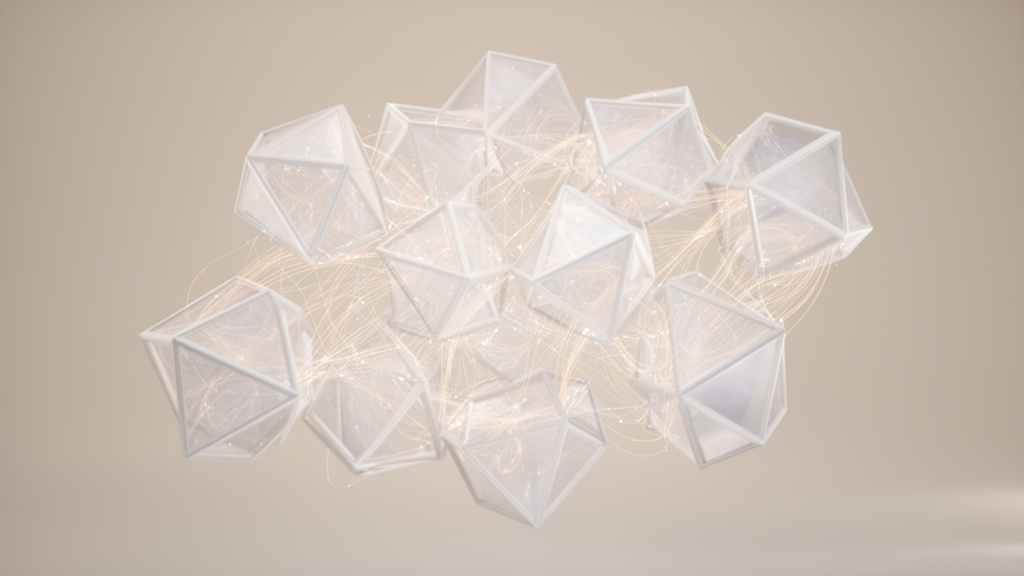
Researchers have introduced a simplified mathematical framework for cell complexes to make higher-order network models accessible for practical applications in signal processing and network science. In a review article published in Applied Network Science, authors Josef Hoppe, Vincent P. Grande, and Michael T. Schaub address the longstanding gap between abstract topological theory and applied signal processing methods.

Cell complexes are higher-order network models deeply rooted in algebraic topology that have gained increasing interest across signal processing and network science. Although signals defined on these complexes can be described through accessible algebraic and combinatorial notions, conventional presentations rely heavily on abstract topological concepts. As a consequence, traditional topological definitions have remained disconnected from practical signal processing methods developed for network analysis.

To bridge this divide, the researchers introduced the concept of abstract regular cell complexes, abbreviated as arccs. This simplified formulation relies exclusively on notions from algebra rather than higher-level topology. For most practical applications, these abstract regular cell complexes are equivalent to regular cell complexes, providing an accessible introduction to cell complexes from a perspective of network science and signal processing, including central methods and recent developments.

The authors further simplified the framework for systems operating in low dimensions. Because many practical applications work with cell complexes of dimension two and below, the authors provide an even simpler definition for this case. This definition significantly simplifies understanding and working with cell complexes in practice.

Subject of Research: Simplified algebraic frameworks for cell complexes in network science

Article Title: Don’t be afraid of cell complexes! An introduction from an applied perspective

Article References: Hoppe, J., Grande, V. P., & Schaub, M. T. (2026). Don’t be afraid of cell complexes! An introduction from an applied perspective. Applied Network Science. https://doi.org/10.1007/s41109-026-00826-y

Image Credits: AI Generated

DOI: 10.1007/s41109-026-00826-y

Keywords: cell complexes, abstract regular cell complexes, higher-order networks, algebraic topology, signal processing, network science, combinatorial notions, regular cell complexes, dimension two complexes, applied network science, algebraic methods, practical applications, network models, Josef Hoppe, Vincent P. Grande, Michael T. Schaub

News Source: Austin Grant. (November 26, 2026). Simplified Algebraic Cell Complex Model Bridges Network Science and Signal Processing. Scienmag.


Tags: abstract regular cell complexesalgebraic methodsalgebraic topologyApplied Network Sciencecell complexescombinatorial notionsdimension two complexeshigher-order networksJosef HoppeMichael T. Schaubnetwork modelsnetwork sciencepractical applicationsregular cell complexesSignal ProcessingVincent P. Grande
Share12Tweet7Share2ShareShareShare1

Related Posts

Phase Field Finite Element Simulations Map Dynamic Concrete Fracture and Branching

Phase Field Finite Element Simulations Map Dynamic Concrete Fracture and Branching

November 26, 2026
Massive Bunker Walls Stabilize Library Quarantine Temperatures but Seasonal Decay Risks Persist

Massive Bunker Walls Stabilize Library Quarantine Temperatures but Seasonal Decay Risks Persist

November 26, 2026

Transonic Fan Simulations Reveal Dynamic Operating Hysteresis During Rapid Engine Transients

November 26, 2026

Adaptive Lightweight Structures Merge Nonlinear Mechanics Control and Real-Time Monitoring

November 26, 2026

POPULAR NEWS

  • Virtual Reality Timing Shapes Career Learning Dynamics in Middle School Classrooms

    Virtual Reality Timing Shapes Career Learning Dynamics in Middle School Classrooms

    29 shares
    Share 12 Tweet 7
  • Symbolic Analysis in Julia Identifies Hidden Model Ambiguities Before Biological Estimation

    29 shares
    Share 12 Tweet 7
  • Entomologists Describe New Cricket Subgenus and Two Species From South America

    29 shares
    Share 12 Tweet 7
  • Trimmed Gutta-Percha Cones Increase Apical Sealer Percentage in Canal Obturation

    29 shares
    Share 12 Tweet 7

About

We bring you the latest biotechnology news from best research centers and universities around the world. Check our website.

Follow us

Recent News

Phase Field Finite Element Simulations Map Dynamic Concrete Fracture and Branching

Neuron Identity Gene Fezf2 Balances Developing Mouse Brain Circuits

Massive Bunker Walls Stabilize Library Quarantine Temperatures but Seasonal Decay Risks Persist

Subscribe to Blog via Email

Enter your email address to subscribe to this blog and receive notifications of new posts by email.

Join 89 other subscribers
  • Contact Us

Bioengineer.org © Copyright 2023 All Rights Reserved.

Welcome Back!

Login to your account below

Forgotten Password?

Retrieve your password

Please enter your username or email address to reset your password.

Log In
No Result
View All Result
  • Homepages
    • Home Page 1
    • Home Page 2
  • News
  • National
  • Business
  • Health
  • Lifestyle
  • Science

Bioengineer.org © Copyright 2023 All Rights Reserved.