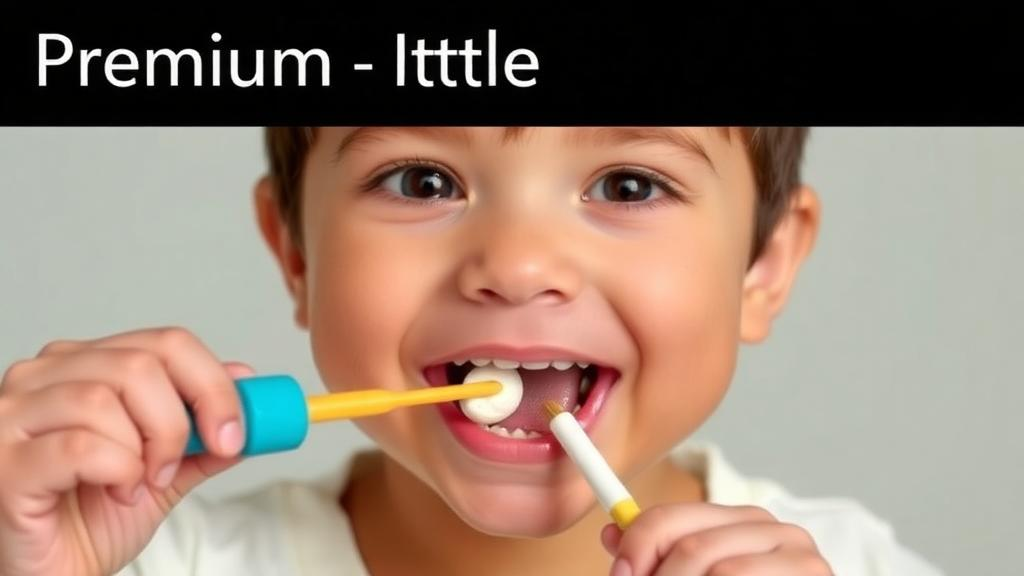
Every bite of food a child takes and every word a child speaks depends on a hidden orchestra of muscles working inside the mouth. The jaw must stabilize against force, the lips must seal and round on command, and the tongue must direct airflow with remarkable precision. When any part of this system falters, the consequences can ripple outward into nutrition, growth, communication, and a child’s overall quality of life. Yet despite how fundamental these oral motor skills are, clinicians have long lacked reliable, standardized ways to measure them, particularly in regions where normative data simply did not exist. A new study from Egypt set out to change that, and in doing so has produced one of the first structured roadmaps of how typically developing children master the mechanics of the mouth.
Researchers from Fayoum University and Cairo University conducted a cross-sectional study of 275 typically developing children, randomly selected from nurseries in Fayoum, Egypt. The children, aged between two and six years, were divided into six-month age intervals, creating a fine-grained developmental ladder across the preschool years. The goal was ambitious but practical: to establish preliminary normative reference values for oral motor function using the tool hierarchies of Oral Placement Therapy, a structured clinical approach that breaks complex oral movements into graded, measurable tasks. The work, published in BMC Pediatrics, offers clinicians a data-driven baseline against which children with suspected feeding or speech difficulties can now be compared.
The assessment battery reads like an obstacle course for the mouth. Children were asked to complete tasks drawn from several distinct Oral Placement Therapy hierarchies, including bite blocks, bite tubes, horn hierarchies, straw hierarchies, and bubble-blowing tasks. Each of these instruments targets a specific component of oral motor control. Bite blocks and bite tubes probe jaw stability and jaw strength, measuring how well a child can hold and sustain position against resistance. Horn hierarchies demand graded lip closure, controlled airflow, and the ability to direct breath through a narrow aperture. Straw hierarchies test suction, lip rounding, and tongue retraction in progressively harder steps. Bubble blowing, deceptively simple, requires coordinated lip rounding, sustained controlled exhalation, and fine regulation of oral airflow pressure.
What makes this approach technically significant is its departure from purely observational assessment. Traditional evaluations of oral motor function often rely on subjective clinical judgment, which varies from one examiner to another and lacks the objectivity needed for confident diagnosis. The OPT tool hierarchies, by contrast, present the child with physical tasks of increasing difficulty, each with a defined success criterion. A child either achieves the position or movement required by a given tool level or does not, and the resulting scores can be tallied and compared across age groups. This structure converts what was once an impressionistic clinical picture into quantifiable performance data, addressing a long-standing weakness in the field of pediatric feeding and speech assessment.
The results traced a clear developmental trajectory. Oral motor performance showed an overall age-related progression across most of the assessment domains, confirming that these skills mature in a predictable pattern during the preschool years. The pattern was strikingly consistent at both ends of the age spectrum: children younger than 42 months consistently achieved lower scores, while children older than 66 months achieved the highest scores across most of the OPT tool hierarchies. In other words, the years between roughly three and a half and five and a half appear to be a critical window in which the building blocks of sophisticated oral control are assembled.
Statistical analysis revealed significant differences among the age groups in several key domains, including jaw stability, jaw strength, lip function, and oral airflow control. These are not trivial distinctions. Jaw stability underlies a child’s ability to chew effectively and to keep the articulators in position for clear speech production. Lip function governs everything from drinking from an open cup to producing bilabial sounds such as p, b, and m. Airflow control, meanwhile, is the engine behind blowing, sucking, and a host of speech sounds that require precise management of the breath stream. The finding that all of these domains differentiate children by age suggests that the OPT hierarchies are sensitive to genuine developmental change rather than random variation.
The implications for early identification are considerable. Feeding disorders and speech sound disorders affect a substantial number of children worldwide, and delayed diagnosis often means missed opportunities for intervention during the periods of greatest neuroplasticity. With normative reference values in hand, a therapist in Egypt, or potentially in other populations once further validation is complete, can now place an individual child’s performance on a developmental curve. A four-year-old who cannot complete straw hierarchy levels that most four-year-olds master, or who struggles with bite block tasks that peers handle easily, can be flagged for closer evaluation and earlier therapy. The reference data thus serve as a clinical yardstick for distinguishing typical variation from genuine impairment.
The choice of population matters as much as the choice of tools. Normative data are inherently population-specific, shaped by cultural feeding practices, dietary textures, and linguistic environments. Until now, clinicians working with Egyptian children had to rely on reference values derived from other countries, an approximation that risks both over-referral and under-referral. By generating data from 275 randomly selected children in Fayoum, the research team has provided the first structured baseline tailored to this population, using six-month intervals that match the rapid pace of development in early childhood. The study was approved by the Medical Research Ethical Committee of the Faculty of Medicine at Fayoum University, and written informed consent was obtained from the parents or legal guardians of all participating children.
The authors are careful to frame their findings as preliminary rather than definitive. They note that multi-center validation and comprehensive psychometric evaluation are warranted before these data can be adopted as standardized clinical benchmarks. This caution reflects standard practice in measurement science: a normative dataset drawn from one region and one sampling frame must be tested for reliability, validity, and generalizability before it becomes the foundation for clinical decisions. Still, the study demonstrates that the OPT tool hierarchies are a feasible and practical method for assessing oral motor function in young children, a finding that lowers the barrier for clinics and therapists who need structured, repeatable assessment procedures.
For the broader field, the study represents a quiet but meaningful advance in how the invisible mechanics of the mouth are brought into measurable focus. Feeding and speech are among the most complex motor behaviors humans perform, involving dozens of muscles coordinated with sub-second timing, yet they are often assessed with less rigor than a single joint in the knee. By anchoring oral motor evaluation to graded physical tools and population-specific reference values, this research moves the field toward the kind of standardization that has long transformed other areas of pediatric rehabilitation. For the children of Fayoum, and potentially far beyond, the humble bubble wand and straw have become instruments of science, capable of catching developmental problems early enough to change a child’s trajectory.
Subject of Research: Normative development of oral motor skills in preschool children assessed with Oral Placement Therapy tools
Article Title: Establishing preliminary normative reference values for oral motor skills in typically developing Egyptian children using oral placement therapy tools
Article References: Zaytoun, R. A. E., Abdel Hady, A. F., Farag, M. E., Alasheery, R. A., Gomaa, M. M., & Amin, S. M. (2026). Establishing preliminary normative reference values for oral motor skills in typically developing Egyptian children using oral placement therapy tools. BMC Pediatrics, 26(1), Article 892. https://doi.org/10.1186/s12887-026-07555-2
Image Credits: AI Generated
DOI: 10.1186/s12887-026-07555-2
Keywords: oral motor skills, Oral Placement Therapy, normative reference values, Egyptian children, pediatric assessment, feeding development, speech development, jaw stability, lip function, airflow control, BMC Pediatrics, Fayoum
News Source: Ophelia Keating. (October 14, 2026). Simple Tools Reveal How Children’s Mouths Master Speech and Feeding Skills. Scienmag.