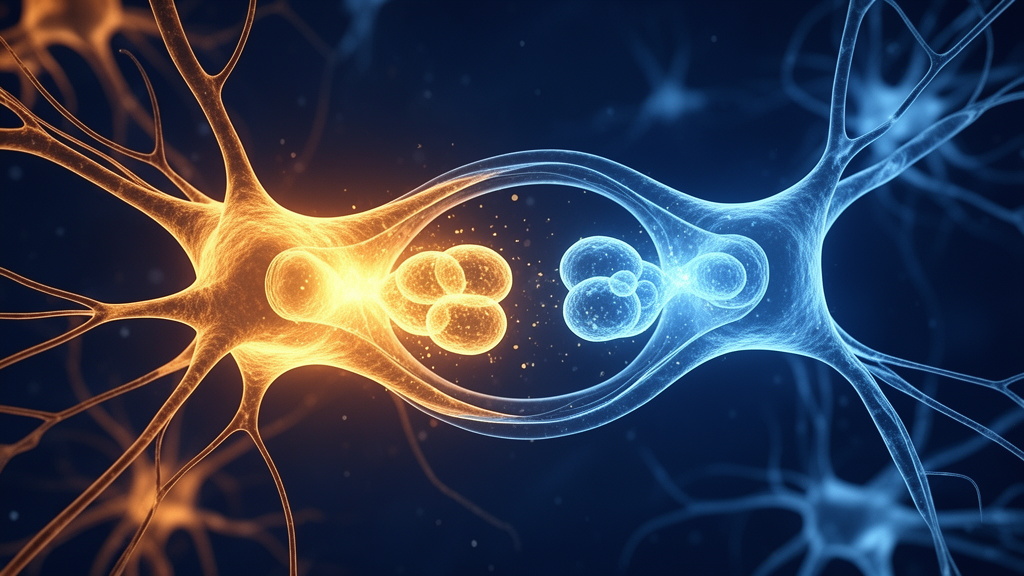
The Simons Foundation has launched the Simons Collaboration on Brain Energetics, a ten-year initiative designed to investigate how energy constraints fundamentally shape neural computation. This new collaboration, known as SCOBE, will provide $80 million to a group of 26 investigators spanning systems and computational neuroscience, cellular and molecular biology, engineering, and theory. The central goal of the project is to understand the interplay between how the brain creates and uses energy, as well as how it functions under metabolic stress. By addressing these fundamental questions, the collaboration aims to reveal the principles linking energy supply and demand to how neural circuits compute and how behavior arises.
The human brain carries out more complex processes than any other organ in the body, a function that requires a substantial amount of energy. Roughly 20 percent of the energy the body produces is consumed by the brain to maintain its operations. Despite this high metabolic cost, scientists still do not fully understand how the brain creates energy, rations it out, or uses its available supply to execute critical functions. Every thought and action depends on neurons performing computations that are extraordinarily costly in energy terms, yet the specific energetic limits that shape the way the brain is built and how it computes remain largely unknown to the scientific community.
SCOBE will focus its research efforts on four major topic areas to address these gaps in knowledge. The first area involves brain energetics at the single-cell level, where researchers will examine how much energy different types of brain cells need to perform specific tasks. These tasks include firing signals or clearing waste, and the study will look at how these cells work together to allocate resources. Researchers also plan to develop new sensors that can track energy-related molecules such as glucose and adenosine triphosphate, or ATP, as they move through cells, providing a detailed map of energy allocation and expenditure.
The second major focus area is energetics across brain circuits, which will explore how energy availability shapes computational processes that require large networks of cells. These processes include vision, navigation, and memory. The studies in this area will ask whether more demanding computations require more energy and how the brain prioritizes them when energy is limited.
Neurovascular coupling represents the third focus area, looking at the relationship between the brain and its blood supply. These projects study how neurons communicate with blood vessels to change how much energy they receive.
The fourth area of focus is adaptation to energy scarcity, which will investigate how the brain adapts to changes in energy availability. The amount of energy shuttled to the brain can fluctuate for many reasons, such as chronic metabolic conditions like diabetes, decreased oxygen levels, or pregnancy. These studies will explore how the brain remains resilient under high energy demand or metabolic challenge and what happens when those protections break down.
To address these areas, SCOBE investigators will study worms, flies, mice, and humans. This diversity in model organisms will allow the researchers to determine which principles of brain energetics are shared across species.
Like all the foundation’s neuroscience collaborations, SCOBE will have a strong focus on theory, computation, and data sharing. Not a lot of past research into brain energetics has taken a theoretical or computational approach, so the team is optimistic about what they will learn by applying advanced modeling techniques to integrate diverse data types. The collaboration is also committed to open data and is looking forward to sharing their findings with the broader research community.
The team of SCOBE investigators includes a diverse group of experts from leading institutions. Among them are Anton Arkhipov from the Allen Institute, Ghazaleh Ashrafi from Washington University, and Erin Barnhart from Columbia University. Other key members include Kwabena Boahen and Thomas Clandinin from Stanford University, Daniel Colón-Ramos from Yale University, and Emily Jane Dennis from the Janelia Research Campus.
Additional investigators include Anna Devor from Boston University, Gaute Einevoll from the University of Oslo, and Surya Ganguli from Stanford University. The team also features Lisa Giocomo from Stanford University, Chenghua Gu from Harvard University, and Balijit Khakh from the University of California, Los Angeles. Laura Lewis from the Massachusetts Institute of Technology and Jonathan Polimeni from Harvard University and Massachusetts General Hospital are also part of the group.
Further members of the SCOBE team include Priya Rajasethupathy from Rockefeller University, Vidhya Rangaraju from the Max Planck Florida Institute for Neuroscience, and Nathalie Rochefort from the University of Edinburgh. Tim Ryan from Weill Cornell Medicine and Sava Sakadzic from Harvard University and Massachusetts General Hospital contribute their expertise to the project. Nirao Shah and Longzhi Tan from Stanford University, along with Alison Tebo from the Janelia Research Campus, are also involved.
The final group of investigators includes John Vaughen from the University of California, San Francisco, Tim Vogels from the Institute of Science and Technology Austria, and Gary Yellen from Harvard University. The Simons Foundation’s neuroscience collaborations are designed to understand fundamental principles of brain function, and brain energetics is a critical example of that. Brain energetics likely impacts everything from how the brain carries out computations to our basic understanding of autism, neurodevelopment, and aging. It is one of the backbone constraints for understanding the brain that needs to be addressed to push the field forward.
The goal of the Simons Collaborations in Neuroscience is to bring together groups of outstanding scientists to address fundamental questions about brain function, with a focus on fields in which significant new developments have created novel opportunities for exploration. The foundation currently supports four neuroscience collaborations, including the Simons Collaboration on Brain Energetics, the Simons Collaboration on Ecological Neuroscience, the Simons Collaboration on Plasticity and the Aging Brain, and the Simons Collaboration on the Global Brain.
According to Kelsey Martin, executive vice president of the Simons Foundation Autism and Neuroscience division, every thought and action depends entirely on neurons executing computations that are extraordinarily costly in terms of energy. Martin emphasized that science currently lacks an understanding of how these metabolic boundaries influence the physical architecture of the brain and its computational processes. By uniting empirical experiments conducted across multiple species and biological scales with overarching theory, the collaboration seeks to reveal the core principles connecting cellular energy supply and demand directly to circuit-level computation and emergent behavior.
From an institutional leadership perspective, Alyssa Picchini Schaffer, vice president and senior scientific officer of neuroscience collaborations at the foundation, explained that these collaborative programs are specifically structured to address fundamental rules governing neural systems. Schaffer noted that brain energetics represents a cornerstone constraint for the entire discipline. Energetic dynamics likely exert a profound influence across diverse domains of brain function, extending from baseline neural computation to core insights into autism, neurodevelopment, and the mechanisms of aging, making this research essential for pushing the broader field forward.
Hannah Bayer, a senior scientific officer in neuroscience collaborations, observed that relatively little prior research into brain energetics incorporated rigorous theoretical or computational modeling. Bayer expressed confidence that leveraging advanced computational techniques will allow investigators to synthesize disparate biological data types gathered across organisms.
Beyond tracking energy allocation in healthy states, the overarching initiative investigates how foundational biological limits govern neural computation when metabolic resources become constrained. The cellular and circuit mechanisms underpinning how energy is generated, supplied, and utilized establish strict physical boundaries on brain activity and behavior. By examining physiological disruptions such as oxygen deprivation, chronic metabolic illness, and heightened demand during pregnancy, researchers aim to identify the specific failure points that occur when protective metabolic buffers break down, resolving how neural networks cope with extreme energetic stress.
Subject of Research: Simons Collaboration on Brain Energetics
Article Title: Simons Foundation launches collaboration to uncover how energy shapes brain computation
Article References: Simons Foundation launches collaboration to uncover how energy shapes brain computation. Original publication (Bibliographic details unavailable.)
Image Credits: AI Generated
DOI: Not provided
Keywords: brain energetics, neural computation, Simons Foundation, metabolic stress, neurovascular coupling, energy allocation, cellular biology, computational neuroscience, fMRI interpretation, brain circuits, metabolic conditions, open data, theoretical modeling, cross-species study, ATP tracking, glucose sensing, neurodevelopment, autism research, aging brain, scientific collaboration
News Source: Cassandra Pierce. (November 14, 2026). Simons Foundation Funds $80 Million Brain Energy Study. Scienmag.