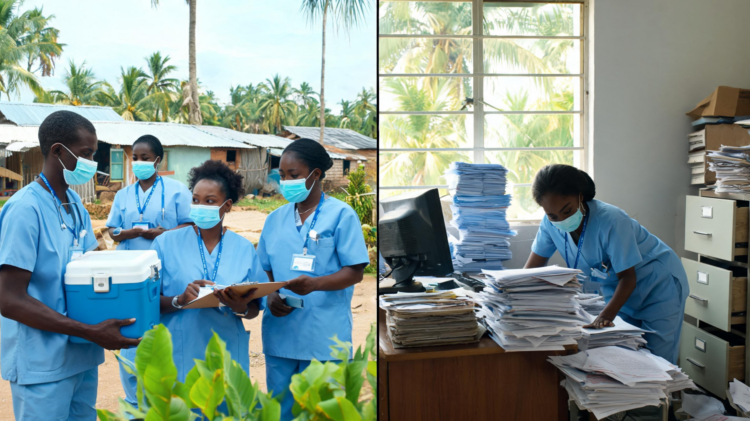
Sierra Leone’s national public health agency can detect and report emerging health threats relatively quickly, but a study of its emergency operations has found that translating those signals into completed field action remains substantially slower. The research points to a gap between formal capacity—the authority, trained personnel, infrastructure and partnerships available to an institution—and operational capability, defined as the ability to mobilise those resources reliably, rapidly and repeatedly during an emergency. At the National Public Health Agency (NPHA), the central weakness was not its legal mandate or its relationships with external partners. Instead, researchers identified incomplete internal systems for managing staff, financing emergencies, procuring supplies, maintaining surge rosters and extending response routines into districts. The findings offer a detailed view of how an emerging national public health institute functions from inside, rather than relying only on country-level preparedness assessments. That distinction matters as governments build institutions expected to coordinate surveillance, laboratories, emergency operations, risk communication and outbreak response under a single mandate.
The mixed-methods study was conducted at NPHA between February and August 2025, three years after the agency was established under Sierra Leone’s National Public Health Agency Act. Researchers invited all 214 employees to complete a structured readiness survey, and 180 responded, an 84.1 percent response rate. The survey assessed 11 domains on a five-point scale, including surveillance, laboratory systems, information management, risk communication, emergency operations, logistics, emergency finance, coordination and two distinct workforce areas: internal human-resource management and outbreak surge capacity. The researchers also conducted 28 interviews with key informants and four focus-group discussions involving 32 participants. Staff were selected across senior leadership, technical and programme roles, operations and finance, and district-facing positions. Finally, the team reviewed institutional and operational records covering a 12-month period. This convergent design allowed perceived readiness to be compared with administrative evidence and with descriptions of how decisions, personnel, money and supplies moved through the emergency system.
Overall perceived readiness averaged 2.8 out of 5, with a standard deviation of 0.7; only 30.4 percent of respondents rated overall readiness at four or five. Internal human-resource management received the lowest score, averaging 2.1, and just 12.8 percent of staff gave it a high rating. By contrast, coordination with partners and the Ministry of Health averaged 3.6, surveillance and early warning 3.4, and risk communication 3.1. Workforce and surge capacity averaged 3.0, placing it above internal human-resource management. The distinction between these domains was central to the analysis. Surge capacity refers to the people and arrangements available to expand response during an outbreak, while internal human-resource management includes recruitment, induction, performance appraisal, career development, retention, payroll integration and routine personnel information systems. An agency may therefore possess trained responders and still lack the organisational machinery needed to recruit replacements, document responsibilities, support professional development or retain experienced staff after a crisis has passed.
Administrative records reinforced the survey results. NPHA had 214 employees in post against an approved establishment of 286 positions, an overall vacancy rate of 25.2 percent. The gaps were particularly pronounced in functions exposed to operational delays: finance and procurement positions were 60.0 percent vacant, district-facing posts 51.4 percent vacant, and human-resource and administration posts 44.4 percent vacant. Technical and programme positions were comparatively better filled, at 82.2 percent. Among 41 people appointed during the preceding year, only 13 had a documented induction record. The median interval from vacancy approval to appointment was 118 days, while only 13.1 percent of all staff had a completed annual appraisal on file. Updated job descriptions were present in 42.5 percent of personnel files, and documented continuing professional development during the previous year was available for 31.8 percent of staff. These figures suggest that individual expertise has developed faster than the systems needed to maintain and distribute it.
The agency’s response workforce is a significant asset, shaped by investments made after the 2014–2016 Ebola epidemic. Sierra Leone has developed a Field Epidemiology Training Programme, emergency operations infrastructure, electronic disease surveillance and response, laboratory resources and national and district Rapid Response Teams. Staff also carry experience from Ebola, COVID-19 and successive mpox outbreaks. The study found, however, that this strength remains vulnerable because much of it depends on a small, experienced cohort and informal personal networks. A national surge list included 74 staff, but it had not been updated for nine months; documented emergency roles or terms of reference existed for only 43 of those people. Just 26 had taken part in a simulation or drill during the preceding year. At district level, nine of 16 districts had updated Rapid Response Team lists, and five had conducted a documented simulation. The researchers interpret surge capacity as real but only partly institutionalised: staff know how to respond, yet the system does not consistently record who is responsible, how roles should be activated or how readiness should be rehearsed.
This concentration of capability was also visible in the statistical analysis. Technical staff with previous outbreak-response experience had substantially higher odds of reporting strong readiness than would be expected from the separate effects of technical training and experience alone. The adjusted odds ratio for their combined profile was 3.41, with a 95 percent confidence interval from 1.62 to 7.18. In practical terms, experienced technical personnel may be compensating for weak organisational systems through knowledge, relationships and the ability to improvise under pressure. That is useful during an emergency but creates institutional risk if those individuals leave. Of the 24 staff who exited during the preceding year, 15 were technical or programme staff, and 11 departures were recorded as movement to nongovernmental organisations, donor-supported projects or international agencies. Partner- or project-supported employees represented 40.7 percent of the workforce. Researchers say parallel employment arrangements can strengthen short-term capacity while complicating retention, reporting lines, career progression and the development of a unified agency identity.
Finance, procurement and decentralisation created additional delays between recognising an event and acting on it. Emergency financial systems averaged 2.3 out of 5, while logistics and supply-chain readiness averaged 2.4. The median time from approval of an activity to release of funds was 21 days, and emergency procurement took a median of 46 days. Sixteen of 43 reviewed emergency procurements, or 37.2 percent, exceeded their planned timelines. Records also documented seven episodes of reagent or personal protective equipment stockouts, while 18 staff advances required a median of 36 days for reimbursement. The agency’s national coordination was stronger than its documented district reach: only eight districts had designated NPHA focal persons, six had records of surveillance feedback to district teams, and deployment from a district request took a median of three days, increasing to five days for remote districts. These bottlenecks matter because outbreaks begin in communities and districts, whereas authority, financing and much of the coordination remain concentrated in Freetown.
The clearest operational signal came from examining the 7-1-7 framework, which separates detection within seven days of emergence, notification within one day of detection and completion of early response within seven days of notification. Across 12 priority events, the median time from emergence to detection was five days and from detection to notification was one day. Yet the median interval from notification to completion of early response was 18 days. Eight events met the detection target, nine met the notification target and only four completed early response within seven days. Delays were most often associated with specimen transport, laboratory confirmation, release of funds, field deployment, supplies and district logistics. The agency could therefore see and communicate public-health signals faster than it could turn them into completed field interventions. The study’s authors argue that this sequence reveals why legal authority, trained personnel and strong partnerships cannot by themselves demonstrate preparedness. For Sierra Leone and similar emerging public health institutes, durable readiness will depend on building integrated human-resource systems, documented surge roles, emergency financing, faster procurement and district routines that continue to function when projects end or experienced responders move on.
The findings also clarify how preparedness should be measured. A high-level assessment may confirm that surveillance, trained personnel or partner coordination exists, while missing the organisational steps that allow those resources to be activated under pressure. Reviewing personnel files, deployment records, procurement timelines and event histories alongside staff accounts therefore provides a more operational test of readiness. In this case, the agreement between perceptions and routine records strengthens the interpretation that administrative systems were not merely viewed unfavourably by employees; they were producing observable gaps in how the agency functioned.
The interaction between technical expertise and outbreak experience is particularly important for interpreting the regression result. The association does not show that either characteristic causes readiness, nor that experienced technical staff can substitute indefinitely for institutional systems. Rather, it suggests that expertise and practical exposure may reinforce one another, enabling a small group to navigate procedures, contacts and decisions more effectively. That pattern can make an organisation appear more capable during familiar emergencies while leaving it exposed to turnover, simultaneous events or threats outside the experience of its established responders. Readiness testing should consequently examine whether procedures work for less experienced staff, not only whether highly experienced personnel can deliver results.
For emerging public health institutes, the practical implication is to treat routine administration as part of the response architecture. Clear job descriptions, induction, appraisal, maintained rosters, delegated authority and documented district links create the conditions for expertise to be transferred and repeatedly used. These measures are less visible than laboratories or emergency operations centres, but they determine whether those assets can be connected into a timely response. Because this study examined one national agency over a defined period and used perceived readiness as one component of its analysis, its associations should not be treated as universal effect estimates. Its value lies instead in identifying testable institutional mechanisms that comparable agencies can examine through their own records, event timelines and role-specific accounts.
Subject of Research: Sierra Leone’s national public health emergency management capacity and operational capability
Article Title: A study of public health emergency management capacity and capability of Sierra Leone’s national public health agency
Article References: Ikoona, E. N., Namulemo, L., Sinnah, M. M., Vandi, M. A., & Sahr, F. (2026). A study of public health emergency management capacity and capability of Sierra Leone’s national public health agency. Journal of Emergency and Disaster Medicine, 2(1), Article 16. https://doi.org/10.1007/s44467-026-00020-1
Image Credits: AI Generated
DOI: 10.1007/s44467-026-00020-1
Keywords: Sierra Leone, public health emergencies, outbreak response, national public health institutes, health workforce, emergency preparedness, human resource management, surveillance, health systems, public, health, emergency
Cite Scienmag News
APA MLA Chicago
Scienmag. (August 29, 2026). Sierra Leone’s Public Health Agency Has Response Skills but Fragile Internal Systems. https://scienmag.com/sierra-leones-public-health-agency-has-response-skills-but-fragile-internal-systems/
Scienmag. “Sierra Leone’s Public Health Agency Has Response Skills but Fragile Internal Systems.” Scienmag, 29 August 2026, https://scienmag.com/sierra-leones-public-health-agency-has-response-skills-but-fragile-internal-systems/. Accessed 29 August 2026.
Scienmag. “Sierra Leone’s Public Health Agency Has Response Skills but Fragile Internal Systems.” Scienmag. August 29, 2026. https://scienmag.com/sierra-leones-public-health-agency-has-response-skills-but-fragile-internal-systems/
Copy citation Download RIS
Tags: building national health emergency institutionsemergencyemergency preparednessemergency preparedness and response infrastructureHealthhealth surveillance and risk communicationhealth system resilience in Sierra Leonehealth systemshealth threat detection and reportinghealth workforcehuman resource managementinternal staff and finance management in health emergenciesinternal system weaknesses in emergency managementnational public health institutesoperational capability in public healthoutbreak responseoutbreak response coordinationpublicpublic health emergenciespublic health emergency response capacitypublic health supply chain managementSierra LeoneSierra Leone national public health agencysurveillance